Ultra Care
About Us

Get The Facts

Get the Facts - Federal Election Campaign 2013

Queensland motorists deserve better roads: more people are dying in crashes and the annual cost of the road carnage is $4 billion. So the RACQ is joining an unprecedented nation-wide campaign in the lead-up to the Federal election in September because all sides of politics need to commit to increased road funding.

  1. Why is RACQ undertaking this campaign during the Federal Election?
    The RACQ was formed in 1905 to promote the interests of motorists. Today it represents 1.2 million members and their families and is Queensland’s largest club. We take our advocacy role very seriously and work tirelessly to ensure Queensland motorists and their families get a fair go.
  2. What does the Federal election campaign involve?
    We’re joining with the Australian Automobile Association (AAA), which represents the seven state and territory motoring clubs around Australia, to demand better roads and transport funding on behalf of our combined membership of seven million motorists.

    In Queensland, the campaign will involve billboards at several sites in Brisbane and along the Bruce and Warrego Highways. As well, there will be television, radio, newspaper and online advertising highlighting the need for more roads and transport funding.

    We are also using all RACQ’s own communication channels, such as our bi-monthly magazine The Road Ahead, digital newsletters, our website, Facebook page and Twitter, to get the message out to our members and supporters.

    And we’re also seeking the support of other key stakeholders, such as industry and community groups, for our campaign.
  3. Why launch a campaign of this size now?
    We’re continuing more than a century of advocating on behalf of our members, and using the weight of more than 1.2 million Queenslanders (and seven million motoring club members around Australia) to get a better result for road users. It’s not good enough that so many people are dying on our roads, and we’re demanding action.
  4. What does RACQ hope to achieve?
    Nationally, our priorities are outlined on the demandbetterroads.com.au website, and include more investment in transport infrastructure and new approaches to road funding. Our priority projects for Queensland are:

    Project Details Cost
    1. Bruce Highway Upgrade of all six sections of the Bruce Highway $11 billion
    2. Warrego Highway Construct second Toowoomba Range Crossing to address capacity and safety $1.6 billion
    3. Gateway Motorway North Upgrade to six lanes from Nudgee to Bruce Highway $1.3 billion
    4. Pacific Motorway Upgrade to six lanes from Nerang to Tugun $3.8 billion
    5. Brisbane Inner Rail Solution New rail tunnel to provide a second river crossing and add capacity to inner Brisbane $5.3 billion
  5. Why these specific projects?
    These are the projects we know will have the biggest impact on improving road safety in Queensland and reducing congestion. For example, the Bruce Highway accounts for one in six of all road deaths on national highways across Australia. And while we’ve had an increase in Federal roads funding for the Bruce in the past six years, it was in such an appalling state of neglect even more is required.
  6. Does the campaign support the current Federal Labor Government, the LNP, or any other political party?
    RACQ is, and has always been, apolitical; the political persuasion of the next Federal Government is irrelevant to the desperate need to improve the road network.
  7. How do better roads reduce the road toll?
    We know that by making roads safer, we can save twice as many lives as safer drivers and safer cars combined. Road crashes cost Queensland $4 billion every year so road safety is not just a health issue, it’s an economic and social one.
  8. Why should the state of Queensland’s roads be a top election issue?
    Cars account for 75 percent of all passenger travel in Queensland, so how governments cater for motorists is a key indicator of economic, social and environmental performance.
  9. Why is road safety an important issue in this election?
    Queensland’s road toll rose to 279 in 2012, and is on track to rise again in 2013 – for the third consecutive year. More must be done to curb this devastating loss of life.
  10. What can I do to support the RACQ’s campaign?
    Go to demandbetterroads.com.au and join the online petition. Tell your local federal parliamentarian and candidates that they should support more funding for Queensland’s national highways.

Get the Facts - 2013 Floods

Important information for individuals, families and community groups affected by the recent floods.

Question: Does RACQ have automatic flood cover for household insurance policyholders, when was it introduced and am I covered as an RACQ Insurance customer?

Answer: RACQ provides automatic flood cover as standard for all its household insurance policyholders.

All household insurance policies included automatic flood cover as of 1 July 2012, regardless of your renewal date.

Question: Does RACQ’s comprehensive car insurance cover flood?

Answer: Yes, and it always has.

Question: What exactly is the definition of 'flood'?

Answer: RACQ has adopted the government's common definition of flood, which we introduced twelve months early. It is in the current PDS.

Question: My household insurance premiums have gone up, even though I don’t live in a flood zone. Why is that?

Answer: Premiums generally have increased due to the numerous weather related incidents in the past few years and the consequent increase in reinsurance costs. For those properties in locations that are more likely to flood, premiums have increased to reflect the level of risk.

Question: Why doesn’t RACQ simply provide an opt-out for customers who don’t want flood cover?

Answer: Having flood cover as standard removes the need for customers to assess their own flood risk before making the decision to purchase the product. This approach provides consumers with clarity. RACQ Insurance customers have certainty that they are covered for flood.

Question: How do I make an insurance claim?

Answer: The best way is to ring our 24/7 insurance claims call centre on 13 7202 and our claims staff will guide you through the process.

Question: How many claims has RACQ Insurance received as a result of Cyclone Oswald and the floods?

Answer: RACQ has received more than 8,000 insurance claims as a result of the severe weather produced by ex-Tropical Cyclone Oswald. The majority of claims received has been for damage to households.

Question: Politicians have blamed premium rises on ‘big corporates’, such as RACQ, seeking big profits. Is that true?

Answer: No. RACQ is a mutual, which means all profits (or surpluses) go back into improved services and benefits for members. RACQ Insurance is wholly-owned by the RACQ club. The funds generated by our wholly-owned insurance company support the activities of Queensland’s largest club and peak motoring organisation.

Question: Is the RACQ Foundation still going?

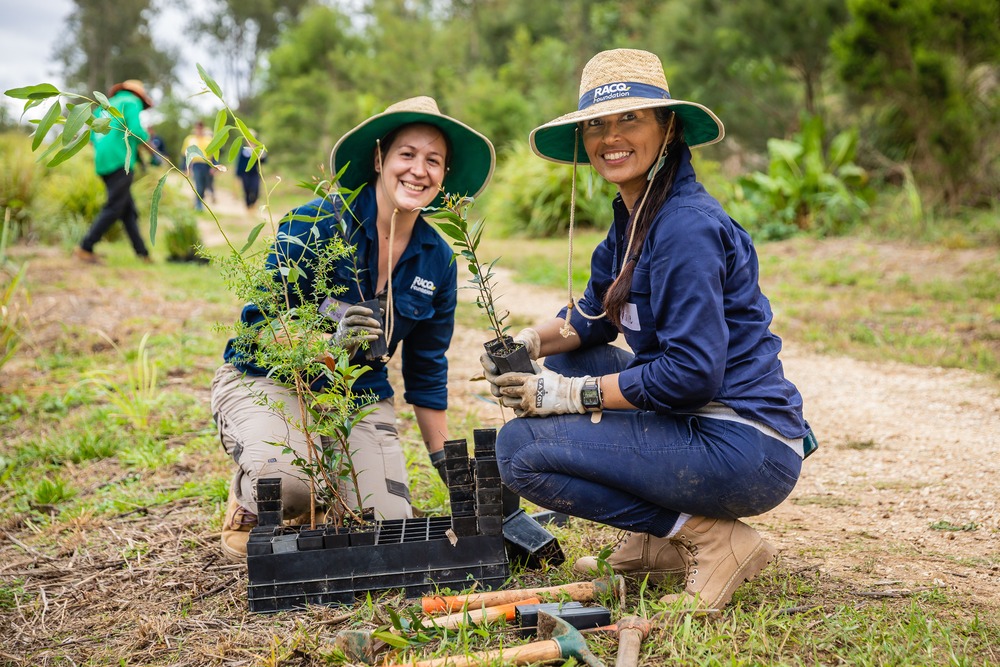
Answer: The RACQ Foundation was set up two years ago in the aftermath of the record storms, floods and cyclones of the summer 2010/2011. Almost 120 community groups throughout Queensland have approved funding totalling more than $6 million from the RACQ Foundation since it was established.

The Foundation still has funds available to distribute to small and medium-sized community and charitable organisations that have been victims of natural disasters and offer services or facilities to local communities. Individual grants of up to $200,000 are available for capital works and social services projects.

More information, including eligibility criteria and application packs, is available at www.racq.com/foundation.

Question: How many roadside assistance jobs has the RACQ handled in the current emergency?

Answer: RACQ responded to more than 34,000 calls for roadside assistance between 24-29 January, with most of these occurring in the south-east of the State from Bundaberg to the NSW border and west to Toowoomba. This includes a record 11,200 calls in one day.

Question: How else has the RACQ contributed to the current emergency response?

Answer: RACQ provides regular road condition updates to Queensland media, particularly ABC radio, which is the official emergency broadcaster. Since Sunday 26 January, we have completed more than 60 live interviews between 6am and 11pm daily, syndicated throughout Queensland in a bid to keep motorists safe on the roads.

RACQ has also dispatched its Community Response Team, volunteer staffed trained in the disaster recovery work, along with the Mobile Member Centre and insurance staff to Bundaberg to assist victims on the ground.

Question: The RACQ also provides road condition reports online. Has this service been busy?

Answer: Yes - we’ve experienced a high demand for this service, with 779,131 page views of our online road reports between 23-30 January.

Get the Facts - RACQ Insurance

RACQ Insurance sets the record straight on recent decisions made by the Financial Ombudsman Service (FOS) and related media coverage. We welcome your feedback.

  1. Question: Does the FOS finding that a Goodna couple’s home was impacted by flash flooding, not riverine flooding, apply to all RACQ-Insurance related cases before FOS?

    Answer: This decision does not set a blanket precedent. Determinations made by the FOS depend on the particular circumstances which apply for each individual claim.

    In the determinations that we have received from the FOS so far, we have had claims decisions upheld and claims decisions overturned.

  2. Question: How many RACQ Insurance policyholders appealed their claim decision with FOS?

    Answer: Less than 20 policyholders are currently awaiting a determination from the FOS in respect of their claim. The appeal process is open to any RACQ Insurance policy holder and as part of our claims processes we let our policyholders know of their right to appeal claim decisions through the FOS.

    We encourage anyone who believes their claim should be looked at by FOS to do so.

  3. Question: Will RACQ Insurance appeal the FOS decision?

    Answer: Determinations made by the FOS and accepted by the policyholder are binding on RACQ Insurance. As a member of the Insurance Council of Australia, RACQ Insurance has always supported the external dispute resolution service provided by the FOS.

  4. Question: Will policyholders whose claim decisions were reversed by FOS have to pay back the compassionate payment given to them by RACQ?

    Answer: No. RACQ Insurance has paid out $10 million from its compassionate fund to provide support to our policyholders who were seriously affected and whose contract of insurance did not cover them for the specific damage.

    The $10 million was provided by The Royal Automobile Club of Queensland Limited (RACQ), the parent organisation of RACQ Insurance, foregoing its dividend for this year. It was part of a $20 million package for flood victims announced by the RACQ which included $2 million to the Premier’s Flood Relief Fund and $8 million to be distributed through the RACQ Foundation to community groups and organisations which are in need due to the impact of the floods and Cyclones.

Get the Facts – Mobiles

A road safety survey conducted by the State’s peak independent motoring organisation last year found that 90.5 percent of RACQ members want greater police enforcement of hand-held mobile phone rules for drivers.

RACQ members voted talking or sending text messages on mobile phones the fourth most annoying driver behaviour in the survey, which RACQ conducted to identify road safety issues and behaviours of most concern to its 1.2 million members.

Driver distractions, including use of hand-held mobile phones, are more than just annoying to motorists - they can also contribute to crashes.

During May 2012, RACQ is using 'fuel boards' attached to petrol pump nozzles in service stations throughout the state to hammer home the road safety message that if you are driving, you shouldn’t be using your mobile.

Question: Why has RACQ decided to use this method to promote safety messages around mobile phone use and driving?

Answer: All motorists have to refill their vehicles and this is a cost-effective way to reach them without providing another driver distraction.

Question: If RACQ is genuinely campaigning for cheaper fuel, why is it paying the fuel companies to advertise at their outlets?

Answer: The two issues are completely unrelated. This form of advertising is relatively cheap and reaches a large number of motorists when they are open to safety messages.

Question: Everyone multi-tasks these days, even when driving. What’s the problem?

Answer: People with busy lifestyles see time spent in the car as an opportunity to do other tasks while they are driving. But they’re not stopping to think of the dangers posed by this risky behaviour, not just to them but also to other road users.

RACQ advocates that drivers should refrain from doing anything that takes their eyes off the road, hands off the wheel, or mind off the driving task. A driver’s key responsibility is to drive safely, and distractions such as phone use, changing a CD, eating or drinking interfere with this.

Question: Isn’t this just the RACQ going to extremes?

Answer: No. We are reflecting the views of our members, who have told us in surveys that:

  • 63% believe that both hand-held and hands-free mobile phone use should be banned for all drivers
  • 90% believe that text messaging while driving is very distracting
  • 80% believe that making or receiving calls without using hands-free is very distracting

Get the Facts – Motoring Matters

The time for talking is over - we need action to curb the rising road toll. RACQ is undertaking the biggest campaign in our 106-year history because all sides of politics need to commit to increased road funding.

RACQ’s Motoring Matters document can be downloaded at Motoring Matters

  1. Why is RACQ undertaking this campaign during the State Election?

    Formed in 1905 to represent the interests of motorists, RACQ represents 1.2 million members and their families and is Queensland’s largest club. We take the role of advocate very seriously and work tirelessly to ensure Queensland motorists and their families get a fair go.
  2. Why launch a campaign of this size now?

    We’re continuing more than a century of advocating on behalf of its members, and using the weight of more than 1.2 million Queenslanders to get a better result for road users. It’s not good enough that so many people are dying on our roads, and we’re demanding action.

    Bad roads lead to higher road deaths and more severe road injuries. It’s not good enough to always blame the driver. Queenslanders can support RACQ’s campaign for safer roads on our Facebook page www.facebook.com/racqofficial.

    This is the biggest campaign in our 106-year history because the time for talking is over – we need action to curb the road toll.
  3. What does RACQ hope to achieve?

    We have outlined our priorities in our Motoring Matters document, which has been distributed to all major political parties, political leaders and key candidates. It demands action on key road funding and road safety policy issues, along with consumer focused policies to make fuel pricing more transparent, vehicle registration cheaper, and driving more economical and environmentally friendly.

    We believe Motoring Matters outlines realistic initiatives that the next State Government simply cannot afford to ignore.
  4. So, the campaign is just a document?

    We’re using billboards on Queensland’s key highways, from the Gold Coast to Cairns and west to Toowoomba, calling on all sides of politics to ensure road funding and road safety is part of their election platforms.

    A wide range of advertising and media events are planned in the lead up to the election that will reinforce the message to both politicians and the general public.

    We are also using all RACQ’s own communication channels, such as our bi-monthly magazine, digital newsletters, our website, Facebook page and Twitter, to get the message out to our members and supporters.

    And we’re also seeking the support of other key stakeholders, such as industry and community groups, for our campaign.
  5. Does the campaign support the current State Labor Government, the LNP, or any other political party?

    RACQ is, and has always been, apolitical; the political persuasion of the next State Government is irrelevant to the desperate need to improve the road network and the cost of motoring.
  6. Why is the cost of motoring important?

    Not only is Queensland the most expensive state in which to own and operate a vehicle, road crashes cost Queensland $4 billion every year. Road safety is not just a health issue; it’s an economic and social one.
  7. Why should motoring be a top election issue?

    Cars account for 75 percent of all passenger travel in Queensland, so how governments cater for motorists is a key indicator of economic, social and environmental performance.
  8. Why is road safety an important issue in this election?

    Queensland’s road toll rose to 269 last year, and is on track to rise again in 2012. More must be done to curb this devastating loss of life. We’re pushing for a range of initiatives to address this issue, including expanding on-road police presence, increased road infrastructure funding, and road safety education programs.
  9. Aren’t the Bruce and Warrego Highways federal roads and not the State Government’s responsibility?

    It is the State Government’s responsibility to prioritise funding for federal roads, undertake feasibility studies, and get projects ‘dig ready’. The priority the State Government gives federal road projects goes a long way toward securing funding.
  10. What can I do to support the RACQ’s campaign?

    Go to RACQ’s Facebook page at www.facebook.com/racqofficial to show your support. Then ask your local candidates if they support RACQ’s policies, which are available at Motoring Matters.

Get the Facts - Used Car Safety Ratings

It is important that your vehicle offers you good protection from injury in a crash. It is also important that your vehicle offers good protection to other road users, such as pedestrians, cyclists, motorists or the drivers of other vehicles, who may also be involved in a crash . The Used Car Safety Ratings provide you with an overall crash safety rating which includes a model's impact on unprotected road users and drivers of other vehicles.

Question: How are the Used Car Safety Ratings calculated?

Answer: Monash University’s Accident Research Centre analysed records from more than four million vehicles in police-reported road crashes and more than one million injured road users in New Zealand and Australia between 1987 and 2009.

Question: What types of vehicles are included in the ratings?

Answer: The majority of popular passenger vehicles and light commercial vehicles that were manufactured from 1996 onwards were assessed. Where there was sufficient data, a rating was given to the vehicle.

Question: What is the Safe Pick category and why was it created?

Answer: The 2011 Used Car Safety Ratings include a new Safe Pick category. Safe Picks are the safest second hand cars that motorists can purchase to protect themselves and also reduce the risk of injury to other motorists, pedestrians and cyclists in a crash. The category was developed to encourage motorists to think not only about their own safety but also the safety of other road users in an effort to reduce the deaths and injuries that occur on our roads.

Only 20 vehicles made it into the Safe Pick category. They ranged in size from smaller hatchbacks to larger SUVs. Five small cars made it to the list, challenging the myth that only large cars are safe. They are: Honda Civic 2006-2009; Peugeot 307 2001-2009; Volvo S40/V40 1997-2004; Volkswagen Golf/Bora 1999-2004; and Volkswagen Golf/Jetta 2004-2009.

Question: Which used cars were rated the best and the worst?

Answer: The Australian Ford Falcon FG 2008-2009 was rated the safest used vehicle for its high level of protection for both occupants and other road users. The 1996 Daihatsu Mira was the worst rated vehicle. The risk of death and serious injury was found to be 8.2 times higher in the Daihatsu Mira than in the Falcon FG.

Question: Is it possible to buy a safe second hand vehicle that is also cheap to run?

Answer: The results showed that whether you want a small car or a four-wheel drive, it’s possible to purchase a safe car that’s relatively affordable. You can save more on fuel costs without compromising safety by purchasing one of the small cars that made it to the Safe Pick category. The Volkswagen Golf is a good example of a Safe Pick that is economical to run.

Question: How often are the ratings updated and who funds them?

Answer: The ratings are updated annually and they are funded by motoring clubs, including the RACQ, and road authorities around Australia and New Zealand.

RACQ's Vehicle Running Costs Survey

RACQ annually releases information on vehicle running costs which include the average cost of owning and operating vehicles for private purposes. It is based on typical vehicles in various sizes available in Australia and provides an indication of the likely areas of expense.

Question: Have motoring costs gone up in this year's survey?

Answer: Overall costs have stayed mainly the same or dropped slightly. This is because total ownership costs include finance repayments, depreciation, registration, insurance, fuel and maintenance and these costs do not change in a uniform way. For 2011, most costs increased but finance costs, which has a noticeable influence of overall costs, and CTP dropped.

Question: What were the cheapest cars surveyed?

Answer: For Queensland purchasers Holden’s Barina Spark followed very closely by the Suzuki Alto were found to be the cheapest in the survey with Hyundai’s petrol i30, Toyota Camry and the Holden Commodore 3.6 dual fuel being the cheapest in the small, medium and large car categories.

Question: What was the most expensive vehicle to own and operate?

Answer: he Toyota Landcruiser GXL Turbo Diesel was the most expensive at nearly $389 per week, and has been for the past six years.

Question: Is it possible to make savings when shopping for a new car?

Answer: A purchaser can do many things such as choosing a smaller vehicle that will still meet their motoring needs yet has lower ownership costs. Negotiating a lower purchase price is still one of the most effective ways of minimising the amount that needs to be financed and this lower initial price helps reduce overall depreciation costs. Depreciation is generally the largest single cost of car ownership and only becomes apparent when the car is sold.

Question: How do hybrids and diesel engine cars compare to petrol ones?

Answer: Hybrid models tend to have higher overall ownership costs than their petrol equivalents even though they consume less fuel. This cost difference is mainly due to their higher purchase prices. Diesel engine vehicles are closer to petrol versions in terms of overall ownership costs and depend on actual models as to whether they are cheaper or dearer to own. Diesels are generally more expensive to purchase and have higher servicing costs, but fuel costs are lower.

A summary of the full 2011 report, Facts on Private Vehicle Expenses is available at www.racq.com.au/runningcosts.

Get the Facts - CBD Parking

RACQ commissioned a study into the cost of car parking in Australia’s capital cities, following a global survey of daily parking rates in 2010 that ranked Brisbane as the 23rd most expensive city in the world.

The study found that last year:

  • Motorists paid more for short term parking in Brisbane’s CBD than in any other capital city in Australia except Sydney. In the Asia-Pacific region, Brisbane was the third most expensive city, behind Sydney and Tokyo.
  • Brisbane motorists paid three times as much for both short and long term parking than they did in 2001.
  • For short term CBD parking, Brisbane motorists paid an average of $21.70 for one hour, just $4.13 less than Sydney residents who paid an average of $25.83, and $5.72 more than Melbourne motorists who paid $15.98.
  • Approximately 60 percent of the maximum daily parking charge in the CBD is accrued in the first two hours, meaning those seeking the short term parks are hit the hardest.
  • All-day parking rates in Brisbane’s CBD were less than those in Sydney and Melbourne, with motorists paying an average of $51.97, compared to $69.02 in Sydney and $64.64 in Melbourne.
  • While Brisbane’s all-day rates were lower, they only benefit city workers doing the daily commute while the families, shoppers and those seeking dining and entertainment options were hit hard with expensive short-term parking costs.

The complete report is available at www.racq.com/transport

Get the Facts - Qld State Budget 2011-2012

RACQ takes a look at the Queensland State Budget for 2011-2012 and what it means to motorists and the costs associated with running their vehicle.

Question: How much money is the State Government allocating to roads in this year’s budget?

Answer: The Queensland Government will spend $3.6 billion on roads in 2011-12, including $1.4 billion for repairs to roads damaged by natural disasters. Although the $3.6 billion is about $300 million more than last year’s state budget for roads, it is actually costing the state government less because the Federal Government is providing approx. 75 percent of the disaster recovery money. It is disappointing that the state government did not choose to allocate more money to improve safety and productivity, cater for population growth, and flood-proof key highways.

Question: Is all the funding going to rebuild roads damaged in this year’s natural disasters?

Answer: $1.4 billion will be spent in 2011-12 to rebuild roads damaged in the floods and cyclones. Seventy five percent of this spending comes from the Federal Government. This means about $350 million is being contributed by the State Government.

Question: Will my registration fees be going up?

Answer: Yes – by 3.6 percent. This is in line with the Brisbane CPI, which the State Government uses as a yardstick. Queensland will continue to be the most expensive state in Australia in which to register a vehicle. The total bill to register a car in 2011-12 (including CTP and the traffic improvement fee) is shown below:

Cylinders 2011-12 vehicle registration (including traffic improvement fee & CTP)
4 $641.90
6 $805.30
8 $982.80

Question: Were any major new road projects or upgrades announced?

Answer: No 'surprise' announcements of new road projects or major road upgrades were included in the 2011-12 Queensland Budget. The majority of funding is directed at road projects previously committed or already underway, or to repairing flood damaged roads.

Get the Facts - Unroadworthy Roads

The RACQ asks Queenslanders to nominate the roads in their area they think are the most ‘unroadworthy’. In 2011, the survey was undertaken between the start of February and the end of March, giving Queenslanders a chance to speak up about roads that require urgent attention. The survey ranked roads in three categories: national; state; and local.

Question: Which roads did Queenslanders nominate this year?

Answer: Of the 2174 nominations in the 2011 survey, 473 branded the Bruce Highway the most state’s most ‘unroadworthy’ road. All six sections of the Bruce Highway from Brisbane to Cairns featured in the top 10 worst state and national network roads and the Cooroy to Gin Gin stretch once again cemented its reputation as the state’s worst stretch of highway. With more than 320 nominations, all three sections of the Warrego Highway from Ipswich to Charleville also featured in the survey. Together, the two highways accounted for nine of the top 10 worst roads.

More than 500 individual roads throughout Queensland were nominated as substandard by motorists, up from 364 in 2008.

Paradise Road, Larapinta and Illaweena Street, Berrinba, in Brisbane featured prominently in the worst local government road list, followed by Stoney Camp Road, Greenbank in Logan City, Connors Road, Paget, in Mackay and Old Toogoom Road,Torbanlea, on the Fraser Coast.

Question: Why were these roads and streets nominated?

Answer: Motorists are obviously frustrated about the poor standard and condition of the Bruce and Warrego Highways, which are both essential for transport and freight. Respondents identified similar issues along both highways, highlighting rough and narrow road surfaces, poor road shoulders, a lack of overtaking opportunities, and flooding issues. Other concerns centered around the lack of maintenance and capital funding for improvements over many years on the national highway network, and the accelerated road damage caused by heavy vehicle use.

The top five most suggested solutions were to:

  • Resurface roads
  • Widen or duplicate roads
  • Increase road maintenance
  • Improve road shoulders
  • Improve drainage runoff.

Other solutions offered by respondents included more overtaking lanes, improving road alignment, raising the road level and improving road markings.

Question: What will the results be used for?

Answer: RACQ will continue to push for better roads and lobby the relevant authorities to consider our survey results when planning projects. Previous surveys have been used to pressure governments to improve some of Queensland’s most dangerous roads. For example, RACQ’s lobbying led to much needed improvements to the notorious Gap Creek Road, which appeared regularly in previous Unroadworthy Roads Surveys.

Question: Why is the survey held every three years?

Answer: The RACQ Unroadworthy Roads Survey began in 2001 and has since been held every three years to allow federal, state and local governments sufficient time to respond to calls from the community for action on certain roads.

More information is available at www.racq.com.au/unroadworthyroads.

Get the Facts on RACQ Foundation

The state’s peak motoring organisation has called for applications for funding from its $8 million RACQ Foundation, established in response to Queensland’s summer of destruction from natural disasters.

Question: What is the RACQ Foundation?

Answer: The RACQ Foundation was announced in January as part of a $20 million disaster relief package. The package included $10m to fund compassionate assistance payments to severely affected RACQ Insurance policyholders who don’t have flood coverage; $2 million to the Premiers Disaster Relief Appeal; and $8 million to be distributed to communities through the RACQ Foundation.

This was RACQ’s response to the natural disasters that had devastated our State. It was announced well before any other large corporate donations or Federal Government disaster funding. The RACQ Foundation is a charitable trust designed to assist community and charitable organisations re-establish themselves to pre-disaster levels.

Question: How much funding is available and who is eligible?

Answer: The Foundation has $8 million to distribute to small and medium-sized community and charitable organisations that offer services or facilities to local communities. Individual grants of up to $200,000 are available for capital works and social services projects.

Question: When will applicants be informed that their funding submission was successful?

Answer: Applications for the first round of funding through the RACQ Foundation closed April 30 and donations of more than $1.7 million to 22 groups were announced on May 25. Applications for the second round close on May 27, with a third round closing on June 24. Further funding rounds will be announced later in the year.

Question: Who received money in the first round of funding?

Answer: Under the RACQ Foundation’s first round of grants, several organisations in the state’s worst hit regions will receive direct cash assistance. Recipients of this first round funding include:

  • The Endeavour Foundation at Redbank in south-east Queensland, which will receive $200,000 towards building Treetops Residential, a supported accommodation facility which will replace the Riverside Residential building which was inundated by floodwaters;
  • The Kath Dickson Family Centre, a charity for at risk and disadvantaged children and their families in Toowoomba, which will receive $160,000 to re-establish services, repair playground equipment and replace assets to support community services in flood affected areas;
  • Brisbane Basketball, which will receive $200,000 to repair extensive flood damage to their Auchenflower stadium used by more than 4,000 players a week. The funding includes repairs to two courts, toilets, canteen , floor, reception, equipment, security system, disabled lift, new doors, locks, plumbing and the car park;
  • The Tully and District Times Pony Club, which was damaged during Cyclone Yasi, will receive $85,000 to replace the damaged clubhouse roof and repair the canteen and toilet facilities, and;
  • $100,000 to the RSPCA at Fairfield in Brisbane towards the replacement of vital intensive care units damaged when the animal welfare centre was inundated during the floods.

Another 17 organisations are being informed of the funding support following their applications to the RACQ Foundation and we are currently working through the details of these applications to finalise the distribution process.

Question: Why doesn't RACQ just give the money to the worst-hit region, surely they need it the most?

Answer: As a Queensland-wide organisation representing 1.2 million members and their families, it’s important we reflect the nature of RACQ in the spread of donations from the RACQ Foundation.

The first round of $1.7 million in grants will help community organisations which cannot get funding from anywhere else. These are organisations providing vital support and assistance to their local communities and are often the glue around keeping these suburbs, towns and regions together.

More information, including eligibility criteria and applications packs, is available at www.racq.com/foundation.

Actions

Share