

Six of the best: New model launches
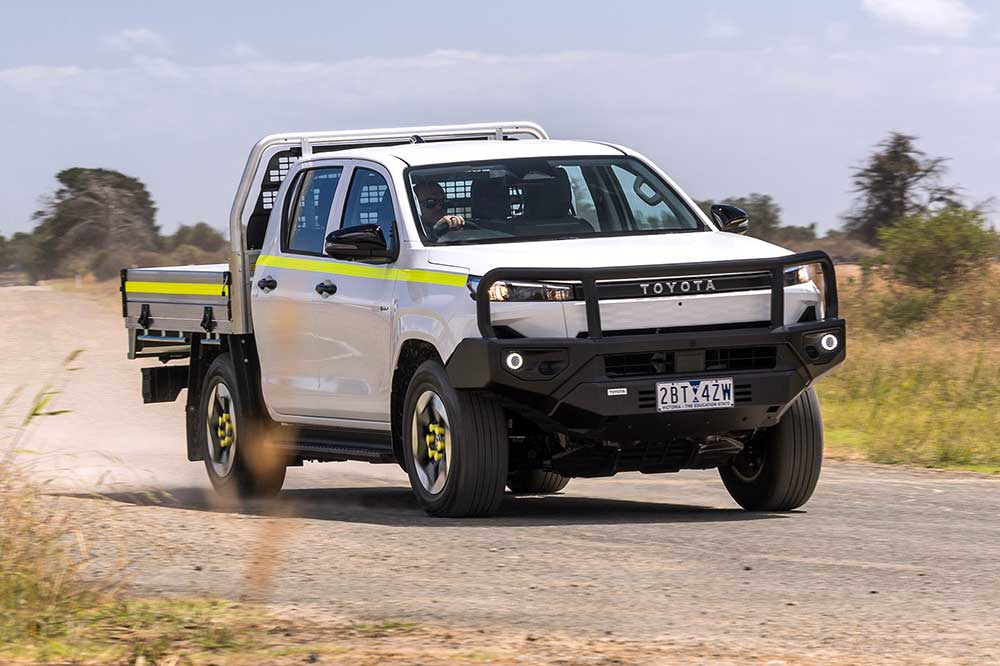
Toyota HiLux BEV SR Double Cab Pickup
Sales of plug-in hybrid powered utes have been growing strongly in Australia but fully electric utes are still relatively rare.
Only the LDV eT60 and KGM Musso have troubled the scorer to date but the arrival of Toyota with a battery-electric HiLux 4x4 is bound to spark interest in this doggedly diesel segment.
The HiLux BEV looks much like its turbo-diesel powered stablemates, aside from a redesigned front end with closed-off upper grille and aerodynamically enhanced 17-inch alloy wheels.
But under the skin it’s a different beast, with a chassis reengineered to accommodate a 59.2kWh lithium-ion battery and an electric motor transaxle at either end.
Combined system outputs are 144kW/468Nm, which is comparable with the diesel’s 150kW/500Nm, but where the latter will travel up to 1,000km on a tank, the BEV manages a more modest 315km. Toyota says its electric HiLux has all the rugged durability and off-road capability of its diesel-powered stablemates but there’s no low-range gearing and towing capacity is limited to 2,000kg.
At circa $17,000 more expensive than its diesel equivalent the HiLux BEV won’t be for everybody, but Toyota is betting on there being enough government, mining and construction fleets wanting a zero-tailpipe emissions alternative to justify its investment.
Specifications
- Price: $76,490 (MRLP)
- Battery: 59.2kWh lithium-ion
- Drivetrain: Dual electric motors, front and rear transaxle, all-wheel drive (144kW/468Nm combined)
- Range/energy consumption: 315km (NEDC) / 20.2 kWh/100km (NEDC)
- Safety rating: Five stars (2025)
- Warranty: Five years, unlimited kilometres vehicle; eight years, 160,000km battery.
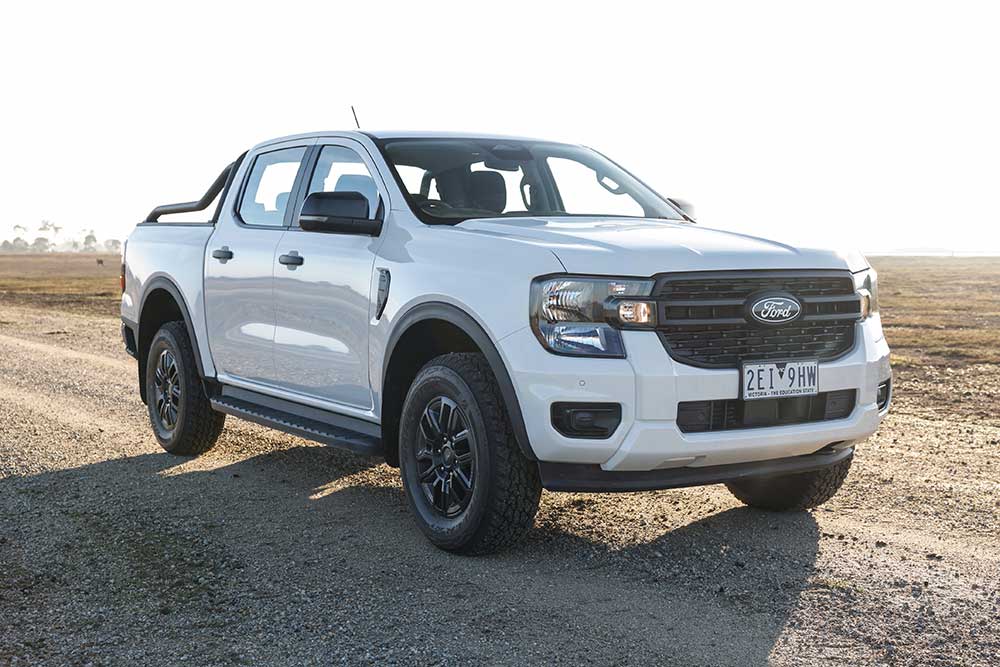
Ford Ranger Black Edition V6 MY26.5
The Australian designed and developed Ford Ranger has been Australia’s best-selling vehicle for the past three years but until now buyers wanting to access the barrel-chested grunt of the V6 turbo-diesel have had to stump for expensive upmarket variants.
That’s no longer the case, with Ford making the V6 available across the 4x4 range including in the humble XL single-cab chassis which at $52,100 is about $10,000 cheaper than the previous entry-level V6.
Choosing the V6 brings a full-time 4x4 system as standard, while a 10-speed automatic is now the only available transmission on both the V6 and the newly updated 2.0-litre four-cylinder turbo-diesel.
Among myriad changes accompanying this MY26.5 update, there is a new Ranger Black Edition which can be had in four-cylinder or V6 guise, with the latter’s $59,990 price tag representing a $6,500 premium.
It’s differentiated via a black grille and side steps, black 17-inch alloys with all-terrain tyres, an integrated rear box step, drop-in bedliner, long-legged sports bar, and adjustable cargo system.
With rear disc brakes, a leather-wrapped e-shifter, electric park brake and selectable drive modes, the Black Edition looks a well-priced V6 option for recreational off-roaders and towing enthusiasts.
Specifications
- Price: $59,990 (MRLP)
- Powertrain: 3.0-litre V6 turbo-diesel, 10-speed automatic transmission, full-time 4WD, high and low range (184kW/600Nm)
- Fuel consumption: 8.3L/100km (WLTP)
- Safety Rating: Five stars
- Warranty: Five years, unlimited kilometres.
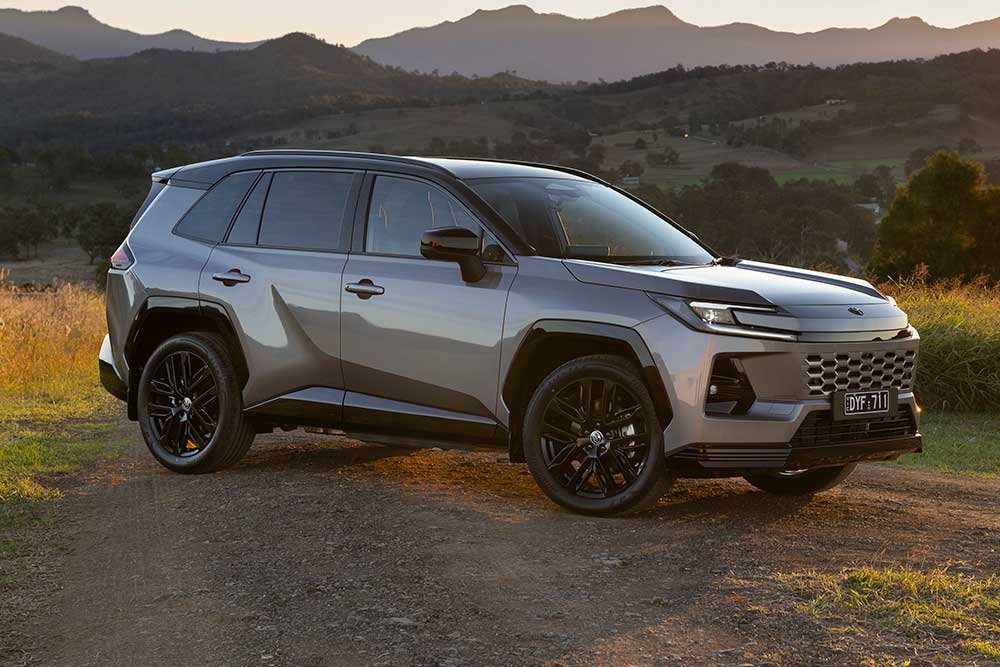
Toyota RAV4 PHEV XSE AWD
Toyota’s status as both pioneer and major proponent of hybrid electric vehicle technology is well established, with more than 500,000 Toyota hybrids sold here since the original Prius launched in 2001.
But when it comes to plug-in hybrid electric vehicle (PHEV) technology the Japanese giant had been overtaken by the likes of Mitsubishi, BYD and a handful of other brands.
That’s no longer the case, with Toyota recently adding a PHEV powertrain option to its otherwise all-hybrid RAV4 range.
The RAV4 was the brand’s biggest seller in 2024 and 2025 but the delayed arrival of this sixth-generation model has dented sales this year.
Now, Toyota is banking on its first ever PHEV powertrain to help turbocharge sales, with the technology available in XSE 2WD and AWD versions from $58,840 (MRLP) and top-of-the-range RAV4 GR Sport AWD at $66,340.
The system combines a 2.5-litre petrol four-cylinder engine with a front electric motor in 2WD variants, or front and rear electric motors in AWD grades, with a 22.7kWh lithium-ion battery.
The approximate WLTP driving range of the 2WD in EV mode is up to 121km while the AWD achieves 113km.
Specifications
- Price: $63,340 (MRLP)
- Powertrain: 2.5-litre petrol four-cylinder engine, front and rear electric motors, combined outputs (273kW), all-wheel drive.
- Battery: 22.7kWh lithium-ion
- Electric range: 113km
- Fuel consumption: 0.7L/100km (WLTP)
- Safety rating: Not rated
- Warranty: Five years, unlimited kilometres; eight years, 160,000km battery.
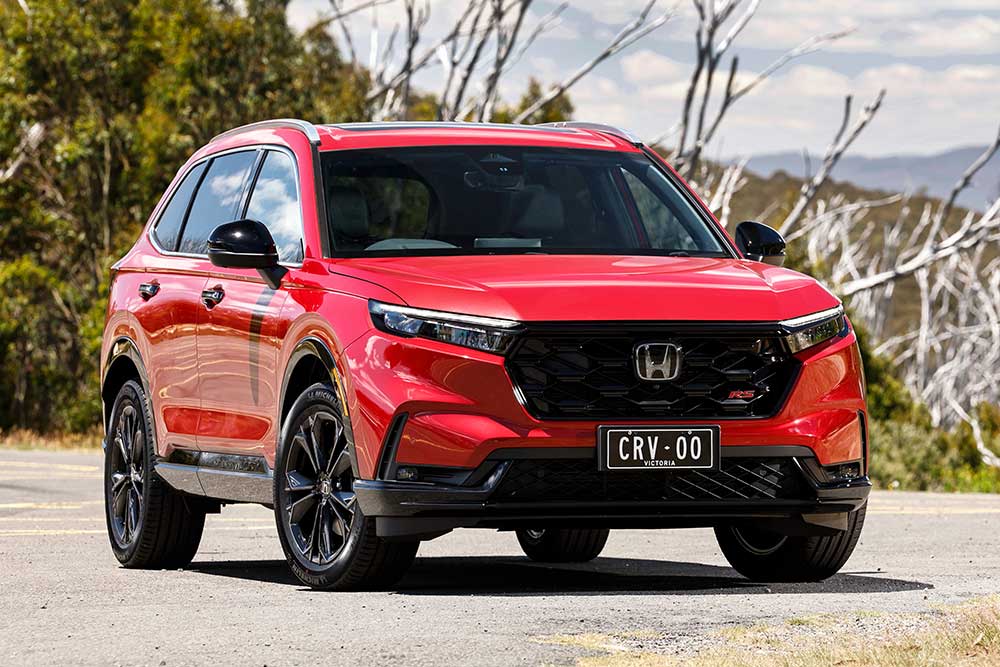
Honda CR-V e:HEV RS AWD
As thousands of Toyota RAV4 customers routinely waited up to six months for delivery in recent years, a highly competitive Japanese alternative sat hiding in plain sight.
The Honda CR-V isn’t some new kid on the block, either, having been sold here in six model generations over almost 30 years, yet the CR-V has failed to capture the public’s imagination (and purse strings) like its best-selling rival.
Part of the reason appears to be Honda’s hesitation in adopting hybrid technology as avidly as Toyota, something addressed earlier this year when Honda updated the CR-V and made the hybrid available almost $10,000 lower on the HEV X.
The updated range includes two petrol 2WD variants in five- or seven-seat configuration, two 2WD hybrids and two AWD hybrids including the range-topping e:HEV RS AWD.
Now, as before, the exterior design blends sporty and functional elements while the roomy interior is attractive, well finished and pleasingly functional. The CR-V e:HEV RS AWD offers above-average driving dynamics and is an engaging drive, with well-judged ride, steering and handling.
Performance is strong too, thanks to a 2.0-litre direct-injection four-cylinder petrol engine teamed with dual electric motors.
Specifications
- Price: $64,400 (MRLP)
- Powertrain: 2.0-litre direct-injection Atkinson cycle four-cylinder petrol engine, e-CVT transmission, all-wheel drive, twin electric motors (generator and propulsion), combined outputs (135kW/335Nm).
- Battery: 1.4kWh lithium-ion
- Fuel consumption: 5.7L/100km
- Safety rating: Four stars (2023)
- Warranty: Five years, unlimited kilometres (or eight years, unlimited kilometres with Honda Extend).
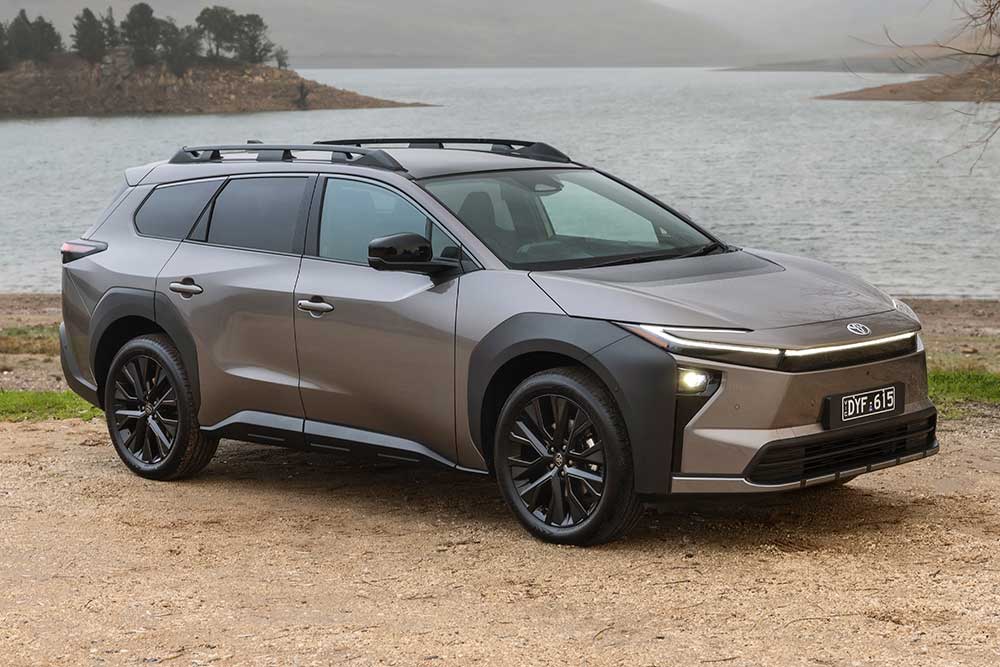
Toyota bZ4X Touring
If from reading these pages you’re getting the impression that it’s been a big second quarter for Toyota, you’d be right, with no less than five new and updated model variants launched between April and June, including a new electric SUV, the bZ4X Touring.
The Touring is to the established bZ4X what the Trailseeker is to the Subaru Solterra, namely a longer body version of the original EV, offering more luggage space and a different design aesthetic, but the same technical fundamentals.
The single-variant bZ4X Touring is priced just $2000 more expensive than the bZ4X AWD at $69,990 but boasts a body that’s 140mm longer, more boot space, taller ride height and increased power outputs from its dual electric motors.
The additional length behind the rear axle and a more upright tailgate boosts luggage volume from 452 litres in the bZ4X to 550 litres.
Under the skin is the same 74.7kWh lithium-ion battery as the updated bZ4X but the Touring comes exclusively as an AWD with a pair of 167kW electric motors producing combined outputs of 280kW.
Unlike its Subaru Trailseeker doppelganger, the Touring is available exclusively with 20-inch wheels which means a maximum range of 488km (WLTP).
Specifications
- Price: $69,990 (MRLP)
- Battery: 74.7kWh lithium-ion
- Drivetrain: Front and rear electric motors, all-wheel drive (280kW combined).
- Range/energy consumption: 488km (WLTP)/16.8kWh/100km (NEDC)
- Safety rating: Five stars (2025)
- Warranty: Five years, unlimited kilometres vehicle; eight years, 160,000km battery capacity warranty.
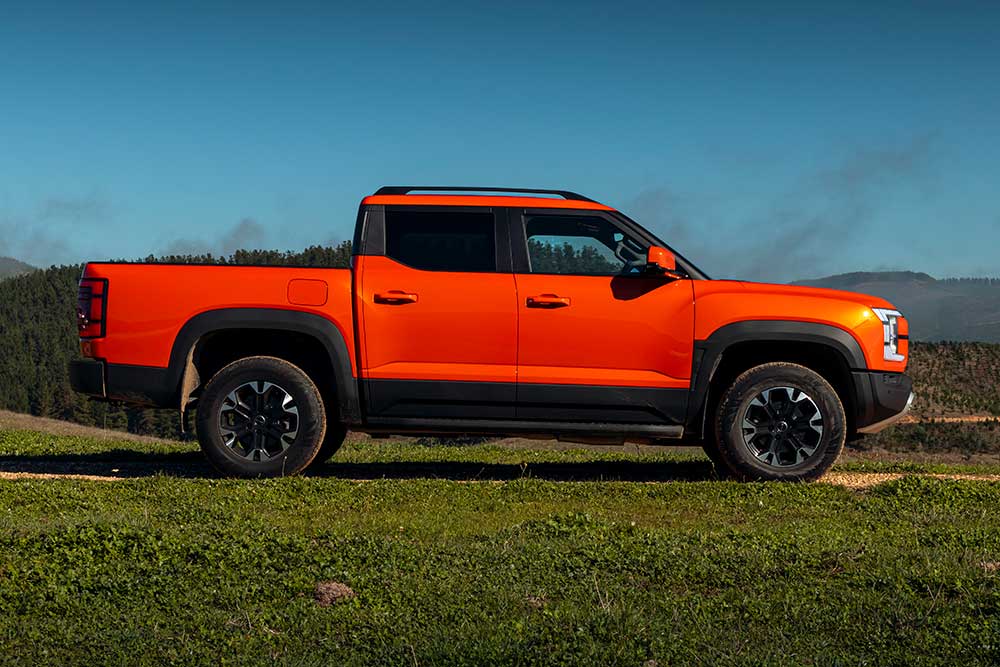
BYD Shark 6 Performance
BYD’s Shark 6 has delivered one of the biggest shake-ups the Australian ute segment has ever known, emerging in late 2024 as a relative unknown to finish 2025 as the country’s fifth best-selling ute.
While buyers clearly find plenty to like about the plug-in hybrid electric, its Achilles heel has been a 2,500kg braked towing capacity where most segment rivals can haul up to 3,500kg.
That’s no longer an issue thanks to BYD updating and expanding its Shark 6 lineup from a single Premium pickup to a new three-variant range encompassing the entry-level ‘Dynamic’ cab‑chassis priced from $55,900 (MRLP), and new Shark 6 Performance.
The latter exclusively gains a 2.0-litre petrol turbo four-cylinder engine plus dual-motor hybrid system, versus the 1.5-litre turbo-petrol and dual-motor hybrid system fitted to other variants.
Power and torque are up by 29kW and 50Nm to 350kW/700Nm, while the Shark 6 Performance also gains a new ‘Crawl Mode’ aimed at improving another area of perceived weakness, namely off-road performance. BYD is promising Crawl Mode will be offered to existing Shark 6 Premium and Dynamic customers via an over-the-air (OTA) update later in the year.
Specifications
- Price: $62,900 (MRLP)
- Powertrain: 2.0-litre turbocharged petrol four-cylinder engine, front and rear electric motors, combined outputs (350kW/700Nm), all-wheel drive.
- Battery: 29.58kWh lithium iron phosphate (LFP) Blade Battery
- Electric range: 80km (WLTP)
- Fuel consumption: 1.3L/100km (WLTP)
- Safety rating: Five stars (2025)
- Warranty: Six years, 150,000km vehicle; eight years, 160,000km battery.


Related topics
Things to note
The information in this article has been prepared for general information purposes only and is not intended as legal advice or specific advice to any particular person. Any advice contained in the document is general advice, not intended as legal advice or professional advice and does not take into account any person’s particular circumstances. Before acting on anything based on this advice you should consider its appropriateness to you, having regard to your objectives and needs.
Insurance Products (excluding Travel Insurance) are issued by RACQ Insurance Limited ABN 50 009 704 152 (RACQI) and arranged by RACQ Distribution Services Pty Ltd (RDS) ABN 35 116 361 650, AFSL 567130 and RDS' authorised representatives (including RACQ Operations Pty Ltd ABN 80 009 663 414, AR No. 234978 (RACQO)). Conditions, limits and exclusions apply.
Any advice provided by RDS and RACQO is general advice only and does not take into account your personal objectives, financial situation or needs and you will need to consider whether the advice is appropriate for you. Read the Product Disclosure Statement (PDS) before making a purchase decision on the product. You can also access our Target Market Determinations on this website.
RDS receives a commission from RACQI for the policies it arranges. RACQO receives fees paid for services it provides to RDS. Further details about remuneration are available on request prior to purchasing.
Banking and loan products issued by Members Banking Group Limited ABN 83 087 651 054 AFSL/Australian credit licence 241195 trading as RACQ Bank. Terms, conditions, fees, charges and lending policies apply. This is general advice only and may not be right for you. This information does not take your personal objectives, circumstances or needs into account. Read the disclosure documents for your selected product or service, including the Financial Services Guide and the Terms and Conditions, and consider if appropriate for you before deciding.
Except for RACQ Bank, any RACQ entity referred to on this page is not an authorised deposit-taking institution for the purposes of the Banking Act 1959 (Cth). That entity’s obligations do not represent deposits or other liabilities of RACQ Bank. RACQ Bank does not guarantee or otherwise provide assurance in respect of the obligations of that entity, unless noted otherwise.
RACQ Bank subscribes to the Customer Owned Banking Code of Practice which establishes higher standards than the law requires. The Code reflects modern consumer expectations and developments in approaches to issues such as consumer vulnerability, guarantors, and supporting customers through financial hardship. Please read our Customer Owned Banking Code of Practice page for more information.
RACQ Operations Pty Ltd (ABN 80 009 663 414, AR No. 234978) and Members Travel Group Pty Ltd (ABN 45 144 538 803, AR No.432492) (RACQ) are authorised representatives of the RACQ Travel Insurance insurer Tokio Marine & Nichido Fire Insurance Co., Ltd. (ABN 80 000 438 291 AFSL 246 548) (Tokio Marine). Tokio Marine Management (Australasia) Pty Ltd (ABN 69 001 488 455, AR No. 1313066) is an authorised representative of Tokio Marine, and administers RACQ Travel Insurance as the managing agent on behalf of Tokio Marine. Terms, conditions (including eligibility criteria), exclusions, limits and sub-limits apply. Any advice is general advice only, and does not take into account your specific objectives, financial situation or needs. Before you purchase, please consider the Combined Product Disclosure Statement (PDS) / Financial Services Guide (FSG) and Target Market Determinations (TMDs) available at racq.com or on request from RACQ.