

2026 Vehicle Operating Costs report: Cheapest cars to own and operate
In journalist Malcolm Gladwell’s year-2000 non-fiction book The Tipping Point: How Little Things Can Make A Big Difference, he describes examples of the moment an idea, trend, or social behaviour crosses a critical threshold and spreads rapidly.
Australia’s electrified vehicle ‘tipping point’ may have arrived this year with consumers eagerly adopting new powertrain technologies in response to rising fuel costs and the increasing availability of affordably priced electrified alternatives.
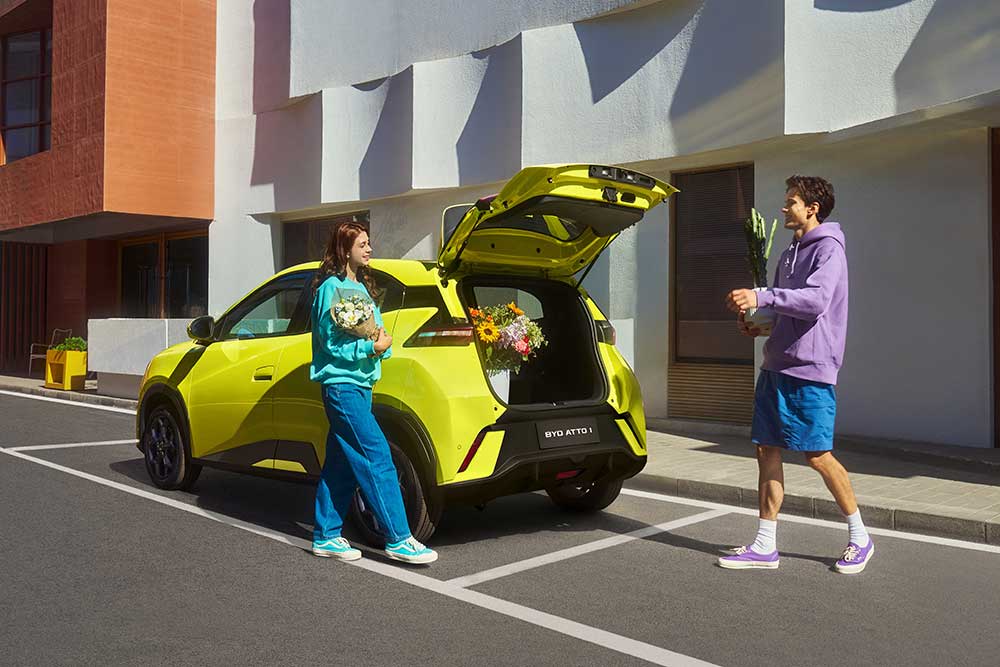
In addition to record electrified vehicle sales, 2026 marked another milestone with RACQ’s annual Vehicle Operating Costs (VOC) Report crowning a battery electric vehicle (BEV), the BYD Atto 1 (pictured above and right), as the most affordable vehicle to own and operate in Queensland.
RACQ Principal Economic and Affordability Specialist Dr Ian Jeffreys said the findings mark a turning point for motorists, with plug-in electric vehicles (EV and PHEV) accounting for 34.5% of Australia’s new vehicle market in September.
“Electric vehicles have been closing the affordability gap with petrol cars for several years, but for the first time, some are now cheaper to own and operate than their petrol or diesel counterparts,” Dr Jeffreys said.
As with past VOC reports, our research shows that the vehicle with the lowest purchase price isn’t always the most affordable in the long term, with the report examining a wide range of costs including fuel, servicing and insurance to provide a clear picture of how much vehicles in different segments actually cost to own and operate.
“When you add up purchase price, loan repayments and fuel or charging costs, EVs and plug-in hybrids are becoming a much stronger proposition for motorists,” Dr Jeffreys said.
“However, we know a cheap car isn’t always the right car. Motorists should still do their homework on safety, security and suitability before making a decision.”
Data crunch explained
Distance travelled
Calculations are based on buying a new vehicle and operating it for five years while travelling 15,000km annually, which is in line with Australian Bureau of Statistics surveys.
Purchase price & residual values
Calculations are based on a manufacturer’s listed retail price or national on-going driveaway price and were current at the time of compilation. The estimated on-road price includes registration and other statutory fees and charges.
Residual value shows the difference between purchase price and what the vehicle is worth at the end of the five-year calculation period, or how much the vehicle has depreciated.
Registration & insurance
Registration costs, other statutory fees and Compulsory Third Party (CTP) insurance costs were current as of 1 July 2026. Calculations include CTP cover (Class 1 or 6, as appropriate).
RACQ Comprehensive Car Insurance rates are based on a privately used vehicle driven by a 30-year-old with a $1,000 basic excess, rating 1 for life, no listed drivers under 25, and garaging in an average risk postcode. Rates also assume the vehicle is financially encumbered and insured for market value. Premiums represent the average of male and female driver rates.
Fuel
Fuel costs of 192.2 cents per litre (cpl) for ULP, 205.3 cpl for PULP 95, and 245.5 cpl for diesel are based on the weighted average (by number of sites) of Queensland metro and regional centres for the June quarter of 2026. Fuel consumption data was based on the Australian Design Rule 81/01 combined cycle test. For electric vehicles, an averaged domestic electricity tariff of 28.02 cents/kWh has been used along with official power consumption provided by the car maker. In the case of plug-in hybrid electric vehicles (PHEVs), both electricity and petrol costs have been used.
Tyres & battery
A replacement set of four tyres and a 12V battery are included. Costs include tyre replacement plus fitting and balancing. Tyre selection was based on the most suitable replacement for the original or an equivalent specification from another brand. A replacement 12-volt battery and fitting are included for most vehicles, including battery electric vehicles.
Service & repairs
Maintenance costs include dealer servicing according to the manufacturer’s schedule. Where capped-price servicing is offered this has been factored in. So too for makes and models with one-off payment service-inclusive programs. Where a capped-price servicing arrangements expires earlier than our five-year calculation period, servicing reverts back to normal schedule and rates.
Conventional finance
The report sets out the costs over five years of a conventional car loan assuming 100% of the total cost (including on-road costs) has been financed. It is assumed the loan is paid monthly and fully repaid at the end of the term. A market average comparison interest rate of 7.51% is applied. A green car loan with a comparison interest rate of 6.29% has been applied to eligible PHEVs and EVs.
Novated lease
For comparison purposes, the report also sets out the costs over five years of obtaining vehicles through a Novated Lease arrangement. Battery electric vehicles valued at up to $91,661 and purchased through a novated lease are currently exempt from Fringe Benefits Tax, representing a considerable saving.
Novated lease costings can be found in the full RACQ Vehicle Operating Report.
Light and small passenger/SUV
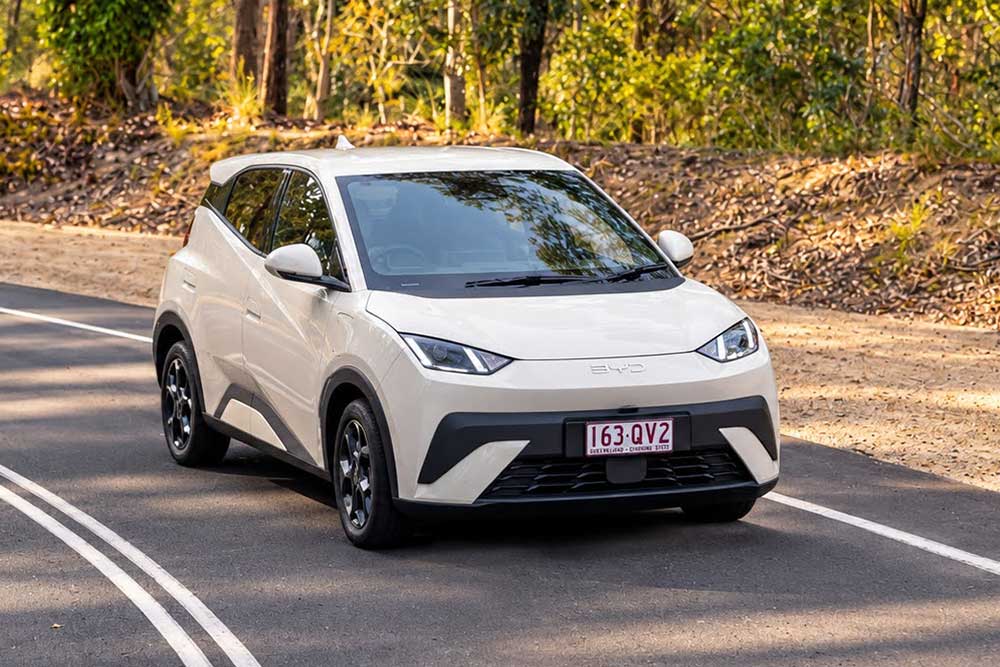
BYD Atto 1 Essential EV
Australians have never had more choice when it comes to affordable electric vehicles (EVs) and BYD has further upped the ante with its keenly priced Atto 1 electric hatch.
The BYD Atto 1 Essential was the lowest-cost vehicle in its category under both conventional finance and novated leasing and takes the overall crown as the most affordable vehicle to own and operate in Queensland. Its win marks a historic transition in the new-vehicle landscape, being the first time a battery-electric vehicle has been crowned our overall winner.
The Atto 1 Essential’s low electricity costs and competitive purchase price saw it beat petrol, hybrid and other electric rivals over the five-year ownership period.
Under conventional financing, the Atto 1 was $236 per month less expensive than the category average, and $2,835 less expensive over a year.
The advantage is even greater for eligible novated leases, where BEVs benefit from FBT exemption.
The entry-level Atto 1 Essential features a single electric motor sending 65kW/175Nm to the front wheels and a 30kWh battery which delivers a modest 220km of range on the WLTP test cycle.
Since the analysis was completed, the Atto 1 Essential was temporarily discounted to $19,990 driveaway, representing a saving of more than $6,000 on the price used in our report.
For those who prefer combustion-power, the Chery Tiggo 4 was the most affordable petrol model, its five-year ownership costs being $5,000 higher than the winning Atto 1 Essential.
See the figures
Medium passenger
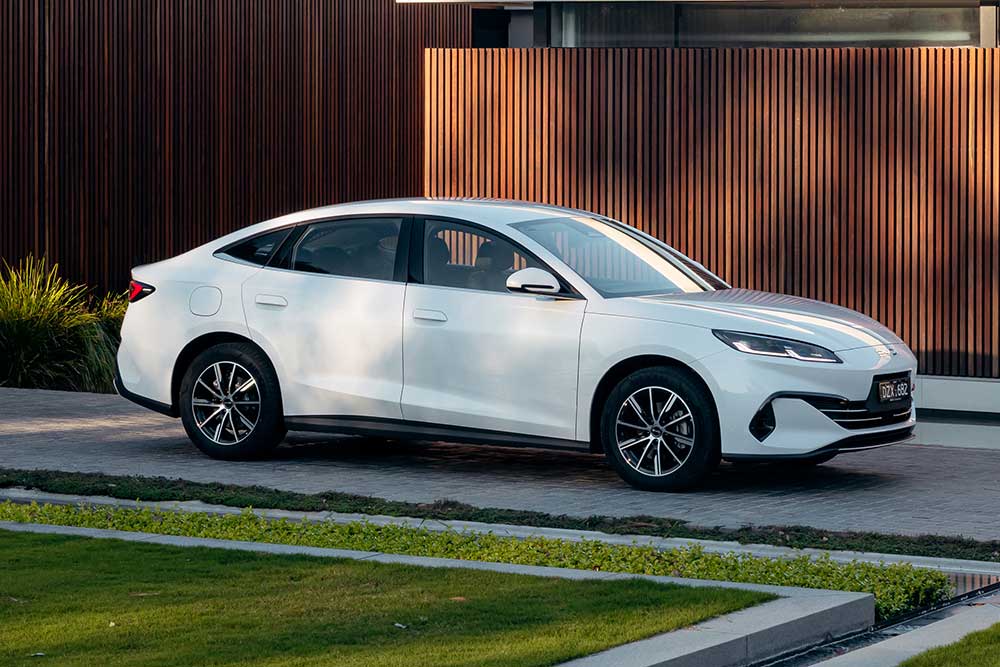
BYD Seal 6 Essential PHEV
Conventional sedans and station wagons have looked in danger of becoming extinct in recent years, swamped by SUVs.
But BYD is keeping faith with the formats, launching the Seal 6 in both body styles. The Seal 6 Essential sedan is the entry point into the two-variant range, undercutting the Touring wagon by $5,000 and claiming the title of lowest-cost medium passenger vehicle.
Under conventional financing, the Seal 6 was $464 per month less expensive than the category average, and $5,567 less expensive over a year.
Both variants feature the same 1.5-litre Atkinson-cycle four-cylinder petrol engine as part of BYD’s widely used DM-i (Dual Motor Intelligent) powertrain, but the Essential sedan gets a smaller 10.08 kWh lithium iron phosphate (LFP) battery delivering a pure electric range of 55km (WLTP).
When fully charged the battery contributes to low 1.1L/100km fuel-consumption, rising to 3.6L/100km when depleted.
Combined petrol-electric outputs for the front-wheel drive sedan are 130kW/210Nm and unlike traditional hybrids where the petrol engine drives the car and the electric motor assists, BYD’s DM-i system uses the electric motor as the primary source of propulsion.
The Seal 6’s relatively low purchase price and low energy costs see it undercut the Toyota Camry hybrid sedan, with operating costs that are lower by $175 monthly, $2103 annually, and $10,513 over five years.
See the figures
Medium SUV
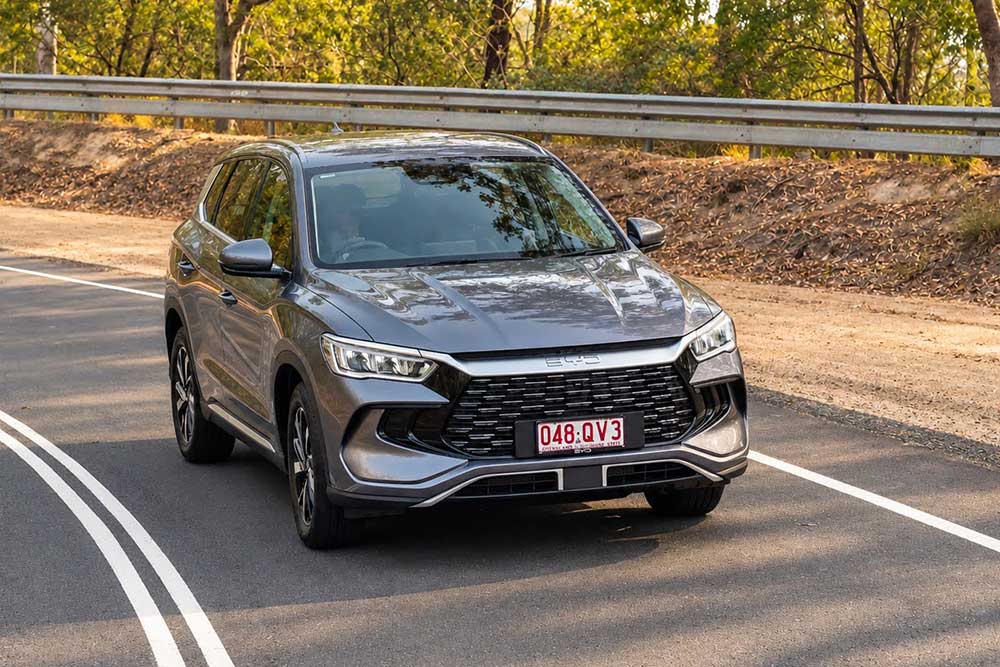
BYD Sealion 5 Essential PHEV
The Medium SUV segment is one of Australia’s most fiercely contested new vehicle categories, with approximately 35 makes and more than 60 models competing for consumer attention.
BYD is well represented with four medium SUVs including the Atto 3 EV, Sealion 5 PHEV, Sealion 6 PHEV and Sealion 7 EV.
The Sealion 5 Essential PHEV emerged as the most cost-effective medium SUV overall under conventional finance.
Under a novated lease the Sealion 5 loses the crown to its smaller stablemate the fully electric BYD Atto 3, illustrating how the FBT exemption can significantly change the relative ownership cost of an EV.
Since our report was finalised the Atto 3 range has been updated with the Essential replaced by the better-equipped and $2,000 more-expensive Evo Dynamic.
Compared with the category average, the Sealion 5 was $236 per month less expensive to own and operate, and $2,828 less expensive over a year.
The Sealion 5 is available in two front-wheel-drive PHEV variants: the entry-level Essential and the higher-grade Premium. Both feature a 1.5-litre petrol four-cylinder engine paired with a front electric motor, delivering combined outputs of 156kW/300Nm.
The Essential’s $4,000 lower price sees it equipped with a smaller 12.9 kWh Blade LFP battery delivering a lower electric drive range of 71km. Fuel consumption is 1.2L/100km (NEDC) with charged battery, or 4.5L/100km when depleted.
See the figures
Large SUV/4x4
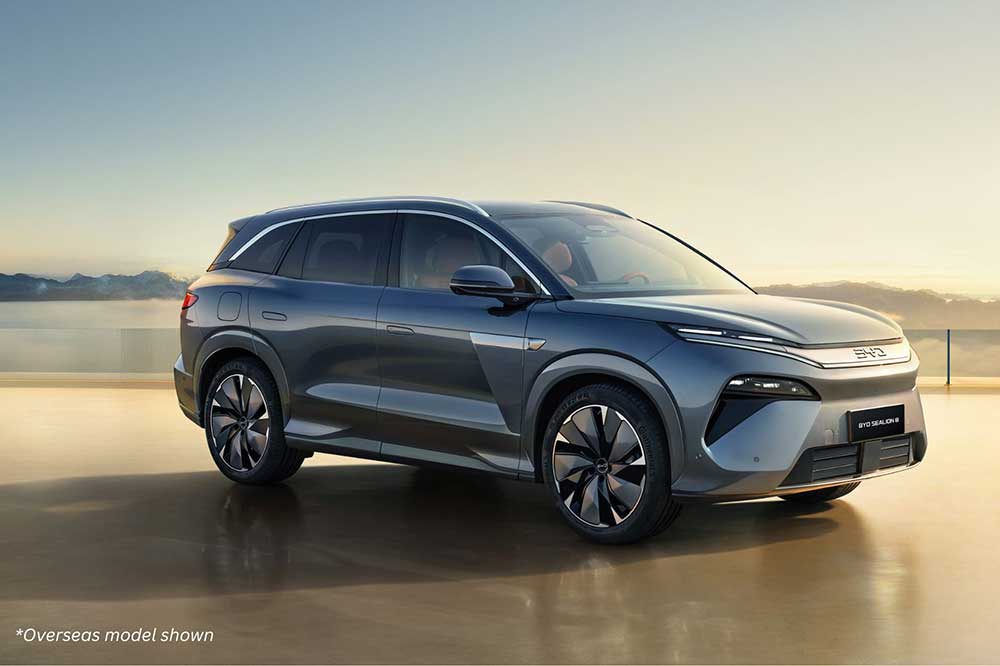
BYD Sealion 8 Dynamic PHEV
The Sealion 8 is yet another new addition to BYD’s burgeoning Australian lineup.
Launched in January 2026 as the brand’s first seven-seater, it takes the fight up to rival large PHEVs including the Mitsubishi Outlander, Mazda CX-80 and Kia Sorento.
Available in entry-level Dynamic Front-Wheel Drive, mid-spec Dynamic All-Wheel Drive, and Premium AWD, the roomy seven-seater’s recommended retail pricing ranges from $56,990 to $70,990.
All three variants feature BYD’s 1.5-litre four-cylinder turbo petrol DM-i powertrain, which in the case of the lower cost Dynamic Front-Wheel Drive variant incudes a smaller 19.0 kWh battery and a front-mounted electric motor.
Combined outputs are 205kW/315Nm, electric-only range is 103km (NEDC) and fuel consumption with a charged battery is 1.1L/100km, rising to approximately 5.3L/100km when the battery is discharged.
The Sealion 8’s combination of low purchase price and low running costs helped it claim the title of our lowest-cost model under both conventional finance and novated leasing, outperforming rival diesel and hybrid-powered large SUVs.
It’s worth noting that this segment includes a mix of both 2WD and AWD SUVs and more heavy-duty 4x4 wagons.
This, to some extent, helps explain why the Sealion 8 was $519 per month less expensive to own and operate than the category average, and $6,227 less expensive over a year when using conventional finance.
See the figures
Light Commercial 4x4
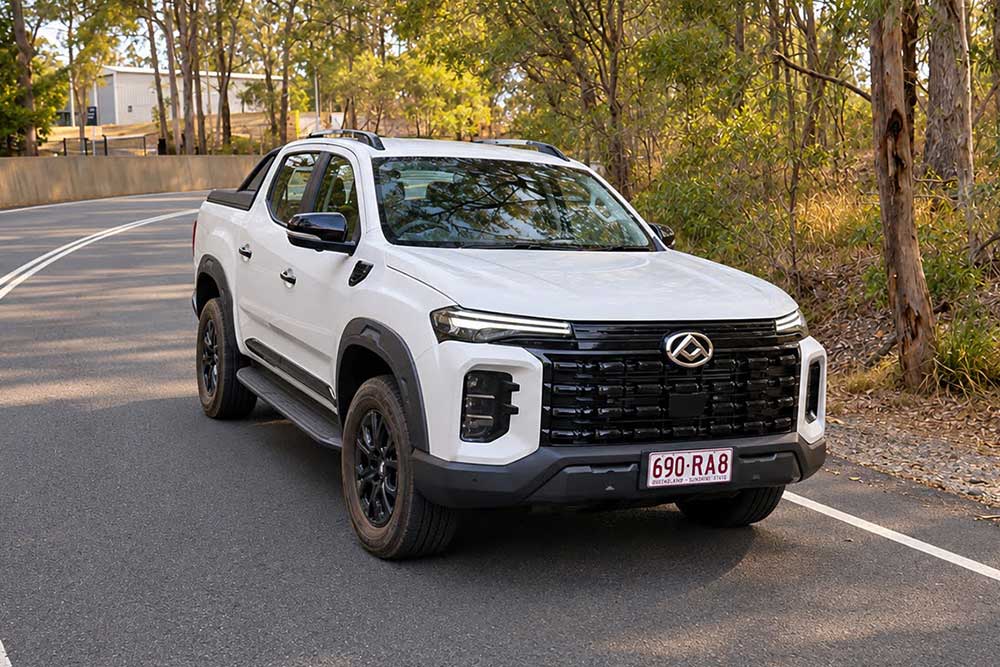
LDV T60 Max Plus
It was only the Light Commercial 4x4 segment and closely-related 4x2 Ute segment that prevented BYD from achieving a clean sweep of VOC 2026.
It was a close-run thing, though, with the BYD Shark 6 Premium dual-cab placing second behind the winning LDV under both conventional finance and novated leasing arrangements.
But the cost-of-ownership plaudits in this segment go to the diesel-powered LDV T60 Max which starts with a circa $9,000 purchase price advantage that helps it edge out the more fuel-efficient Shark 6 by a mere $846 over five years.
Compared with the category average, the LDV T60 Max Plus is $271 per month less expensive to own and operate, and $3,254 less expensive over a year.
The T60 Max variant sits mid-grade in the about-to-be-updated three-variant LDV dual-cab 4x4 lineup, powered by a 2.0-litre four-cylinder bi-turbo
diesel that makes a category-competitive 160kW/500Nm, driving through a ZF eight-speed automatic gearbox.
Combined cycle fuel economy of 8.9L/100km is higher than equivalent diesel-powered segment heavyweights the Toyota HiLux and Ford Ranger but the LDV’s significantly lower purchase price makes that fairly insignificant in the overall operating-costs equation.
A dual-range transfer case and centre differential provide a choice of drive modes including 4x2, full-time 4x4, Auto, plus high and low-range 4x4.
Braked towing capacity is 3,500kg with a payload of 830kg. The LDV T60 Max doesn’t have a current ANCAP rating.
In the separate-but-related Light Commercial 4x2 segment, the Ford Ranger XL 2.0-litre turbo-diesel took the honours ahead of the Mitsubishi Triton GLX and Kia Tasman S.
See the figures

Related topics
Things to note
The information in this article has been prepared for general information purposes only and is not intended as legal advice or specific advice to any particular person. Any advice contained in the document is general advice, not intended as legal advice or professional advice and does not take into account any person’s particular circumstances. Before acting on anything based on this advice you should consider its appropriateness to you, having regard to your objectives and needs.
Insurance Products (excluding Travel Insurance) are issued by RACQ Insurance Limited ABN 50 009 704 152 (RACQI) and arranged by RACQ Distribution Services Pty Ltd (RDS) ABN 35 116 361 650, AFSL 567130 and RDS' authorised representatives (including RACQ Operations Pty Ltd ABN 80 009 663 414, AR No. 234978 (RACQO)). Conditions, limits and exclusions apply.
Any advice provided by RDS and RACQO is general advice only and does not take into account your personal objectives, financial situation or needs and you will need to consider whether the advice is appropriate for you. Read the Product Disclosure Statement (PDS) before making a purchase decision on the product. You can also access our Target Market Determinations on this website.
RDS receives a commission from RACQI for the policies it arranges. RACQO receives fees paid for services it provides to RDS. Further details about remuneration are available on request prior to purchasing.
RACQ Operations Pty Ltd (ABN 80 009 663 414, AR No. 234978) and Members Travel Group Pty Ltd (ABN 45 144 538 803, AR No.432492) (RACQ) are authorised representatives of the RACQ Travel Insurance insurer Tokio Marine & Nichido Fire Insurance Co., Ltd. (ABN 80 000 438 291 AFSL 246 548) (Tokio Marine). Tokio Marine Management (Australasia) Pty Ltd (ABN 69 001 488 455, AR No. 1313066) is an authorised representative of Tokio Marine, and administers RACQ Travel Insurance as the managing agent on behalf of Tokio Marine. Terms, conditions (including eligibility criteria), exclusions, limits and sub-limits apply. Any advice is general advice only, and does not take into account your specific objectives, financial situation or needs. Before you purchase, please consider the Combined Product Disclosure Statement (PDS) / Financial Services Guide (FSG) and Target Market Determinations (TMDs) available at racq.com or on request from RACQ.