
2027 GWM Haval H7 Vanta PHEV Review
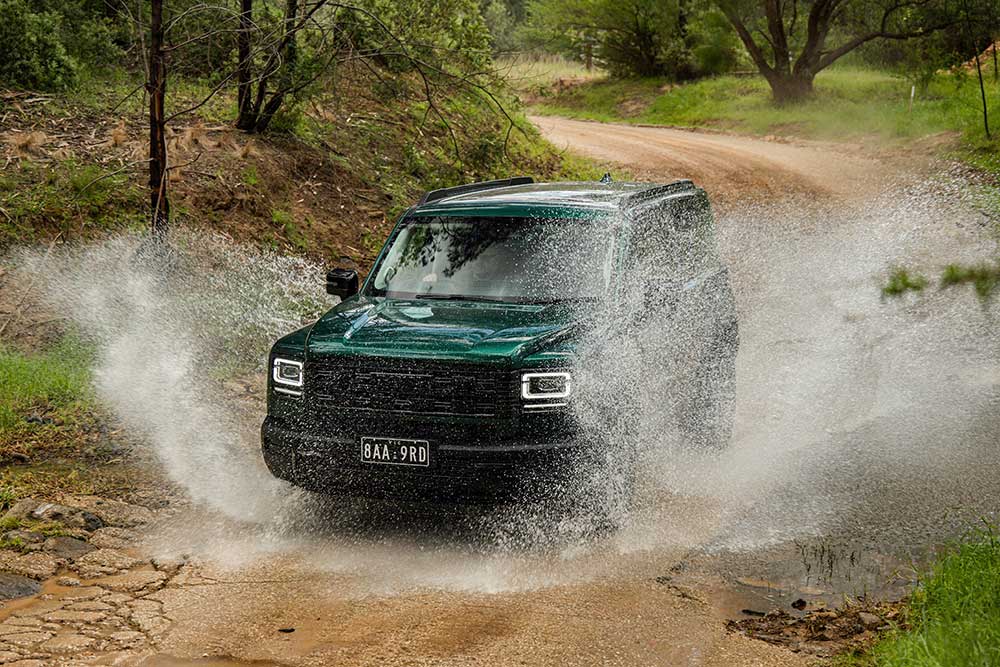
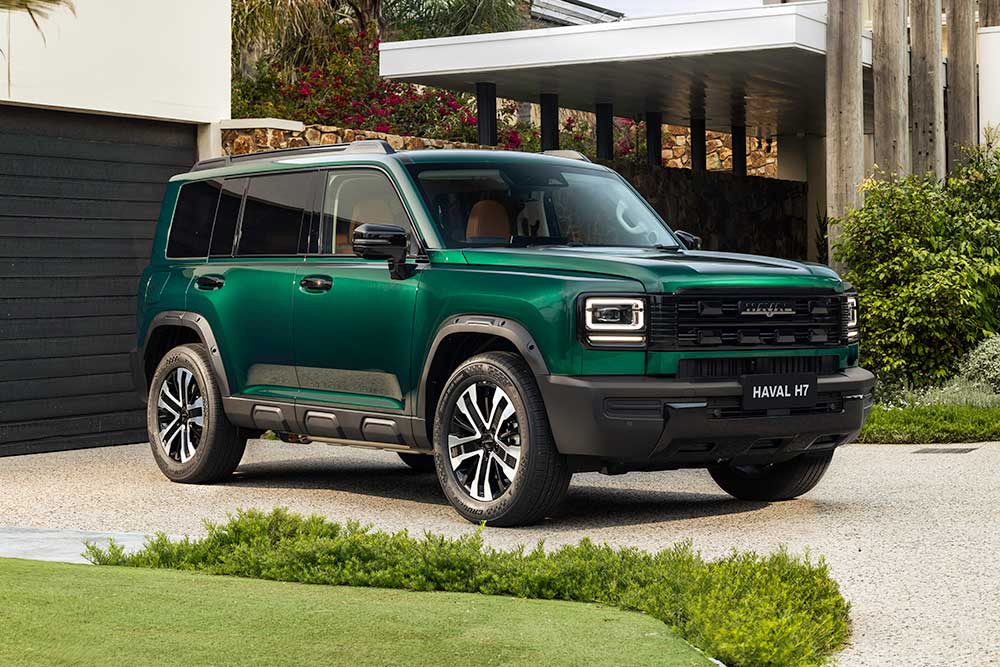
It might look like a fair-dinkum off-roader with its slab-sided body, upright stance, side-hinged tailgate and rear-mounted spare wheel, but the new GWM Haval H7 is very much a soft-roader under the skin.
That's not necessarily a criticism.
Arriving in Australia with the choice of hybrid-electric (HEV) and plug-in hybrid (PHEV) powertrains, the H7 targets buyers who like the image of a traditional four-wheel drive without the weight, fuel consumption and expense typically associated with one.
It combines electrified performance with rugged styling and enough genuine all-terrain hardware to separate itself from the ever-growing army of medium SUVs.
Available in Lux and Vanta grades across both HEV and PHEV powertrains, the H7 range spans prices from $46,990 driveaway to $53,990 driveaway, positioning it aggressively against Japanese rivals such as the Toyota RAV4, Nissan X-Trail, Mitsubishi Outlander and Subaru Forester.
It’s also competitively priced against Chinese rivals like the BYD Sealion 7 and Geely EX5,
At a time when many SUVs have become difficult to distinguish from one another, the H7 stands out, channelling styling elements similar to the Land Rover Defender and Toyota LandCruiser Prado.
There are some compromises, of course, including the fact rear visibility is affected by the spare wheel location, and the ride can feel slightly fidgety on rougher secondary roads.
GWM's messaging around whether this is a soft-roader or an adventure vehicle also feels slightly conflicted.
But as a value-focused electrified SUV with genuine character, the H7 makes an impressive first impression.
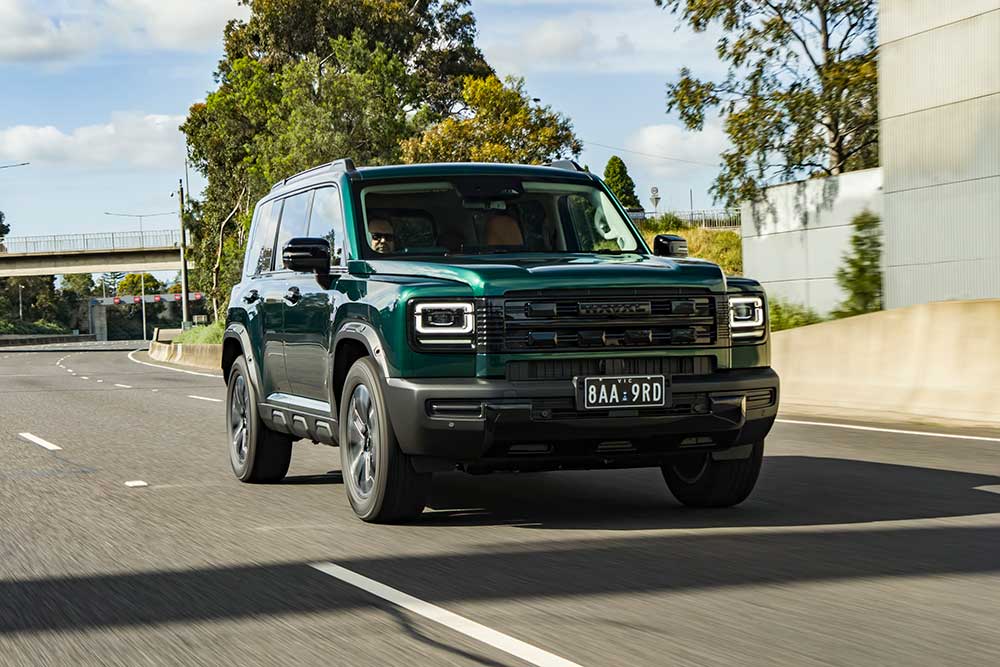
Key specifications
| Item | HEV | PHEV |
|---|---|---|
| Engine | 1.5-litre turbo four-cylinder hybrid | 1.5-litre turbo four-cylinder plug-in hybrid |
| Power | 182kW | 320kW |
| Torque | 670Nm | 670Nm |
| Battery | 1.55kWh | 33.7kWh lithium iron phosphate (LFP) |
| EV Range | N/A | Up to 137km claimed |
| Fuel Consumption | 7.0L/100km | 0.9L/100km |
| Drive Type | AWD | AWD |
| Mechanical Locking Rear Differential | Standard | Standard |
| Towing Capacity | 1500kg braked | 1500kg braked |
| Warranty | 7 years | 7 years |
| Battery Warranty | — | 8 years |
Why the GWM Haval H7 is a different take on the medium SUV
Medium SUVs now represent one of Australia's most fiercely contested market segments. Most focus on practicality, fuel economy and family-friendly packaging.
The H7 doesn't ignore those fundamentals, but it approaches them from a different angle.
Rather than trying to blend in, it leans heavily into a rugged, adventure-inspired aesthetic while simultaneously embracing electrification. That combination gives it a unique position in the market and a point of difference both in the broader medium SUV segment and versus GWM’s own SUV portfolio which includes the Jolion, H6 and H6 GT.
The H7 arrives with a choice of hybrid and plug-in hybrid powertrains right at a time when consumers are increasingly embracing such electrified models over ICE-powered rivals.
How the GWM Haval H7 differs from other soft-roaders
The H7's defining contradiction is that it looks like a proper 4WD and includes hardware such as a mechanical locking rear differential and dedicated off-road modes, yet GWM is adamant that it’s soft-roader and not a proper 4x4.
The lack of a dual-range transfer case is a key feature absent from the H7’s arsenal, of course, but it still features a handy array of standard equipment that should give it better than average all-terrain ability, including:
- All-wheel drive
- Mechanical locking rear differential
- Eight selectable drive modes including terrain settings for Snow, Sand and Mud
- 210mm of ground clearance
- Dedicated off-road displays
- 580mm wading depth.
These features may matter little to most medium SUV buyers who are interested more in their high riding stance and roomy interiors, but the H7 remains one of the more unusual positioning exercises in today's SUV market.
Testing and development
The H7 may be new to Australia, but it isn't an entirely new vehicle globally.
Australian models are based on the Chinese-market Haval Raptor, which has been on sale since 2023. Beneath its rugged bodywork is GWM's familiar LEMON unibody platform, shared with the H6.
The H7 also shares its 2738mm wheelbase with the H6, helping explain the generous cabin accommodation.
Central to the package is GWM's Hi4 electrified AWD system, which combines a turbocharged petrol engine with front and rear electric motors in both the HEV and PHEV variants.
2027 GWM Haval H7 price and running costs
The H7 lineup comprises four variants spread across two trim levels and two different electrified powertrains.
| Variant | Driveaway Price |
|---|---|
| H7 HEV Lux | $46,990 |
| H7 HEV Vanta | $49,990 |
| H7 PHEV Lux | $50,990 |
| H7 PHEV Vanta | $53,990 |
At the time of the H7’s launch in early November 2026, buyers were able to access a limited-time $1000 promotional discount on both the Lux Hybrid and Lux PHEV.
How does the Haval H7’s pricing compare to rivals?
Value is one of the H7's strongest selling points.
At $49,990 driveaway, the flagship H7 Vanta Hybrid sits only $650 above the recommended retail price of Toyota's entry-level RAV4 GX AWD Hybrid.
It's not a like-for-like equipment comparison because the H7 Vanta is much better equipped, but it illustrates how aggressively GWM has priced the H7.
The PHEV comparison is arguably even more compelling.
The H7 Vanta PHEV costs $53,990 driveaway, undercutting the Toyota RAV4 XSE AWD PHEV by more than $9000 while delivering substantially higher outputs of 320kW and 670Nm.
Toyota still enjoys an advantage in terms of its long-established reputation and extensive dealer network, but the H7 counters with stronger performance, a larger 33.7kWh battery versus 22.7kWh, and a claimed electric-only driving range of up to 137km versus the RAV4’s 113km.
As a result, for buyers focused on value, the H7 presents a compelling argument.
Even before factoring in equipment levels, its driveaway pricing places it among the most aggressively priced electrified SUVs in the medium-SUV segment.
This includes the following generous warranty provisions:
- Seven years/unlimited km warranty (vehicle)
- Eight years/ unlimited km (battery)
- Seven years roadside assistance
- Seven years capped-price servicing at $460 per service (first service at 10,000km/12 months, then every 15,000km/12 months).
Exterior design
If there's one area where the H7 immediately excels, it's presence.
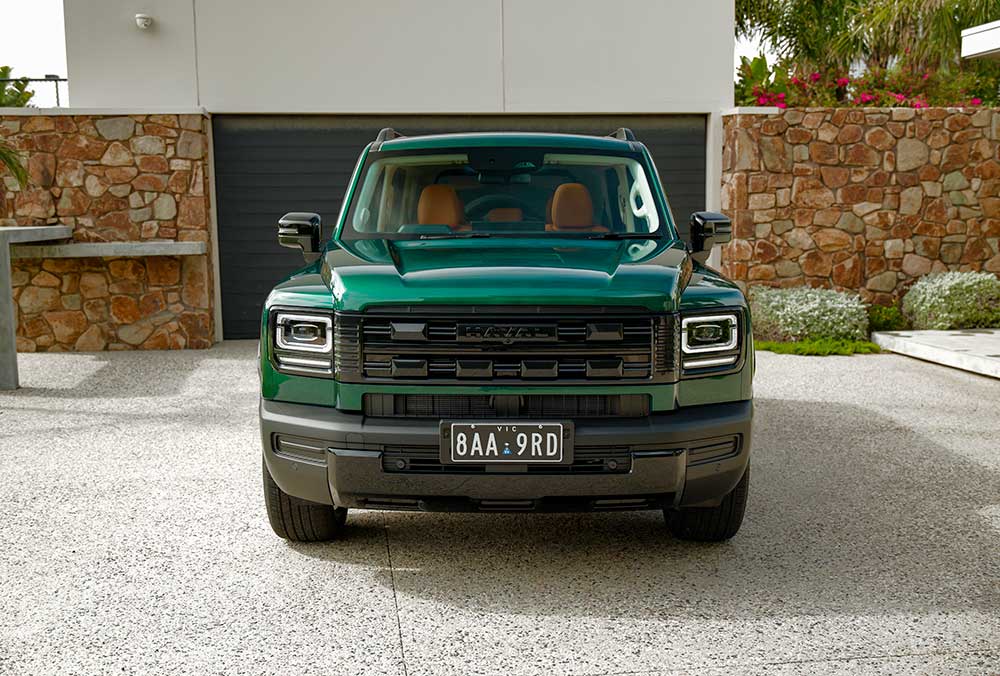
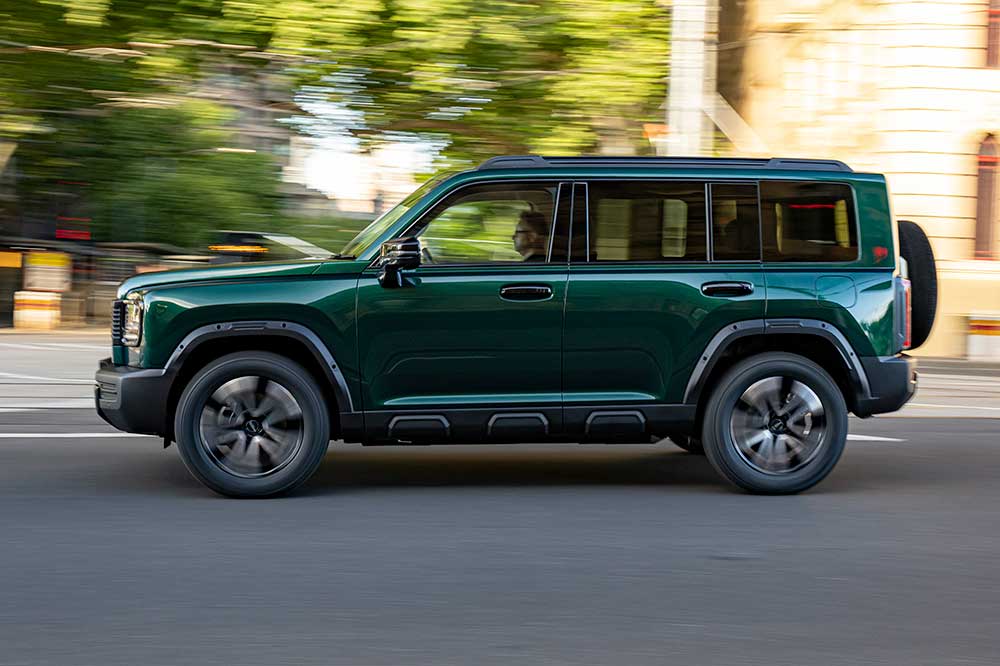
The design is bold, upright and refreshingly different from the rounded shapes that dominate the medium-SUV segment.
From some angles the H7 evokes elements of the Toyota Prado, from others the Land Rover Defender, and others still the Denza B5.
The styling incorporates a number of traditional off-road design cues, including:
- Chunky front and rear bumpers
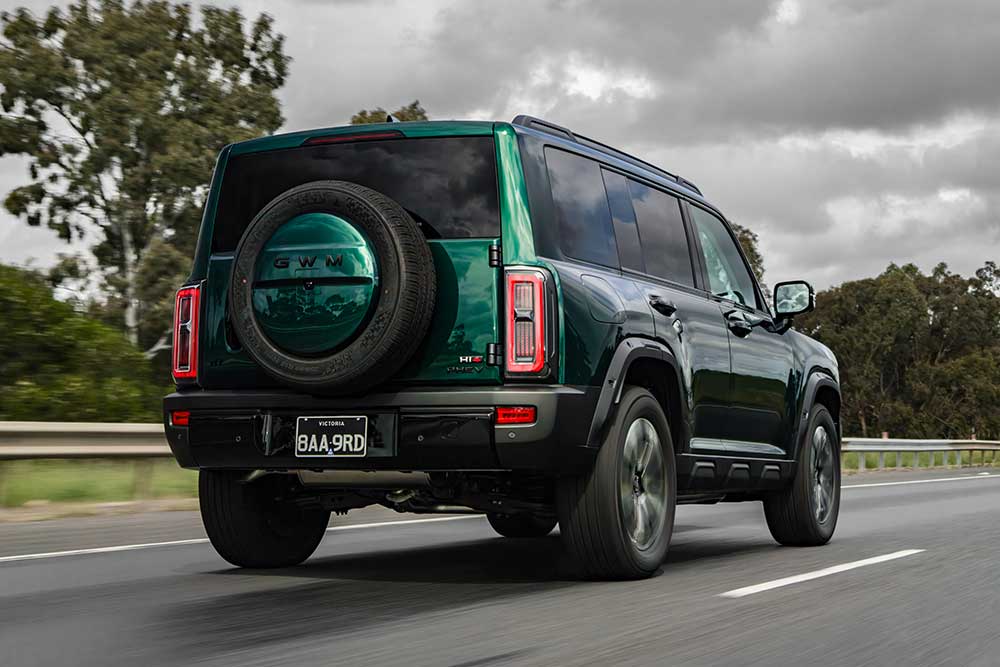
- Side-hinged tailgate
- Externally mounted spare wheel
- Squared wheel arches
- Vertical rear taillights
- Strong shoulder lines
- Upright glasshouse.
In a nutshell, the H7 does an excellent job of looking like a proper four-wheel drive, and this visual differentiation may prove to be one of its greatest strengths.
Buyers wanting something more adventurous-looking than a Toyota RAV4, BYD Sealion 7, Mitsubishi Outlander, or a Nissan X-Trail will likely be drawn to the H7 before they've even looked at the specifications.
Vanta models add further visual aggression through the use of gloss-black exterior detailing, including black badging, mirror caps and trim elements.
One notable downside to the designs is the fact the externally mounted spare wheel compromises rearward visibility. There’s also no electric open-close function for the side-hinged tailgate and the weight of the spare wheel makes it cumbersome to open, especially on any sort of an incline.
Even so, the H7's styling is arguably one of the most successful elements of the overall package.
It looks rugged, distinctive and purpose-built rather than simply relying on black plastic cladding and marketing spin to suggest off-road intent.
Interior design, features and technology
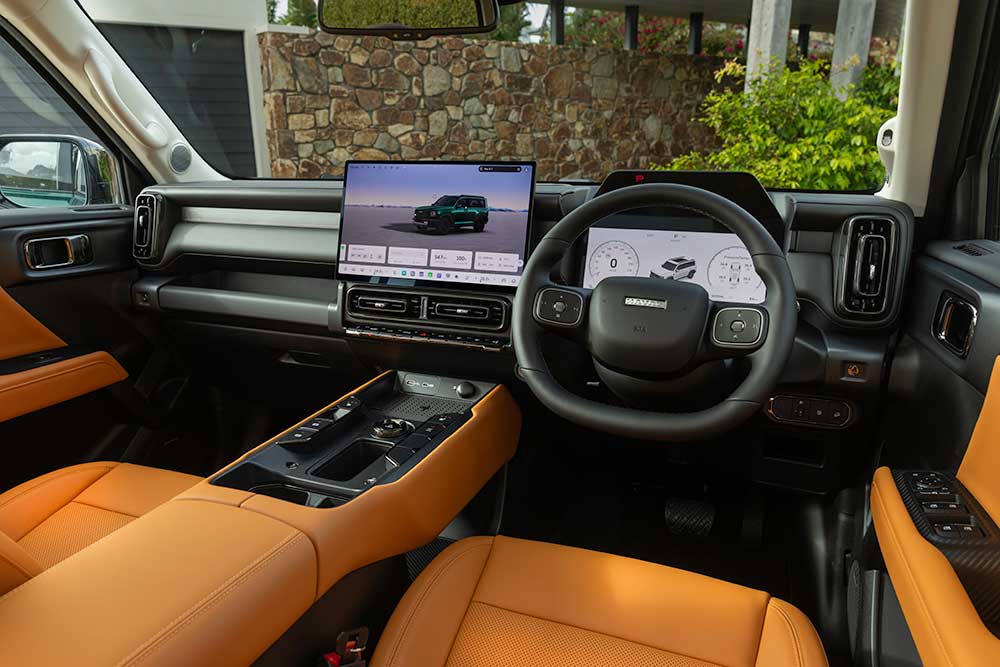
Open the door and the H7 largely delivers on the promise made by its exterior styling.
Rather than simply copying the minimalist approach that has become increasingly common across the SUV market, GWM has given the H7 cabin a bit of personality.
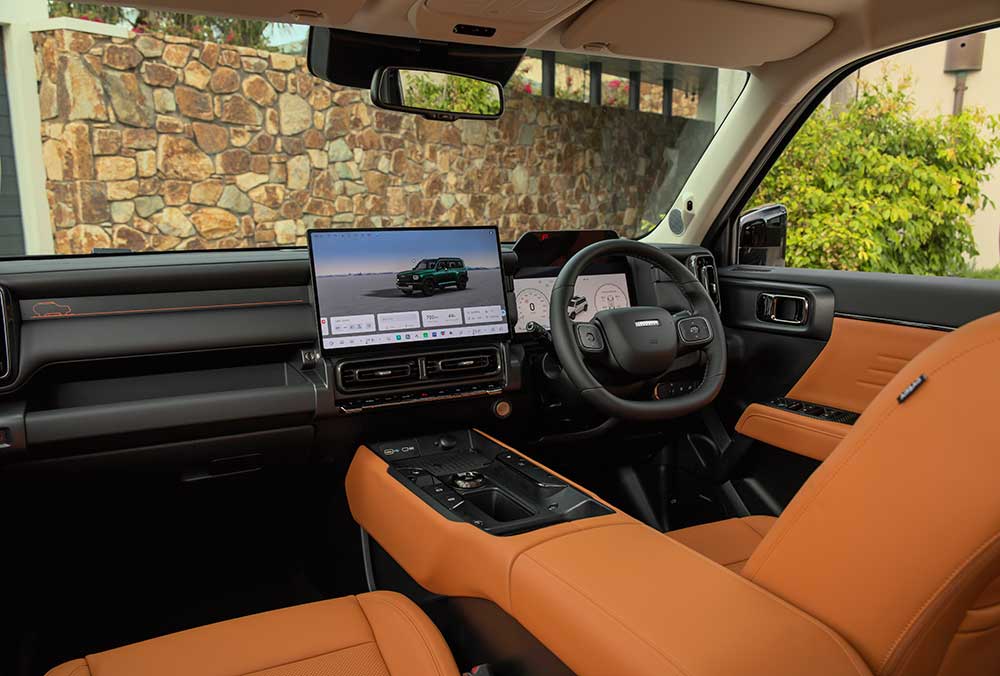
There are several adventure-themed design flourishes scattered throughout the interior, including a Jeep-like vehicle-graphic and integrated grab-handle on the passenger-side dash, and subtle Allen-key-like design details in key locations.
The dash itself is attractively laid out and feels more sophisticated than some of GWM's earlier efforts. Soft-touch materials are used across major touch points, while the light-coloured cream headlining helps create an airy feel inside the cabin.
The dash design retains a row of physical shortcut switch-controls for frequently used functions, reducing the need to constantly interact with the touchscreen while driving.
A column-mounted shifter helps free up space on the centre console, while a dedicated drive mode dial reminds occupants of the H7's more adventurous intentions.
Overall presentation is impressive for the price point and certainly doesn't feel like a budget offering.
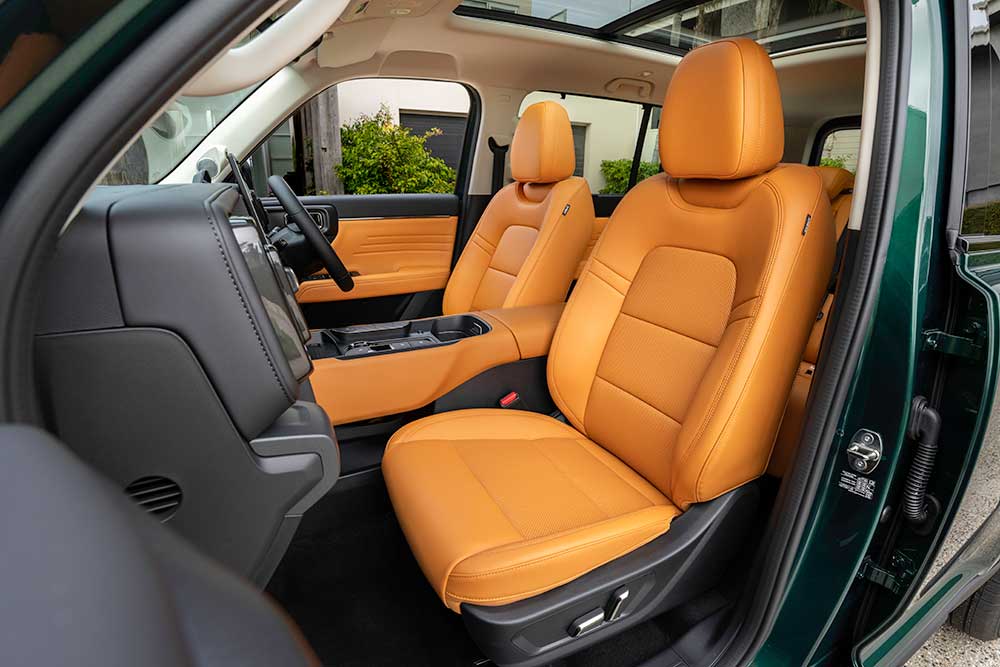
Rear-seat accommodation is generous, benefiting from the H7's long wheelbase, and adult passengers should have few complaints about available space.
Rear-seat features include:
- Rear air vents
- USB-A charging port
- USB-C charging port
- Seat-back map pockets
- Fold-down centre armrest with cupholders.
There are also large B-pillar mounted grab-handles and additional overhead grab handles which may be useful when driving on rough tracks or to aid ingress and egress for persons with restricted mobility.
The high roof and full-length panoramic sunroof contribute to the feeling of interior space, particularly when combined with the light-coloured roof lining. The sunroof comes with an electric shade which will be appreciated in the Queensland heat.
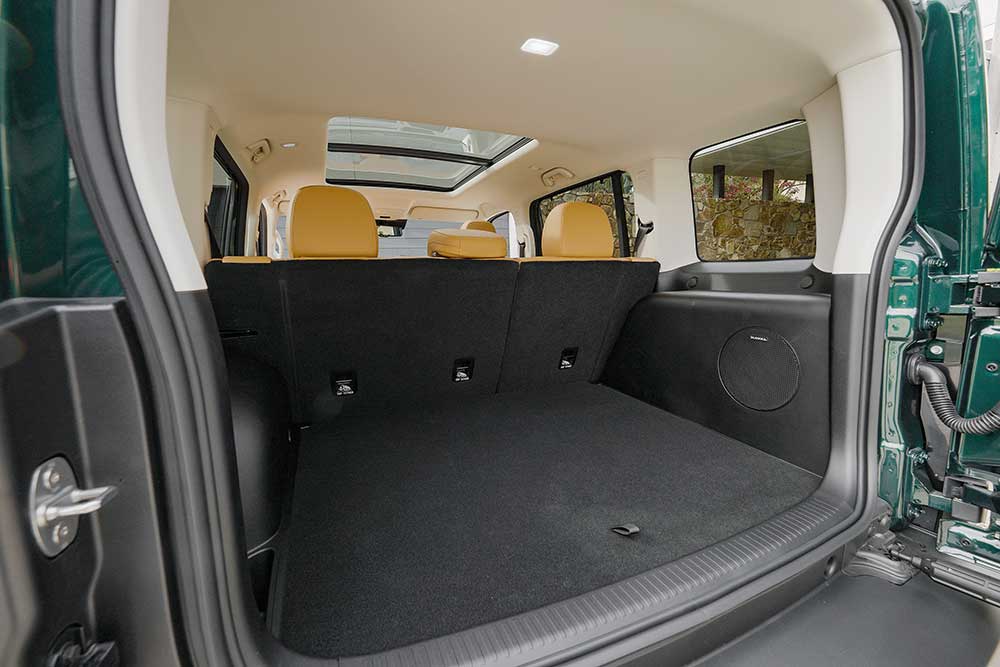
Cargo space is adequate rather than class leading, with 586L of luggage space, expanding to 1,404L with the 60:40 split rear seats folded.
The load floor feels relatively shallow and sits quite high from the ground, however, reducing some practical usability compared with more conventional medium SUVs.
Rear visibility is also compromised by the spare wheel being mounted on the rear door, which limits the view through the back window, particularly when carrying a passenger in the centre rear seat.
Infotainment features
Technology is headlined by a large 15.6-inch central touchscreen running GWM's Coffee OS operating system.
The system supports:
- Wireless Apple CarPlay
- Wireless Android Auto
- Built-in navigation
- Over-the-air software updates
- Voice control functionality
- Wireless smartphone charging.
Ahead of the driver sits a 12.3-inch digital instrument display that can be configured to display a range of vehicle information, including dedicated off-road screens showing pitch, roll and drivetrain data.
The H7 also gains a transparent-view 360-degree camera system designed to improve visibility when manoeuvring off road or in tight urban environments.
Owners can interact with the vehicle through GWM's connected-car smartphone application, which allows remote monitoring of vehicle status, remote locking and unlocking, climate-control activation and charging management functions.
Vanta grades add a number of premium features including:
- Heated front seats
- Ventilated front seats
- Heated steering wheel
- Rear window blinds
- Ambient lighting
- Head-up display
- Premium 10-speaker audio system
- Acoustic laminated glass for the windscreen and front doors.
These additions help differentiate the Vanta from the entry-level Lux and lend the flagship variants a more premium feel.
The GWM Haval H7's performance, engine and towing capacity
The H7's electrified drivetrains are central to its appeal and play a key role in differentiating it from conventional medium SUVs.
Both powertrains utilise GWM's Hi4 intelligent AWD system, combining a turbocharged 1.5-litre four-cylinder petrol engine with front and rear electric motors.
The result is a vehicle that offers competitive performance versus its segment rivals.
While both H7 variants use the same basic 1.5-litre turbocharged four-cylinder petrol engine, the combined system outputs differ substantially depending on whether buyers choose the HEV or PHEV.
The hybrid-electric H7 develops a combined 182kW and 670Nm, with power supplied by the petrol engine working in conjunction with front and rear electric motors.
That's already significantly more output than many direct rivals including the Toyota RAV4 Hybrid AWD which produces 143kW.
The plug-in hybrid elevates performance further. Using the same combustion engine but more powerful electric motors, the H7 PHEV generates a combined 320kW and 670Nm, placing it among the most powerful vehicles in the segment.
Power delivery feels effortless thanks to the immediate torque available, making the H7 feel quicker than its rugged appearance might suggest.
The PHEV's other headline figure is its battery capacity.
A 33.7 kWh lithium iron phosphate (LFP) battery pack allows the H7 PHEV to travel up to 137km (WLTP) on electric power alone, giving owners the potential to complete daily commutes without using petrol at all.
By way of comparison, the Toyota RAV4 AWD PHEV uses a smaller 22.7kWh battery which delivers a claimed electric driving range of 113km (WLTP).
The Haval H7’s fuel consumption is quoted at:
- 7.0L/100km for the HEV
- 0.9L/100km for the PHEV.
As always with plug-in hybrids, the latter figure is achievable only when the battery is regularly charged and used as intended.
Towing capacity
Both HEV and PHEV variants are rated to tow up to 1,500kg braked (750kg unbraked), making them suitable for small boats, camper trailers and general recreational towing duties.
That figure falls short of traditional ladder-frame four-wheel drives such as the Toyota Prado, Ford Everest and GWM Tank 300, but remains competitive for an electrified medium SUV.
For many buyers, the limiting factor is unlikely to be the towing figure itself but rather the intended use.
The H7 has been designed primarily as a lifestyle-oriented SUV rather than a dedicated heavy-duty tow vehicle.
A genuine tow-bar accessory has already been developed for the H7 and joins roof rails among the confirmed accessories currently available.
Safety performance
Safety is an area where the H7 appears well equipped, although an official ANCAP rating was still pending at the time of launch.
GWM says it is targeting a five-star ANCAP safety rating, although buyers should wait for formal assessment results before treating that outcome as confirmed.
Standard safety equipment includes seven airbags comprising:
- Dual front airbags
- Front side airbags
- Curtain airbags
- Centre airbag.
The H7 also incorporates a comprehensive suite of advanced driver-assistance technologies, including:
- Adaptive Cruise Control (ACC)
- Intelligent Cruise Control (ICC)
- Forward Collision Warning (FCW)
- Autonomous Emergency Braking (AEB)
- Lane Keep Assist (LKA)
- Lane Departure Warning (LDW)
- Emergency Lane Keeping (ELK)
- Lane Change Assist (LCA)
- Blind Spot Monitoring
- Rear Cross Traffic Alert
- Door Open Warning
- Traffic Sign Recognition
- Traffic Jam Assist
- High Beam Assist.
Parking and low-speed manoeuvring are supported by:
- Front parking sensors
- Rear parking sensors
- 360-degree surround-view camera.
Buyers shopping in this segment increasingly expect a full suite of driver-assistance technology, and the H7 leaves few boxes unticked. On paper at least, it matches the safety equipment levels offered by the segment's established players.
Upgrades and available accessories
GWM's accessory catalogue for the H7 was still relatively limited at launch, but several key items had already been confirmed.
Available accessories include:
- Genuine tow-bar package
- Roof rails.
The towbar is particularly important given the H7's 1,500kg braked towing capacity and reinforces the vehicle's positioning as an adventure-focused family SUV rather than simply an urban commuter.
Roof rails similarly expand the H7's touring potential, providing a mounting point for roof racks, cargo systems, bike carriers and other lifestyle-oriented equipment.
GWM representatives indicated additional accessories are being considered for the Australian market, although the full local accessory catalogue had not been finalised at the time of launch.
Buyers interested in items such as roof platforms, cargo systems, recovery equipment or model-specific touring accessories should expect the range to expand over time.
The H7 PHEV also offers Vehicle-to-Load (V2L) capability with an output of up to 6kW, allowing owners to power external devices and appliances directly from the vehicle's high-voltage battery.
The GWM Haval H7 driving experience
The H7's styling may be what initially grabs attention, but it is the way the vehicle drives that will ultimately determine whether it succeeds against a growing list of capable medium-SUV rivals.
The brief appears straightforward enough: deliver the visual appeal of a rugged off-roader while maintaining the comfort, refinement and efficiency expected of a modern family SUV.
For the most part, the H7 succeeds.
It’s impressively quiet around town and at suburban speeds, the drivetrain’s electric operation masks much of the noise and vibration associated with conventional ICE-powered SUVs, while the laminated glass fitted to Vanta further assists cabin refinement.
The cabin remains pleasantly hushed on smoother roads and demonstrates a level of sophistication that may surprise buyers unfamiliar with GWM's latest products.
Ride quality is generally well judged.
The suspension manages to keep body movements under control without resorting to excessive firmness and the H7 largely feels composed and comfortable during everyday driving.
However, while the vehicle performs well on smoother roads and highways, rougher secondary roads reveal some weaknesses. Sharp-edged imperfections and patchwork surfaces can occasionally make the suspension feel clunky and slightly fidgety.
It's not overly intrusive but there is a little more vertical movement and impact harshness than some of the segment's most polished competitors.
Steering, braking and handling
The steering is likewise competent but not especially engaging.
Response is predictable enough and the vehicle is easy to place on the road, but feedback through the steering wheel is limited. Around centre there is a degree of numbness that prevents the H7 from feeling particularly connected.
That's unlikely to trouble the typical family-SUV buyer, but keen drivers may notice it.
The wheel and tyre package is 255/60 R19 for both HEV and PHEV variants, with a full-size spare wheel mounted on the side-hinged tailgate which will be appreciated by owners traveling in remote areas or on rough roads.
The cabin is generally well insulated from tyre noise, but coarse-chip bitumen can create some interior rumble and drone.
The combination of a high riding body and soft, ride-oriented suspension mean the H7 is no corner carver. It’s competent but no benchmark dynamically.
Performance, on the other hand, is one area where the H7 impresses.
Even the HEV delivers strong acceleration thanks to its substantial 670Nm torque output. Step into the PHEV and performance becomes genuinely brisk.
The combination of the turbocharged petrol engine and powerful electric motors gives the H7 effortless overtaking ability and strong response when accelerating away from intersections or joining highways.
The PHEV's abundant torque can occasionally overwhelm available grip, allowing the rear tyres to momentarily break traction under hard acceleration before the electronic systems intervene.
Braking performance felt confident during the launch drive and regenerative braking transitions were generally well integrated, helping the electrified drivetrain feel cohesive rather than compromised.
The H7 isn't a sporting SUV, nor does it attempt to be one, but it possesses more performance than many buyers will expect.
Urban, highway and off-road
This is where the H7's identity becomes most interesting.
GWM repeatedly describes it as an AWD SUV rather than a traditional four-wheel drive, yet every H7 receives a mechanical locking rear differential, dedicated off-road displays and multiple terrain modes, including a specific 4WD setting.
That's what makes the H7's positioning slightly confusing.
It carries much of the visual appeal and some of the hardware associated with a genuine off-roader, including that mechanical locking rear differential, but stops short of the body-on-frame construction and low-range gearing that define vehicles such as the Toyota Prado, Ford Everest and GWM's own Tank models.
The kit should ensure the H7 is more capable than the average soft-roader and able to handle limited sand driving, gravel roads, campsite access tracks and general weekend adventures. But the risk is it might tempt some owners to go further off-road than the vehicle is designed for, potentially damaging vulnerable underbody components that are not protected by the usual sturdy plates of dedicated off-roaders.
We didn’t get to drive the H7 off-road but a GWM video was shown during the launch of an H7 being driven up a reasonably challenging track, highlighting the characteristic wheel slip that is common to many electrified AWD systems.
The vehicle ultimately maintained forward progress but seemed to need some wheelspin before the electronics redistributed torque and restored traction.
Forward visibility is excellent thanks to the upright design and large glass area, but rearward visibility is compromised by the spare wheel, becoming more of an issue when carrying a passenger in the centre of the rear seat.
Overall, the H7 strikes an appealing balance. It offers potentially more capability than most mainstream medium SUVs (noting that we didn’t drive it off-road) while remaining quieter, more efficient and easier to live with than a traditional body-on-frame four-wheel drive.
Is the GWM Haval H7 right for you?
At a time when many medium SUVs have converged on a similar formula, the H7 takes a different approach with its individualistic styling.
The side-hinged tailgate, rear-mounted spare wheel and upright proportions give it the sort of visual presence normally associated with dedicated off-road vehicles. The fact it offers standard AWD, a mechanical locking rear differential and multiple terrain modes should endow it with a degree of capability that exceeds what many mainstream soft-roaders offer.
But in the current market it’s the availability of efficient hybrid and plug-in hybrid powertrains in a well-specified package and at a competitive price that will tempt most buyers.
The PHEVs combination of strong performance, substantial battery capacity and lengthy claimed electric driving range gives the H7 a compelling mix of everyday efficiency and long-distance versatility. Buyers able to charge regularly may find themselves completing much of their weekly driving without consuming significant amounts of fuel.
Compromises include the restricted rearward visibility, heavy tailgate and externally mounted spare wheel, and suspension that can feel slightly clunky on rough secondary roads. The steering also lacks some the polish of the best vehicles in this segment.
Buyers seeking a medium SUV with genuine personality, electrified-performance and more adventure-focused capability than most mainstream rivals will find a great deal to like.
More than any individual specification, the H7's ability to convincingly mimic the appearance of a traditional 4WD while delivering the technology, efficiency and practicality modern SUV buyers increasingly expect may ultimately prove to be its greatest selling point.
FAQs about the 2027 GWM Haval H7
What's the GWM Haval H7 like to drive?
The H7 is quiet, comfortable and easy to drive, particularly in PHEV form. The electrified drivetrain delivers strong performance and impressive refinement, while the suspension generally balances comfort and body control well. The ride can become slightly fidgety on rougher secondary roads and the steering lacks some feel but overall, it presents as a capable and pleasant family SUV.
Is the GWM Haval H7 better value than key rivals?
On paper, yes.
The H7 combines competitive driveaway pricing, standard AWD, generous equipment levels and strong warranty coverage. The flagship PHEV also undercuts several plug-in hybrid rivals while offering impressive performance and a substantial battery.
Is the GWM Haval H7 reliable?
It's too early to draw conclusions about long-term reliability, but GWM backs the H7 with a seven-year unlimited-kilometre vehicle warranty and an eight-year battery warranty for PHEV models. The company has also expanded its Australian dealer network significantly in recent years.
Where Is the GWM Haval H7 made?
The Australian H7 is built in China by GWM and is based on the Chinese-market Haval Raptor, which has been on sale since 2023.
How Big Is a GWM Haval H7?
The H7 sits in the heart of the medium-SUV segment and shares its 2738mm wheelbase with the GWM H6. Its upright styling and squared-off bodywork give it a more substantial appearance than many competitors.
Is the GWM Haval H7 suitable for towing and how much can it tow?
Both HEV and PHEV variants are rated to tow up to 1,500kg braked and can be fitted with a genuine tow-bar accessory.
That figure should comfortably handle smaller boats, camper trailers and recreational trailers, although buyers frequently towing large caravans may prefer a vehicle with a higher towing capacity.
What Engine does the GWM Haval H7 have and how does it perform?
All variants use a turbocharged 1.5-litre four-cylinder petrol engine paired with front and rear electric motors through GWM's Hi4 AWD system.
The HEV produces 182kW and 670Nm, while the PHEV develops 320kW and 670Nm. Performance feels strong in both versions, although the PHEV's additional power and larger battery make it the standout choice for buyers wanting maximum performance and electric-driving capability.


More articles
Related topics
Things to note
The information in this article has been prepared for general information purposes only and is not intended as legal advice or specific advice to any particular person. Any advice contained in the document is general advice, not intended as legal advice or professional advice and does not take into account any person’s particular circumstances. Before acting on anything based on this advice you should consider its appropriateness to you, having regard to your objectives and needs.
Insurance Products (excluding Travel Insurance) are issued by RACQ Insurance Limited ABN 50 009 704 152 (RACQI) and arranged by RACQ Distribution Services Pty Ltd (RDS) ABN 35 116 361 650, AFSL 567130 and RDS' authorised representatives (including RACQ Operations Pty Ltd ABN 80 009 663 414, AR No. 234978 (RACQO)). Conditions, limits and exclusions apply.
Any advice provided by RDS and RACQO is general advice only and does not take into account your personal objectives, financial situation or needs and you will need to consider whether the advice is appropriate for you. Read the Product Disclosure Statement (PDS) before making a purchase decision on the product. You can also access our Target Market Determinations on this website.
RDS receives a commission from RACQI for the policies it arranges. RACQO receives fees paid for services it provides to RDS. Further details about remuneration are available on request prior to purchasing.
RACQ Operations Pty Ltd (ABN 80 009 663 414, AR No. 234978) and Members Travel Group Pty Ltd (ABN 45 144 538 803, AR No.432492) (RACQ) are authorised representatives of the RACQ Travel Insurance insurer Tokio Marine & Nichido Fire Insurance Co., Ltd. (ABN 80 000 438 291 AFSL 246 548) (Tokio Marine). Tokio Marine Management (Australasia) Pty Ltd (ABN 69 001 488 455, AR No. 1313066) is an authorised representative of Tokio Marine, and administers RACQ Travel Insurance as the managing agent on behalf of Tokio Marine. Terms, conditions (including eligibility criteria), exclusions, limits and sub-limits apply. Any advice is general advice only, and does not take into account your specific objectives, financial situation or needs. Before you purchase, please consider the Combined Product Disclosure Statement (PDS) / Financial Services Guide (FSG) and Target Market Determinations (TMDs) available at racq.com or on request from RACQ.