
Opinion: Fuel security isn’t one-size-fits-all
Recent events have put Australia’s over-reliance on imported fuel into sharp focus.
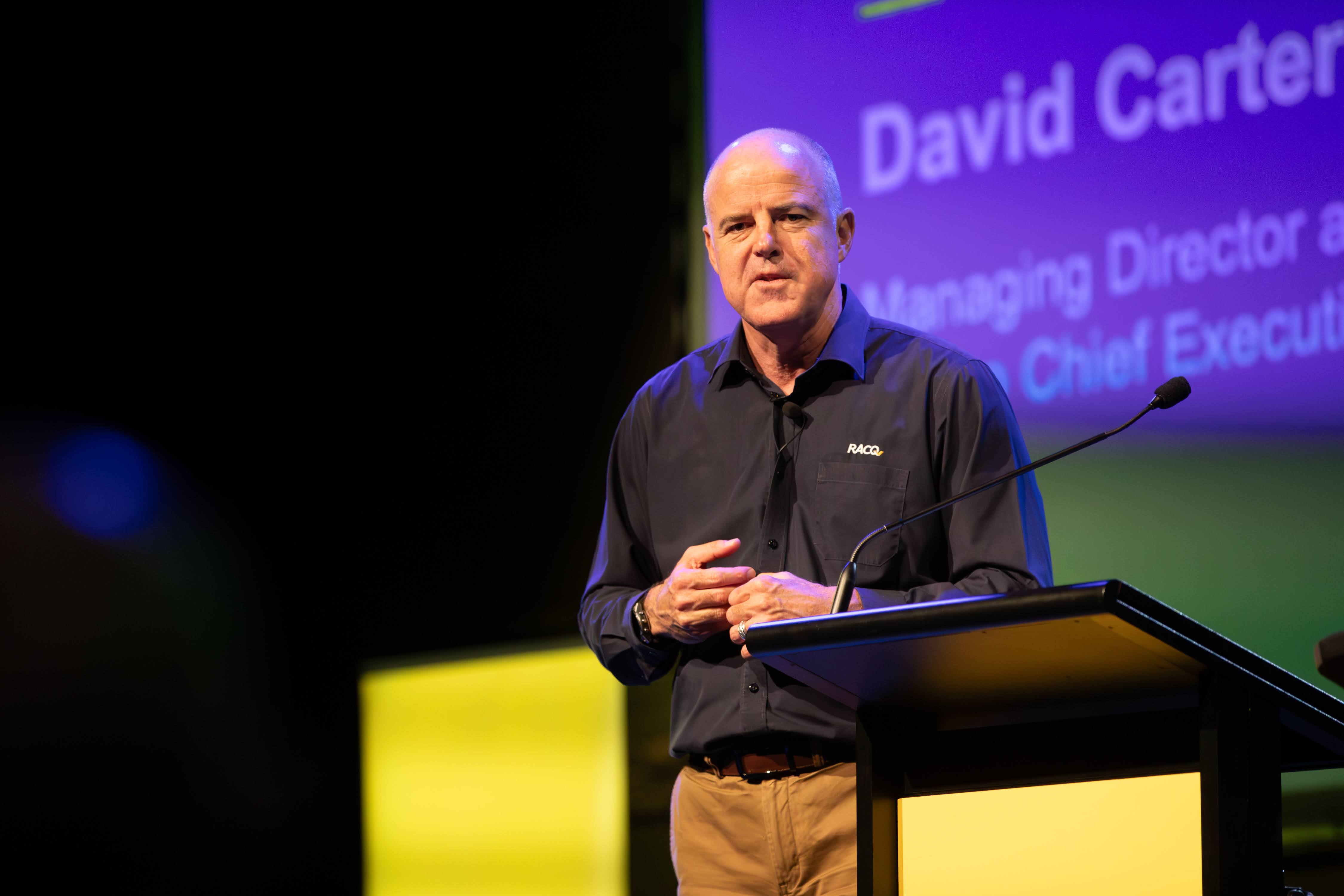
Our country remains highly exposed to supply chain disruptions for both diesel and unleaded. Only a small fraction of our fuel is refined from Australian-sourced crude oil, and even locally refined fuel still depends heavily on imports.
Around 80% of all diesel used in Australia’s transport sector is consumed by industry. When diesel supply tightens, the impact extends well beyond the bowser, driving up food prices and everyday costs for all Australians.
Diesel underpins the movement of food, goods and resources across the country. Farmers, miners and freight operators rely on it to keep shelves stocked and the economy moving.
Increasing on-shore fuel storage to 90 days, at an estimated cost of around $20 billion, would simply delay the problem rather than solve it – and this still assumes global shipping continues to flow freely.
At RACQ, we believe there’s a lower cost path to achieving greater resilience by being more strategic in our choices.
First, Australia must reduce its reliance on imported energy for transport and industry through greater electrification and biofuel production and adoption.
Second, we need a smarter, more targeted approach for moving people – one that reflects how and where Australians live.
In metropolitan areas across Queensland, electrification should be prioritised and supported by better public transport. Reforms that make public transport genuinely affordable are already changing travel behaviour.
TransLink data shows patronage in South East Queensland has increased by 18% since 50-cent fares were introduced. But affordability alone isn't enough – public transport must also be fast, reliable and direct to make it a more attractive option.
Investment in safer pathways for walking, running, cycling and scooting can further reduce fuel demand altogether.
For regional Queenslanders who travel longer distances and need larger vehicles for safety, long-range hybrids using unleaded blended with ethanol offer immediate benefits. Unleaded blended with ethanol is safe, reliable and compatible with most vehicles.
Queensland has an abundance of capacity to produce biofuels and electricity.
Incentivising local biofuel and ethanol production would support regional economies and reduce reliance on imported petrol.
True energy resilience doesn’t come from stockpiling imports. It comes from making strategic choices, followed by investment and execution.
Related topics
Things to note
The information in this article has been prepared for general information purposes only and is not intended as legal advice or specific advice to any particular person. Any advice contained in the document is general advice, not intended as legal advice or professional advice and does not take into account any person’s particular circumstances. Before acting on anything based on this advice you should consider its appropriateness to you, having regard to your objectives and needs.
Insurance Products (excluding Travel Insurance) are issued by RACQ Insurance Limited ABN 50 009 704 152 (RACQI) and arranged by RACQ Distribution Services Pty Ltd (RDS) ABN 35 116 361 650, AFSL 567130 and RDS' authorised representatives (including RACQ Operations Pty Ltd ABN 80 009 663 414, AR No. 234978 (RACQO)). Conditions, limits and exclusions apply.
Any advice provided by RDS and RACQO is general advice only and does not take into account your personal objectives, financial situation or needs and you will need to consider whether the advice is appropriate for you. Read the Product Disclosure Statement (PDS) before making a purchase decision on the product. You can also access our Target Market Determinations on this website.
RDS receives a commission from RACQI for the policies it arranges. RACQO receives fees paid for services it provides to RDS. Further details about remuneration are available on request prior to purchasing.
Banking and loan products issued by Members Banking Group Limited ABN 83 087 651 054 AFSL/Australian credit licence 241195 trading as RACQ Bank. Terms, conditions, fees, charges and lending policies apply. This is general advice only and may not be right for you. This information does not take your personal objectives, circumstances or needs into account. Read the disclosure documents for your selected product or service, including the Financial Services Guide and the Terms and Conditions, and consider if appropriate for you before deciding.
Except for RACQ Bank, any RACQ entity referred to on this page is not an authorised deposit-taking institution for the purposes of the Banking Act 1959 (Cth). That entity’s obligations do not represent deposits or other liabilities of RACQ Bank. RACQ Bank does not guarantee or otherwise provide assurance in respect of the obligations of that entity, unless noted otherwise.
RACQ Bank subscribes to the Customer Owned Banking Code of Practice which establishes higher standards than the law requires. The Code reflects modern consumer expectations and developments in approaches to issues such as consumer vulnerability, guarantors, and supporting customers through financial hardship. Please read our Customer Owned Banking Code of Practice page for more information.
RACQ Operations Pty Ltd (ABN 80 009 663 414, AR No. 234978) and Members Travel Group Pty Ltd (ABN 45 144 538 803, AR No.432492) (RACQ) are authorised representatives of the RACQ Travel Insurance insurer Tokio Marine & Nichido Fire Insurance Co., Ltd. (ABN 80 000 438 291 AFSL 246 548) (Tokio Marine). Tokio Marine Management (Australasia) Pty Ltd (ABN 69 001 488 455, AR No. 1313066) is an authorised representative of Tokio Marine, and administers RACQ Travel Insurance as the managing agent on behalf of Tokio Marine. Terms, conditions (including eligibility criteria), exclusions, limits and sub-limits apply. Any advice is general advice only, and does not take into account your specific objectives, financial situation or needs. Before you purchase, please consider the Combined Product Disclosure Statement (PDS) / Financial Services Guide (FSG) and Target Market Determinations (TMDs) available at racq.com or on request from RACQ.