
Kia launches new Seltos Hybrid SUV
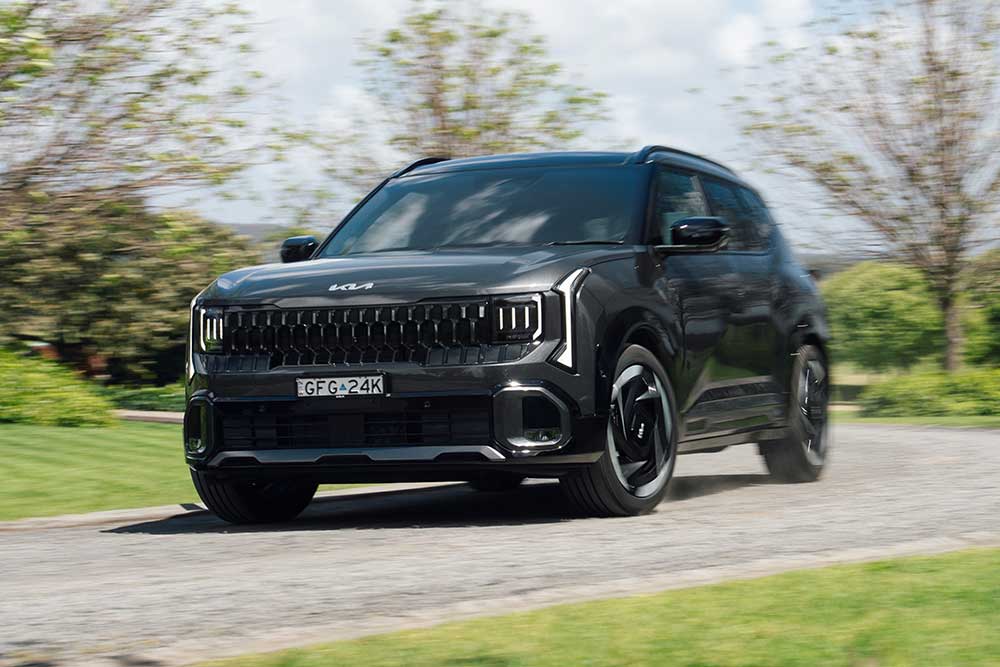
With Aussies adopting electrified vehicles at record levels, Kia has rolled out a fresh contender in the form of the Seltos Hybrid SUV.
Key takeaways
- All new Kia Seltos Light SUV gains hybrid powertrain.
- Five variant lineup comprises S, Sport, Sport+, GT-Line FWD and GT-Line AWD.
- Driveaway pricing from $39,990 to $55,490.
- 1.6-litre four-cylinder hybrid-electric, 112kW/265Nm.
- Fuel consumption from 5.1 to 5.4L/100km depending on variant.
- New looks, expanded dimensions, enhanced practicality.
Kia has launched a fresh hybrid contender into the roiling waters of the intensely competitive Light SUV segment with the promise of roomier accommodation and lower running costs designed to tempt buyers away from key rivals.
The first-ever hybrid-power Seltos debuts a new 1.6-litre HEV powertrain across the five-variant lineup with four of the models driving their front wheels and the range-topping GT-Line AWD the singular all-paw model.
Built on Kia's latest K3 platform, the Seltos boasts striking new looks, expanded dimensions and enhanced connectivity compared to its predecessor.
But it’s the promise of lower running costs courtesy of its thriftier hybrid powertrain that’s the key selling point.
The five-variant Seltos lineup comprises S, Sport, Sport+, GT-Line FWD and GT-Line AWD, with driveaway prices starting at $39,990 and rising to $55,490.
Technically, there’s also a sixth variant as the Seltos S can be optioned with Safety Pack which adds $2430 to its driveaway price, settling at $42,420.
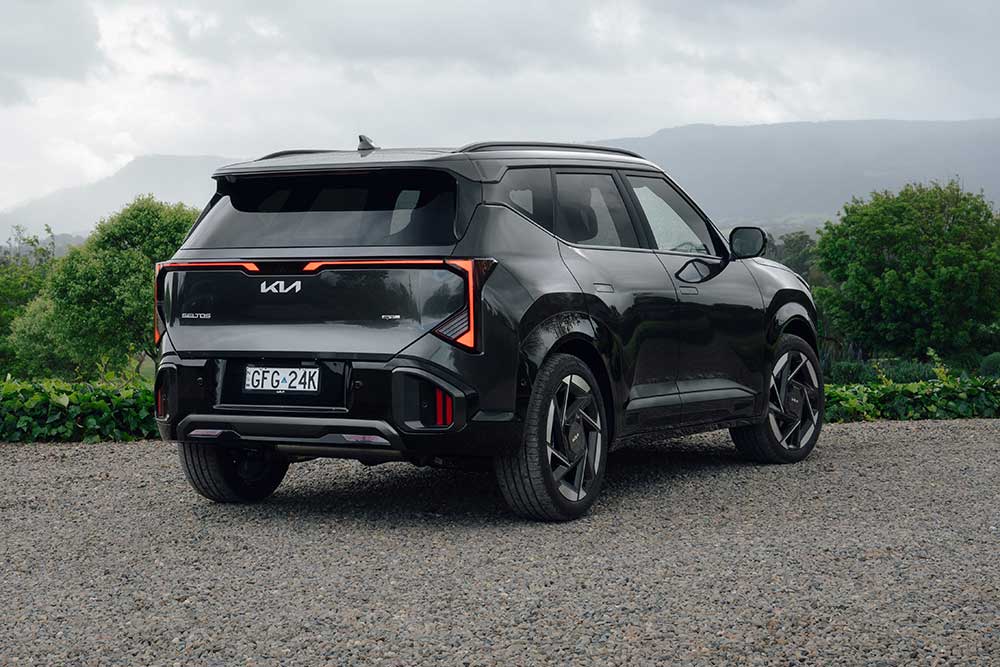
All variants are powered by the same 1.6-litre four-cylinder hybrid-electric engine, developing 112kW/265Nm and driving through a six-speed dual-clutch transmission.
Drive goes to the front-wheels on all bar the range-topping Seltos GT-Line AWD, which as the name suggests drives both front and rear axles.
Unlike traditional all-wheel-drive systems that utilise a mechanical driveshaft to transmit power between the front and rear axles, the GT-Line uses an e-AWD system featuring a dedicated rear electric motor operating independently from the front powertrain which boosts combined power outputs to a healthier 126kW.
Fuel consumption varies slightly across model grades, with the 16-inch alloy-wheel equipped Seltos S the most efficient 2WD model at 5.1L/100km, rising to 5.4L/100km for the GT-Line FWD which is heavier and rides on 18-inch alloys.
The 19-inch alloy-wheel equipped GT-Line AWD is the least fuel-efficient variant at 5.8L/100km.
Dynamically, the new Kia promises improvements to ride and handling courtesy of the K3 platform which is claimed to deliver greater body rigidity and improved structural integrity, while revised suspension geometry and steering calibration are aimed at improving ride and handling.
On the style front, the new Seltos isn’t in any danger of being mistaken for its predecessor thanks to an all-new design that introduces vertically-oriented headlamps and daytime running lights which contribute to a wider visual stance, as does the broad grille treatment.
In side view, the athletic-looking silhouette features pronounced body lines, black wheel arch cladding and lower body mouldings, and flush-fit door handles.
At the rear, a full-width light signature and integrated roof spoiler are notable design elements.
The Seltos’s expanded dimensions mean it could almost step up to the medium-SUV segment where Kia’s larger Sportage SUV does battle against category heavyweight the Toyota RAV4.
The 2,690mm wheelbase is 30mm longer than the old model and identical to that of the current Toyota RAV4.
Likewise, its overall length of 4,430mm is 45mm longer than the old model although still shy of the RAV4’s 4,600mm. Overall width at 1,830mm is +30mm on the old model, but 25mm less than the narrowest RAV4.
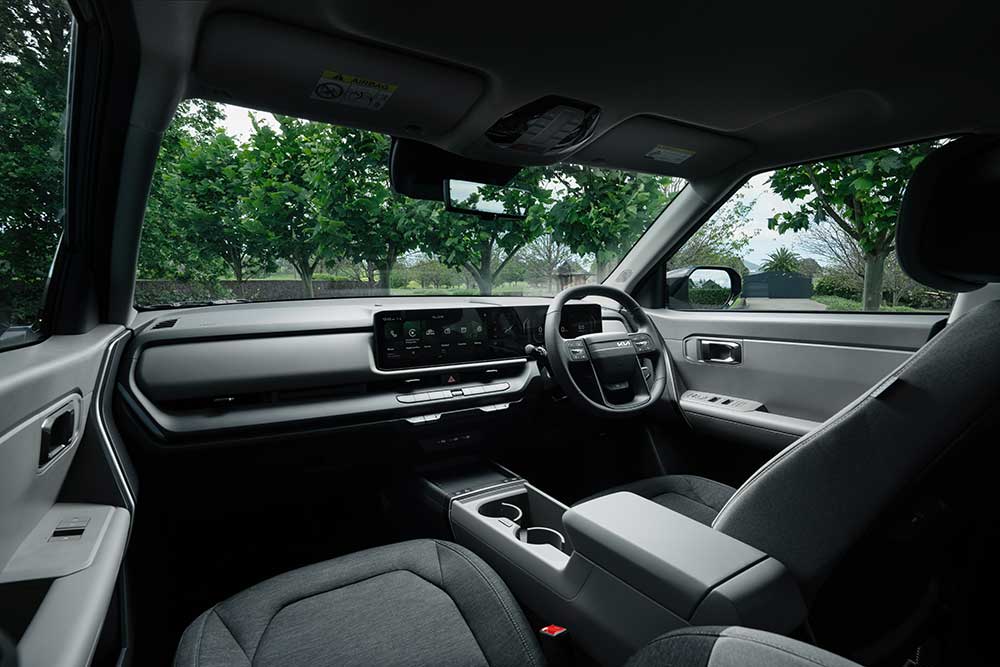
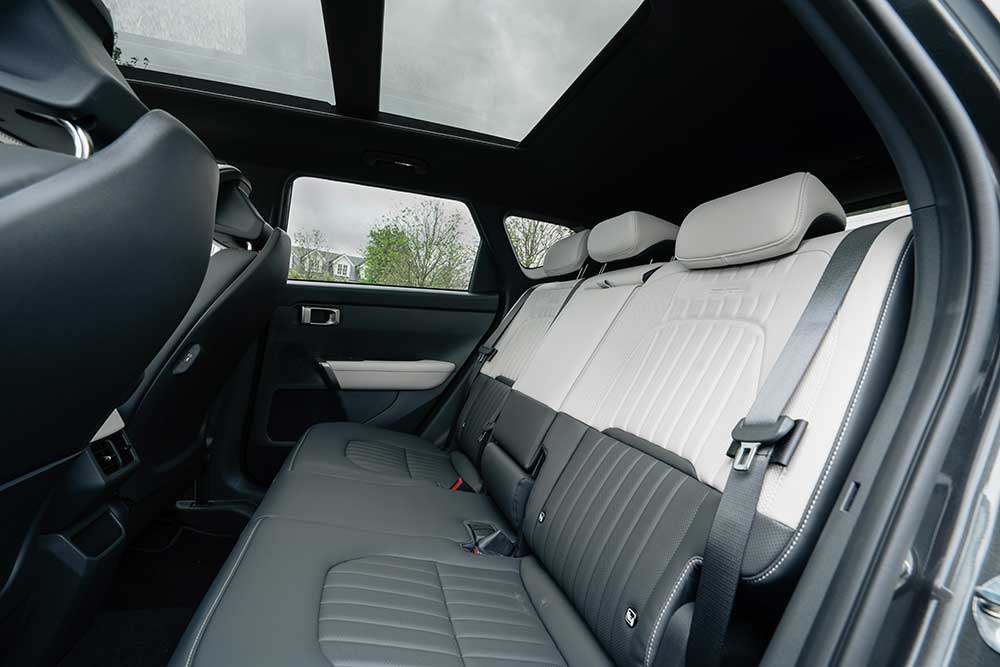
Interior dimensions have all been expanded, with the new Seltos boasting more headroom in both rows (+12 and +14mm respectively), plus more second row legroom (+25mm). ,
There’s also increases to shoulder room in both front (+26mm) and rear (+12mm) seats.
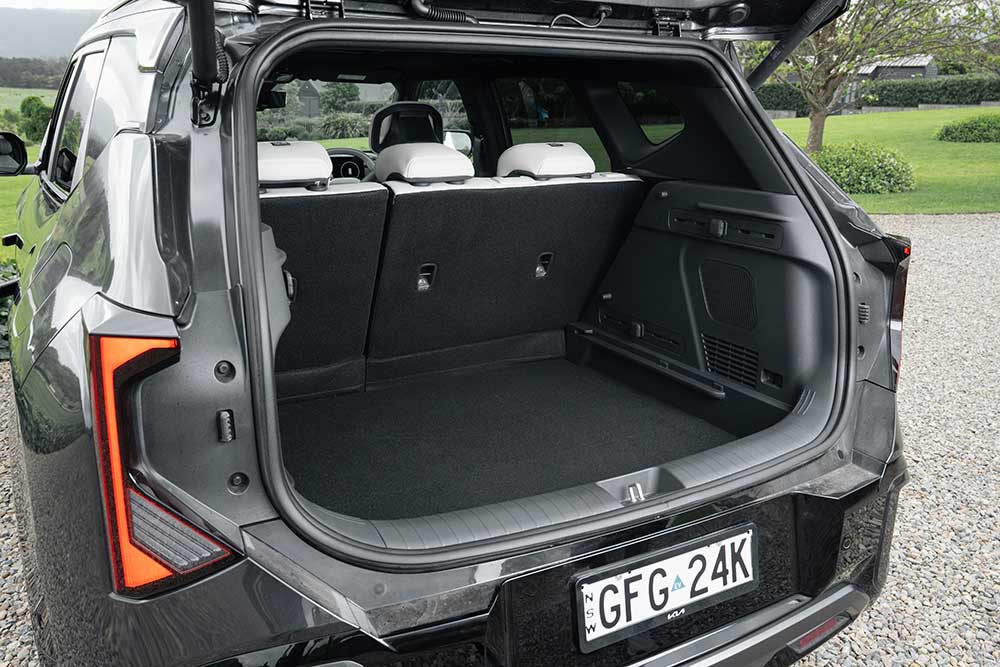
Crucially, for family buyers, luggage space has also been expanded to 483 litres (+15L) with the rear seats up and 1441 litres (+13L) with the rear seats down (measured to the VDA standard).
Comfort and convenience features on all models include reclining second-row seats, rear USB-C charging ports and dual-zone climate control.
Stepping up to Sport+ and beyond brings heated front seats, while the top-grade GT-Line adds ventilated front seats and a heated steering wheel.
Other notable features of the GT-Line include artificial leather-appointed seating, a head-up display, Harman/Kardon premium audio, mesh headrests, a panoramic sunroof, ambient mood lighting, wireless smartphone charging and a smart power tailgate.
All Seltos variants models feature wireless as well as wired Apple CarPlay and Android Auto phone mirroring ability, and all come with Kia Connect which enables remote control of functions including presetting climate control.
The new Seltos also gains Over the Air (OTA) update capability for other connected features.
When it comes to the broader market segment in which it competes, the entry-level Selto S’s driveway pricing matches current deals on key rival the Hyundai Kona Smartstream Hybrid FWD, and slightly undercuts the estimated $34,002 driveaway pricing for the Mazda G20 Pure FWD Auto, although there’s no hybrid powertrain available in the Mazda range.
But as with so many other segments of the Australian new car market it’s Chinese rivals that are price leaders in the Light SUV segment, with the Chery Tiggo 4, GWM Haval Jolion and MG ZS Hybrid leading the charge.
The Chery Tiggo 4 Hybrid Urban undercuts the Seltos S with its $29,990 drive-away pricing, as does the GWM Haval Jolion Premium Hybrid ($29,990 to $32,990 drive-away), and the MG ZS Excite Hybrid+ (28,990 to $30,990 drive-away).


More articles
Related topics
Things to note
The information in this article has been prepared for general information purposes only and is not intended as legal advice or specific advice to any particular person. Any advice contained in the document is general advice, not intended as legal advice or professional advice and does not take into account any person’s particular circumstances. Before acting on anything based on this advice you should consider its appropriateness to you, having regard to your objectives and needs.
Insurance Products (excluding Travel Insurance) are issued by RACQ Insurance Limited ABN 50 009 704 152 (RACQI) and arranged by RACQ Distribution Services Pty Ltd (RDS) ABN 35 116 361 650, AFSL 567130 and RDS' authorised representatives (including RACQ Operations Pty Ltd ABN 80 009 663 414, AR No. 234978 (RACQO)). Conditions, limits and exclusions apply.
Any advice provided by RDS and RACQO is general advice only and does not take into account your personal objectives, financial situation or needs and you will need to consider whether the advice is appropriate for you. Read the Product Disclosure Statement (PDS) before making a purchase decision on the product. You can also access our Target Market Determinations on this website.
RDS receives a commission from RACQI for the policies it arranges. RACQO receives fees paid for services it provides to RDS. Further details about remuneration are available on request prior to purchasing.
Banking and loan products issued by Members Banking Group Limited ABN 83 087 651 054 AFSL/Australian credit licence 241195 trading as RACQ Bank. Terms, conditions, fees, charges and lending policies apply. This is general advice only and may not be right for you. This information does not take your personal objectives, circumstances or needs into account. Read the disclosure documents for your selected product or service, including the Financial Services Guide and the Terms and Conditions, and consider if appropriate for you before deciding.
Except for RACQ Bank, any RACQ entity referred to on this page is not an authorised deposit-taking institution for the purposes of the Banking Act 1959 (Cth). That entity’s obligations do not represent deposits or other liabilities of RACQ Bank. RACQ Bank does not guarantee or otherwise provide assurance in respect of the obligations of that entity, unless noted otherwise.
RACQ Bank subscribes to the Customer Owned Banking Code of Practice which establishes higher standards than the law requires. The Code reflects modern consumer expectations and developments in approaches to issues such as consumer vulnerability, guarantors, and supporting customers through financial hardship. Please read our Customer Owned Banking Code of Practice page for more information.
RACQ Operations Pty Ltd (ABN 80 009 663 414, AR No. 234978) and Members Travel Group Pty Ltd (ABN 45 144 538 803, AR No.432492) (RACQ) are authorised representatives of the RACQ Travel Insurance insurer Tokio Marine & Nichido Fire Insurance Co., Ltd. (ABN 80 000 438 291 AFSL 246 548) (Tokio Marine). Tokio Marine Management (Australasia) Pty Ltd (ABN 69 001 488 455, AR No. 1313066) is an authorised representative of Tokio Marine, and administers RACQ Travel Insurance as the managing agent on behalf of Tokio Marine. Terms, conditions (including eligibility criteria), exclusions, limits and sub-limits apply. Any advice is general advice only, and does not take into account your specific objectives, financial situation or needs. Before you purchase, please consider the Combined Product Disclosure Statement (PDS) / Financial Services Guide (FSG) and Target Market Determinations (TMDs) available at racq.com or on request from RACQ.