
Chery reveals world’s first plug-in hybrid diesel ute
Chery is challenging industry norms with the world’s first diesel plug‑in hybrid ute.
Long before hybrids and plug-in hybrids became the preferred path to more efficient motoring, diesel-powered vehicles were the kings of fuel efficiency.
In Europe diesel-powered passenger vehicles of all types dominated the market between 2000 and 2017, with the flow-on effect seen in Australia mainly with diesel-powered SUVs.
Toyota’s bet on hybrid technology
About the same time diesel was growing in popularity in Europe, Toyota was developing its own fuel-saving technology for petrol-powered vehicles, launching the first-generation Prius hybrid in 1997.
By 2012 when diesel reached its peak of 55% of passenger vehicle sales in Europe, Toyota was onto its third-generation Prius and had begun adding the technology to other models including the Lexus GS 450h, Toyota Highlander/Kluger and the Camry.
It’s history now that Toyota’s bet on hybrid technology has paid off handsomely.
As of early 2020, the Japanese giant had sold over 15 million hybrid electric vehicles (HEVs) worldwide and its local range is increasingly dominated by hybrid-powered models.
Why hybrid technology hasn’t progressed in diesel commercial vehicles
One segment where Toyota hasn’t really looked to implement hybrid technology is commercial vehicles, which Toyota dominates in Australia but which remain almost exclusively diesel-powered.
The closest Toyota has come to bringing its diesel and hybrid technologies together is the 24-volt mild-hybrid Toyota HiLux, which stops short of the full series-parallel hybrid systems the brand uses elsewhere across its range.
Among the reasons why hybrid-electric diesels haven’t become a ‘thing’ are:
- Higher expense (diesels are already costly to build)
- Marginal fuel benefit (diesels are already efficient)
- Strong low-rev torque (reduces hybrid advantages)
- Diesel emissions systems needing consistent high temperatures, not stop/start behaviour.
For these and several other valid reasons, diesel-powered vehicles are rarely fitted with hybrid electric systems.
Chery breaks convention with a diesel plug-in hybrid ute
But someone obviously forgot to tell that to Chery, which recently announced the impending Australian launch of what it says will be the world’s first ute fitted with a plug-in hybrid (PHEV) diesel.
Chery revealed the styling of its new ute at an event in Sydney, dubbing the dual-cab 4x4 concept the KP31, but subsequently launching a promotion to help name the vehicle through a nationwide competition, with the prize of a new Chery ute for the winner.
Design and features of the Chery diesel PHEV
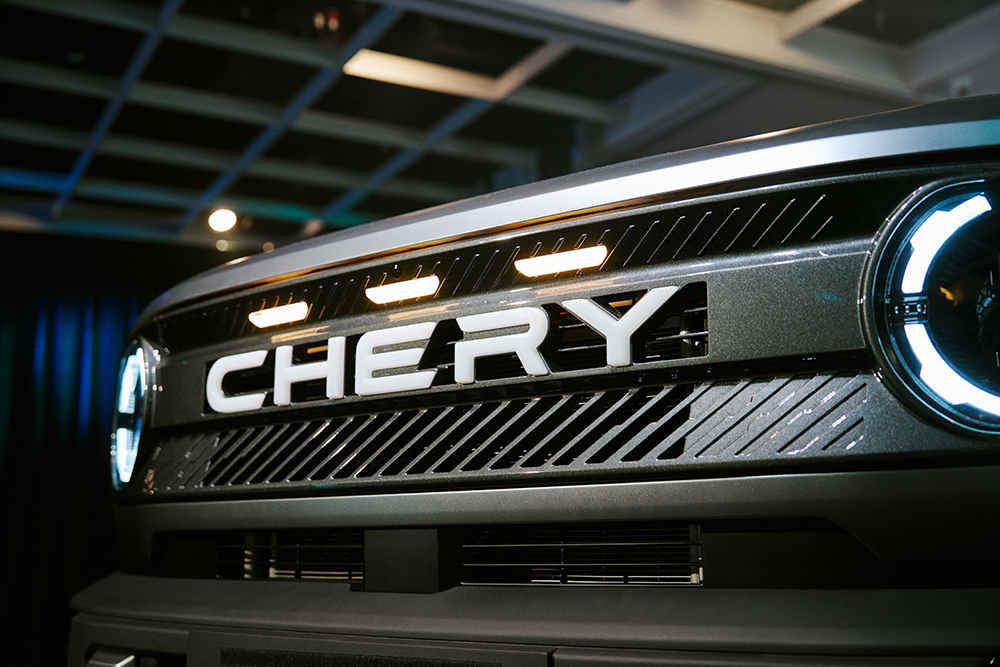
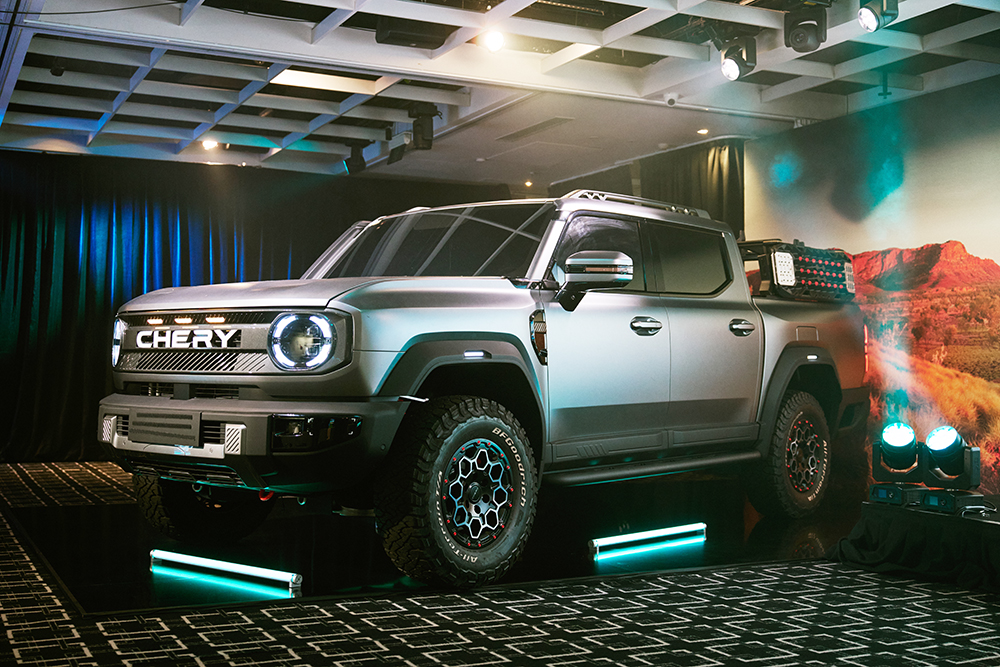
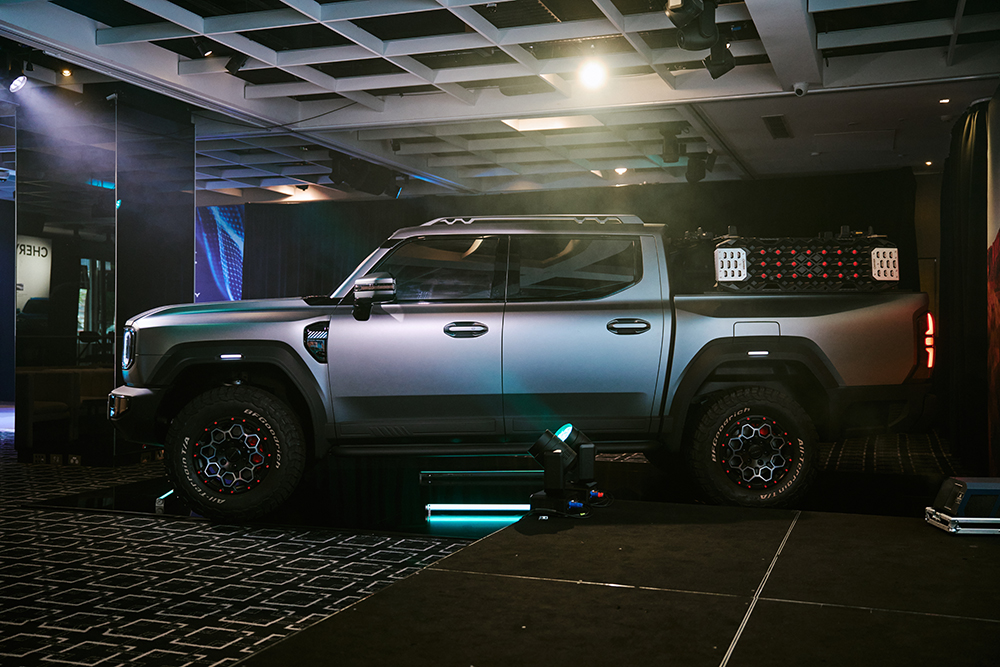
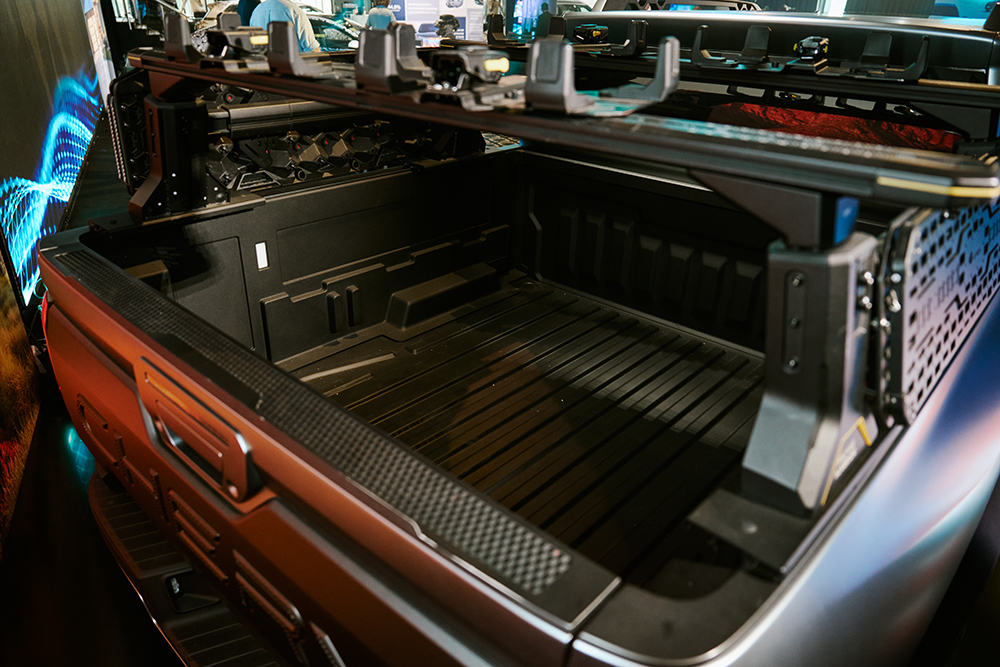
While the physical appearance of the new diesel PHEV ute was on full display at the static reveal, featuring bold CHERY lettering at the front and rear, a snorkel, chunky 285/70 R17 all-terrain tyres, and a tub rack with 4x4 recovery tracks, Chery was less forthcoming with the technical details.
What the Chinese car maker did share was that the vehicle will feature a 2.5-litre turbocharged diesel engine which it claims offers class-leading thermal efficiency of 47%, while also being 10% more fuel efficient compared to the ‘average’ diesel powertrain.
Understanding diesel thermal efficiency
Thermal efficiency is the ratio of useful mechanical power output to the chemical energy input from fuel – or put more basically a measure of how effectively an engine converts fuel into movement.
Higher thermal efficiency means:
- Lower running costs
- Improved fuel economy
- Reduced emissions.
Most modern heavy-duty diesel engines operate around 40-46% thermal efficiency, versus 25-35% for petrol engines, so Chery’s claims place its engine at the high end of current automotive performance metrics.
Payload, towing and dimensions
Beyond this, what we can tell you about Chery’s new ute is that it is slated to launch later this year with a competitive 1,000kg payload, a 3.5-tonne towing capacity, and NVH levels that are claimed to be 30% lower than an ‘average’ diesel powertrain.
Dimensionally, the production version of the KP31 concept will measure 5,450mm long, by 1,920mm wide, and stand 1,925mm tall, making it similar in size to the best-selling Ford Ranger.
Chery’s future plans
Chery also promised that its diesel PHEV ute would be joined by a petrol PHEV model in 2027, signalling the next chapter in an ambitious growth strategy that saw the brand notch up 34,889 sale in 2025, an increase of almost 177% on 2024.



More articles
Related topics
Things to note
The information in this article has been prepared for general information purposes only and is not intended as legal advice or specific advice to any particular person. Any advice contained in the document is general advice, not intended as legal advice or professional advice and does not take into account any person’s particular circumstances. Before acting on anything based on this advice you should consider its appropriateness to you, having regard to your objectives and needs.
Insurance Products (excluding Travel Insurance) are issued by RACQ Insurance Limited ABN 50 009 704 152 (RACQI) and arranged by RACQ Distribution Services Pty Ltd (RDS) ABN 35 116 361 650, AFSL 567130 and RDS' authorised representatives (including RACQ Operations Pty Ltd ABN 80 009 663 414, AR No. 234978 (RACQO)). Conditions, limits and exclusions apply.
Any advice provided by RDS and RACQO is general advice only and does not take into account your personal objectives, financial situation or needs and you will need to consider whether the advice is appropriate for you. Read the Product Disclosure Statement (PDS) before making a purchase decision on the product. You can also access our Target Market Determinations on this website.
RDS receives a commission from RACQI for the policies it arranges. RACQO receives fees paid for services it provides to RDS. Further details about remuneration are available on request prior to purchasing.
Banking and loan products issued by Members Banking Group Limited ABN 83 087 651 054 AFSL/Australian credit licence 241195 trading as RACQ Bank. Terms, conditions, fees, charges and lending policies apply. This is general advice only and may not be right for you. This information does not take your personal objectives, circumstances or needs into account. Read the disclosure documents for your selected product or service, including the Financial Services Guide and the Terms and Conditions, and consider if appropriate for you before deciding.
Except for RACQ Bank, any RACQ entity referred to on this page is not an authorised deposit-taking institution for the purposes of the Banking Act 1959 (Cth). That entity’s obligations do not represent deposits or other liabilities of RACQ Bank. RACQ Bank does not guarantee or otherwise provide assurance in respect of the obligations of that entity, unless noted otherwise.
RACQ Bank subscribes to the Customer Owned Banking Code of Practice which establishes higher standards than the law requires. The Code reflects modern consumer expectations and developments in approaches to issues such as consumer vulnerability, guarantors, and supporting customers through financial hardship. Please read our Customer Owned Banking Code of Practice page for more information.
RACQ Operations Pty Ltd (ABN 80 009 663 414, AR No. 234978) and Members Travel Group Pty Ltd (ABN 45 144 538 803, AR No.432492) (RACQ) are authorised representatives of the RACQ Travel Insurance insurer Tokio Marine & Nichido Fire Insurance Co., Ltd. (ABN 80 000 438 291 AFSL 246 548) (Tokio Marine). Tokio Marine Management (Australasia) Pty Ltd (ABN 69 001 488 455, AR No. 1313066) is an authorised representative of Tokio Marine, and administers RACQ Travel Insurance as the managing agent on behalf of Tokio Marine. Terms, conditions (including eligibility criteria), exclusions, limits and sub-limits apply. Any advice is general advice only, and does not take into account your specific objectives, financial situation or needs. Before you purchase, please consider the Combined Product Disclosure Statement (PDS) / Financial Services Guide (FSG) and Target Market Determinations (TMDs) available at racq.com or on request from RACQ.