
Not all EVs get home on their lab range
The latest round of Real-World testing by the AAA and RACQ turns its focus to EVs with surprising results.
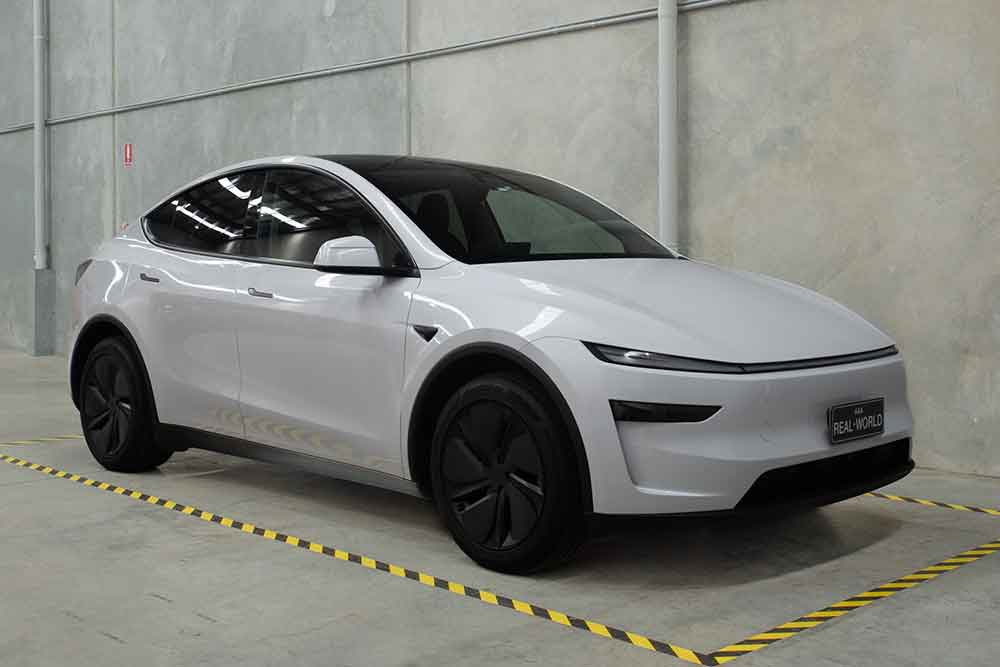
Range anxiety remains one of the biggest barriers to more widespread consumer adoption of electric vehicles (EVs), with new test results from Australia’s peak motoring body confirming that the real-world range of most EVs it has evaluated falls short of the manufacturers advertised claims.
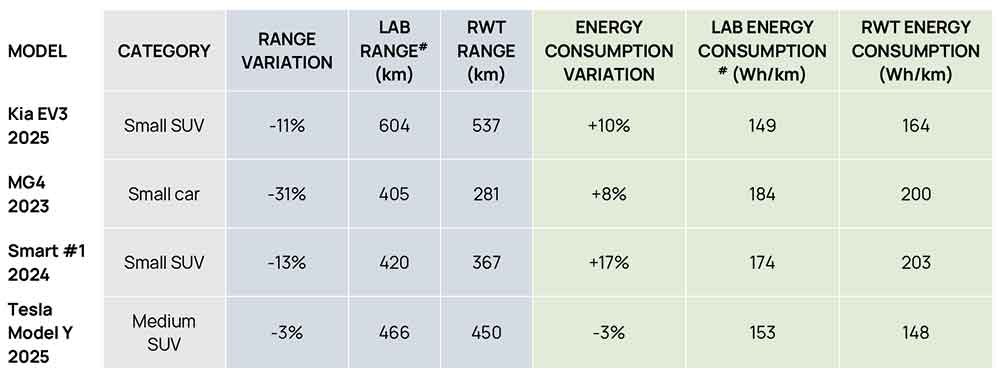
The Australian Automobile Association (AAA) said its independent testing of four new electric vehicles found their real-world driving range to be between 3% and 31% shorter than the official laboratory test results reported by carmakers.
In the latest results, the Tesla Model Y 2025 performed closest to its laboratory test result with a real-world driving range of 450km, which is 3% (or 16km) less than the distance recorded in its lab test.
At the other end of the spectrum, the MG4 2023 recorded the biggest variation from its lab test, with a real-world range of 281km, which is 31% (or 124km) less than the range reported on its mandated windscreen sticker.
EV testing helps keep buyers informed
AAA polling shows 60% of people identifying as likely EV buyers nominate concerns about vehicle range and recharging as “the main concerns or hesitations” preventing them from choosing an EV.
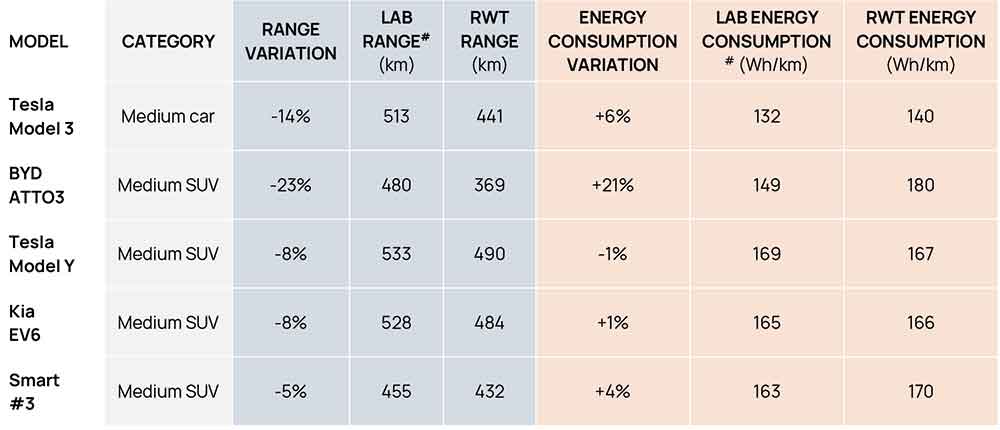
The organisation’s Real World Testing Program has now evaluated nine EVs, finding each had an on-road range shorter than the results recorded in mandatory laboratory testing, and that there were significant variations between models.
AAA Managing Director Michael Bradley said the results gave consumers an independent indication of real-world battery range, which meant they could now know which cars perform as advertised and which do not.
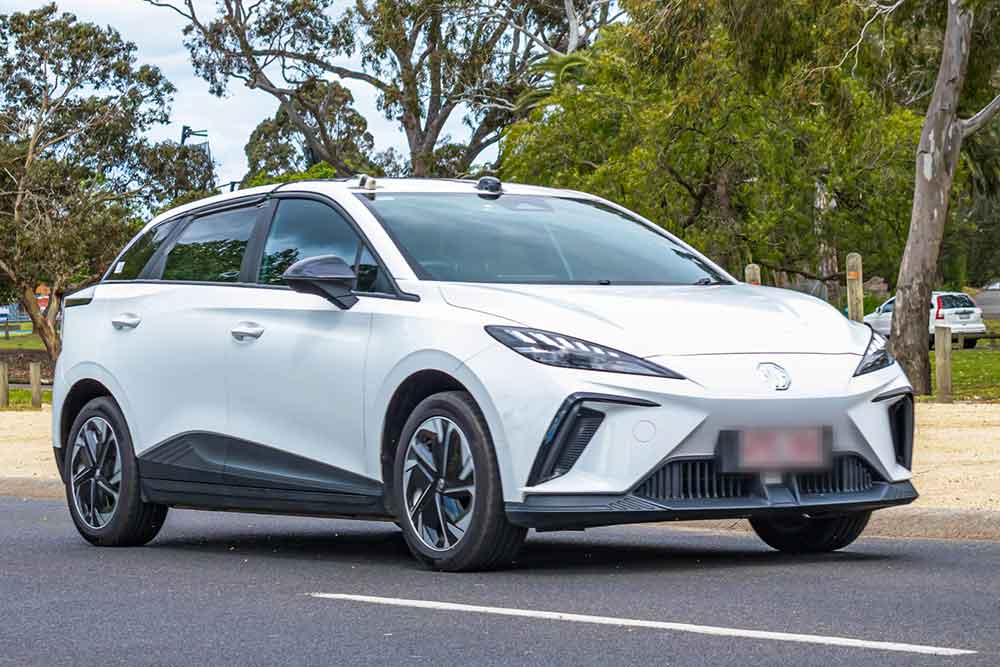
The MG 4's Real-World testing result was 31% less than its lab-tested range.
“Giving consumers improved information about real-world driving range means buyers can worry less about running out of charge and make the switch to EVs with confidence,” Mr Bradley said.
Since starting in 2023, the AAA’s Real World Testing Program has also evaluated 131 internal combustion and hybrid vehicles and found 76% of these cars used more fuel on-road than in their laboratory tests.
Many internal combustion engine powered cars also produced on-road emissions that exceeded current or upcoming Australian regulatory lab limits for toxic tailpipe emissions.
How the Real-World Testing Program works
The AAA program is supported by $14 million in Commonwealth funding and was created in response to the 2015 Volkswagen scandal, which showed increasingly stringent regulation of vehicle emissions incentivises carmakers to optimise vehicle functionality for laboratory, rather than the real-world performance.
The program tests cars on a 93km circuit in and around Geelong, Victoria.
It uses strict testing protocols based on European regulations to ensure results are repeatable, and to minimise the influence of human factors such as driving style and changing traffic flows.
Real-world testing measures EV range by quantifying both the energy needed to drive a vehicle around the program test route, and the energy needed to recharge each vehicle’s fully depleted battery.
The AAA said the results provided potential EV buyers with the information they needed to understand which cars perform as advertised, and which fall short.
Results from the AAA's latest EV testing:
In August 2025, the AAA released the following five results from its first tranche of EV testing:

More articles
Related topics
Things to note
The information in this article has been prepared for general information purposes only and is not intended as legal advice or specific advice to any particular person. Any advice contained in the document is general advice, not intended as legal advice or professional advice and does not take into account any person’s particular circumstances. Before acting on anything based on this advice you should consider its appropriateness to you, having regard to your objectives and needs.
Insurance Products (excluding Travel Insurance) are issued by RACQ Insurance Limited ABN 50 009 704 152 (RACQI) and arranged by RACQ Distribution Services Pty Ltd (RDS) ABN 35 116 361 650, AFSL 567130 and RDS' authorised representatives (including RACQ Operations Pty Ltd ABN 80 009 663 414, AR No. 234978 (RACQO)). Conditions, limits and exclusions apply.
Any advice provided by RDS and RACQO is general advice only and does not take into account your personal objectives, financial situation or needs and you will need to consider whether the advice is appropriate for you. Read the Product Disclosure Statement (PDS) before making a purchase decision on the product. You can also access our Target Market Determinations on this website.
RDS receives a commission from RACQI for the policies it arranges. RACQO receives fees paid for services it provides to RDS. Further details about remuneration are available on request prior to purchasing.
Banking and loan products issued by Members Banking Group Limited ABN 83 087 651 054 AFSL/Australian credit licence 241195 trading as RACQ Bank. Terms, conditions, fees, charges and lending policies apply. This is general advice only and may not be right for you. This information does not take your personal objectives, circumstances or needs into account. Read the disclosure documents for your selected product or service, including the Financial Services Guide and the Terms and Conditions, and consider if appropriate for you before deciding.
Except for RACQ Bank, any RACQ entity referred to on this page is not an authorised deposit-taking institution for the purposes of the Banking Act 1959 (Cth). That entity’s obligations do not represent deposits or other liabilities of RACQ Bank. RACQ Bank does not guarantee or otherwise provide assurance in respect of the obligations of that entity, unless noted otherwise.
RACQ Bank subscribes to the Customer Owned Banking Code of Practice which establishes higher standards than the law requires. The Code reflects modern consumer expectations and developments in approaches to issues such as consumer vulnerability, guarantors, and supporting customers through financial hardship. Please read our Customer Owned Banking Code of Practice page for more information.
RACQ Operations Pty Ltd (ABN 80 009 663 414, AR No. 234978) and Members Travel Group Pty Ltd (ABN 45 144 538 803, AR No.432492) (RACQ) are authorised representatives of the RACQ Travel Insurance insurer Tokio Marine & Nichido Fire Insurance Co., Ltd. (ABN 80 000 438 291 AFSL 246 548) (Tokio Marine). Tokio Marine Management (Australasia) Pty Ltd (ABN 69 001 488 455, AR No. 1313066) is an authorised representative of Tokio Marine, and administers RACQ Travel Insurance as the managing agent on behalf of Tokio Marine. Terms, conditions (including eligibility criteria), exclusions, limits and sub-limits apply. Any advice is general advice only, and does not take into account your specific objectives, financial situation or needs. Before you purchase, please consider the Combined Product Disclosure Statement (PDS) / Financial Services Guide (FSG) and Target Market Determinations (TMDs) available at racq.com or on request from RACQ.