
Suzuki introduces mild hybrid technology to the Vitara SUV
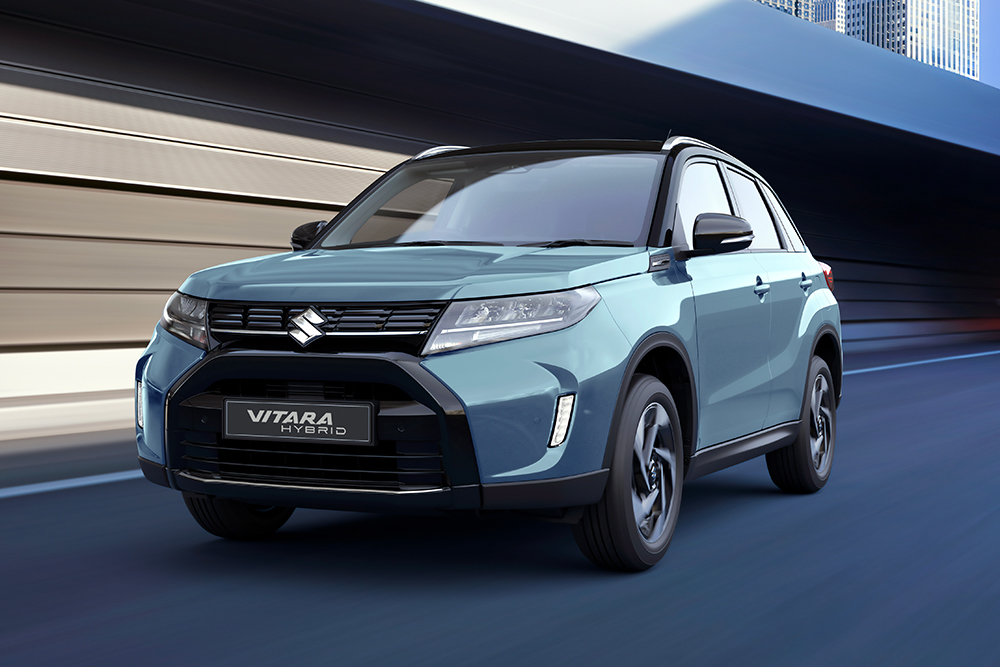
Australians purchased a record number of hybrid-powered vehicles in 2025 with the strong consumer uptake encouraging Suzuki to add the technology to its Vitara SUV.
Aussies bought 199,133 new hybrid vehicles in 2025, an increase of 15.3% compared to the previous year, with that figure swelling by a further 53,484 when you add in plug-in-hybrid electric vehicles (PHEVs).
Clearly, Aussies are very comfortable with hybrid technology, thanks in no small part to the ongoing efforts of Toyota which sold its first hybrid Prius here in 2001 and which last year had the top three best-selling hybrid models with the RAV4, Corolla and Corolla Cross.
Suzuki’s slow but steady hybrid rollout
Like most other car makers, Suzuki was slower to the hybrid party than Toyota, launching its first mild-hybrid equipped model the Swift hatch in 2024, and following that with the Fronx SUV in 2025.
Now, with the Federal Government’s New Vehicle Efficiency Standard (NVES) adding pressure on car makers to further reduce their emissions, Suzuki Australia is expanding its electrified vehicle offering with the introduction of the Suzuki Vitara Hybrid.
What’s new in the Vitara hybrid?
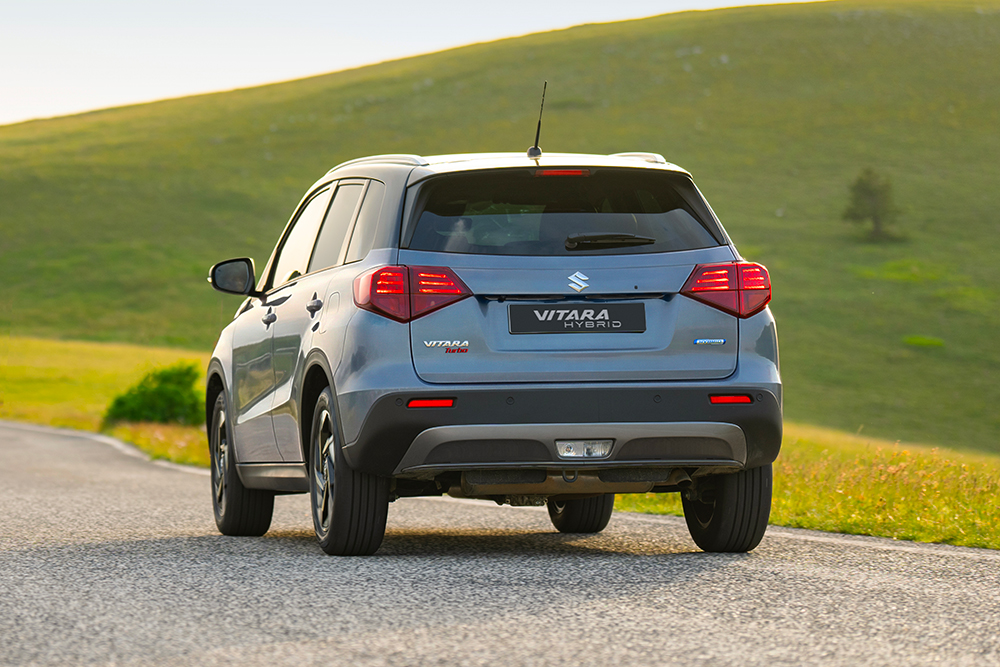
Promising enhanced fuel efficiency and reduced tailpipe emissions, the hybrid Vitara is not an all-new model but a heavily updated version of the current generation vehicle which has been sold here since 2015.
The new hybrid variants will be accompanied by an all-new, all-electric version — the e Vitara — in June this year, but for now the updated Vitara range consists of the new Vitara Turbo Hybrid priced from $39,990 (driveaway) and the all-wheel drive Vitara Turbo Hybrid Allgrip priced from $45,990 driveaway.
Absent from the new Vitara lineup is the former entry-level 1.6-litre non-turbocharged four-cylinder petrol model, which was available from $29,490 (driveaway), meaning entry to the Vitara range is now a hefty $10,500 more expensive.
Mild hybrid powertrain explained
Both new Vitara variants are equipped with so-called ‘mild-hybrid’ technology, which entails a 48 volt electrical system and an integrated starter generator attached to a 1.4 litre turbocharged four-cylinder petrol engine and six-speed automatic transmission.
The system provides a modest power boost under acceleration, enables smoother stop start functionality, and harvests energy during deceleration, delivering an overall reduction in fuel consumption and emissions, according to Suzuki.
Power and torque outputs for both variants are 81kW/235Nm, with claimed combined cycle fuel consumption of 5.8L/100km for the front-wheel-drive model and 5.9L/100km for the all-wheel-drive. Both variants require more expensive 95 RON fuel or better.
Exterior and interior updates
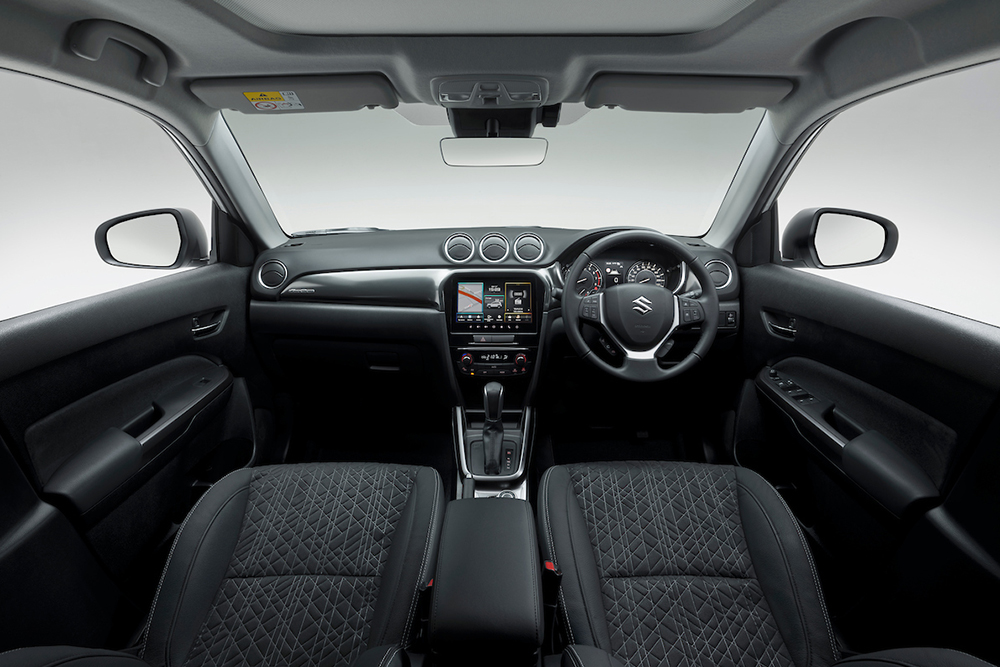
Exterior design changes are limited to a new front bumper, redesigned grille, gloss black body highlights and a redesigned lighting signature.
Inside, both variants boast a central touchscreen infotainment system supporting smartphone connectivity, with the Allgrip adopting a larger 9.0 inch touchscreen.
Safety Features
Now, as before, the Vitara does not have an ANCAP safety rating but its standard safety features include Autonomous Emergency Braking (AEB), Adaptive Cruise Control (ACC), Lane Departure Warning (LDW), Lane Keeping Assist (LKA), Blind-Spot Monitoring, Rear Cross-Traffic Alert (RCTA), and six airbags.
Standard equipment by variant
Vitara Turbo Hybrid standard features include:
- 17 inch alloy wheels
- Automatic LED headlamps and DRLs
- Rear privacy glass
- Auto dimming rear view mirror
- Leather wrapped steering wheel
- Automatic air conditioning
- Four speaker audio
- 7.0 inch infotainment system
- Rear-view camera
- Fabric upholstery.
Vitara Turbo Hybrid Allgrip adds or upgrades:
- Synthetic leather upholstery
- Panoramic sunroof
- Premium design elements
- Six-speaker audio
- 9.0 inch infotainment system
- Front and rear parking sensors
- All-wheel drive with four selectable modes (Auto, Sport, Snow, Lock).


More articles
Related topics
Things to note
The information in this article has been prepared for general information purposes only and is not intended as legal advice or specific advice to any particular person. Any advice contained in the document is general advice, not intended as legal advice or professional advice and does not take into account any person’s particular circumstances. Before acting on anything based on this advice you should consider its appropriateness to you, having regard to your objectives and needs.
Insurance Products (excluding Travel Insurance) are issued by RACQ Insurance Limited ABN 50 009 704 152 (RACQI) and arranged by RACQ Distribution Services Pty Ltd (RDS) ABN 35 116 361 650, AFSL 567130 and RDS' authorised representatives (including RACQ Operations Pty Ltd ABN 80 009 663 414, AR No. 234978 (RACQO)). Conditions, limits and exclusions apply.
Any advice provided by RDS and RACQO is general advice only and does not take into account your personal objectives, financial situation or needs and you will need to consider whether the advice is appropriate for you. Read the Product Disclosure Statement (PDS) before making a purchase decision on the product. You can also access our Target Market Determinations on this website.
RDS receives a commission from RACQI for the policies it arranges. RACQO receives fees paid for services it provides to RDS. Further details about remuneration are available on request prior to purchasing.
Banking and loan products issued by Members Banking Group Limited ABN 83 087 651 054 AFSL/Australian credit licence 241195 trading as RACQ Bank. Terms, conditions, fees, charges and lending policies apply. This is general advice only and may not be right for you. This information does not take your personal objectives, circumstances or needs into account. Read the disclosure documents for your selected product or service, including the Financial Services Guide and the Terms and Conditions, and consider if appropriate for you before deciding.
Except for RACQ Bank, any RACQ entity referred to on this page is not an authorised deposit-taking institution for the purposes of the Banking Act 1959 (Cth). That entity’s obligations do not represent deposits or other liabilities of RACQ Bank. RACQ Bank does not guarantee or otherwise provide assurance in respect of the obligations of that entity, unless noted otherwise.
RACQ Bank subscribes to the Customer Owned Banking Code of Practice which establishes higher standards than the law requires. The Code reflects modern consumer expectations and developments in approaches to issues such as consumer vulnerability, guarantors, and supporting customers through financial hardship. Please read our Customer Owned Banking Code of Practice page for more information.
RACQ Operations Pty Ltd (ABN 80 009 663 414, AR No. 234978) and Members Travel Group Pty Ltd (ABN 45 144 538 803, AR No.432492) (RACQ) are authorised representatives of the RACQ Travel Insurance insurer Tokio Marine & Nichido Fire Insurance Co., Ltd. (ABN 80 000 438 291 AFSL 246 548) (Tokio Marine). Tokio Marine Management (Australasia) Pty Ltd (ABN 69 001 488 455, AR No. 1313066) is an authorised representative of Tokio Marine, and administers RACQ Travel Insurance as the managing agent on behalf of Tokio Marine. Terms, conditions (including eligibility criteria), exclusions, limits and sub-limits apply. Any advice is general advice only, and does not take into account your specific objectives, financial situation or needs. Before you purchase, please consider the Combined Product Disclosure Statement (PDS) / Financial Services Guide (FSG) and Target Market Determinations (TMDs) available at racq.com or on request from RACQ.