
Vehicles fail to match advertised range in real world
Testing by Australian motoring clubs shows many popular new cars fail to achieve their advertised fuel consumption and battery range when tested on the road.
The latest Real-World Testing Program results from the RACQ and other peak motoring bodies has again shown consumers can’t always rely on the fuel consumption and emissions information provided at point of sale, with 25 of the latest 30 internal combustion engine (ICE) powered cars tested consuming more fuel in real world conditions, compared to manufacturer lab tests.
In separate testing of five popular EVs, the Clubs’ tests found their driving range was between 5% and 23% less in real driving conditions than recorded in mandatory laboratory tests.
The testing, funded by the Federal Government, aims to alleviate range anxiety and provide motorists with an independent indication of real-world battery and fuel range. It can also help consumers pick out cars that will save them money in fuel and electricity bills, which is important at a time when many are feeling cost-of-living pressures.
The first EV tests found the 2023 BYD Atto 3 recorded the largest variation from its lab test – with a real-world range of 369km on a single charge – 23% less than the 480km recorded in its laboratory test.
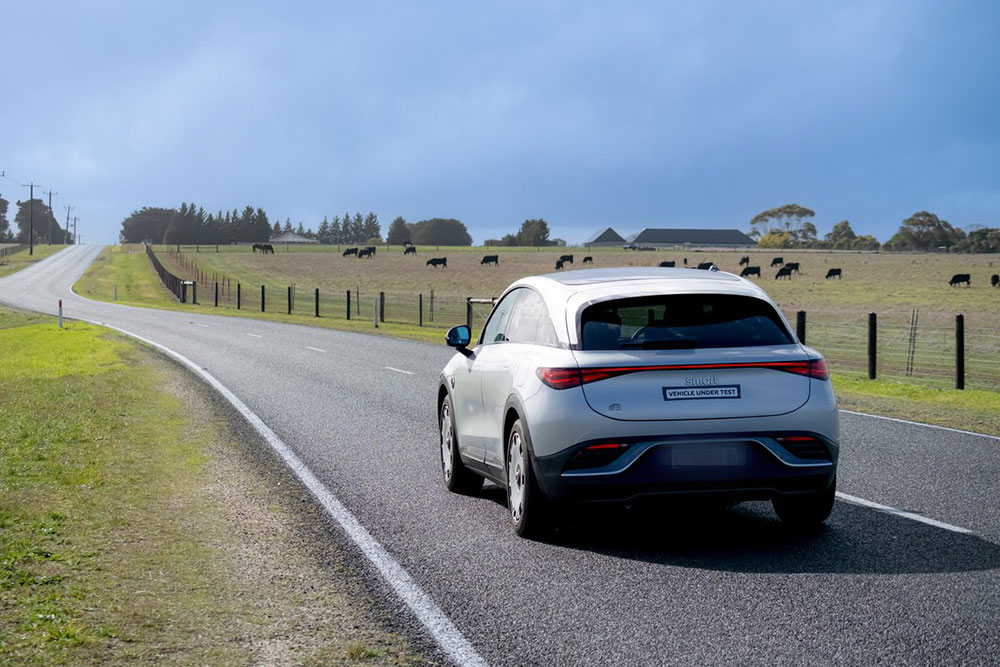
At the other end of the spectrum, the 2024 Smart #3 EV performed closest to its laboratory test result with a real-world driving range of 432km – 5%, or 23km, less than recorded in its mandatory laboratory test.
Other EVs tested included the 2022 Kia EV 6 and the 2024 Telsa Model Y, which both had driving ranges of 8% less in the real-world tests, and the 2024 Tesla Model 3 which had a real-world range of 441km on a full charge, 14% less than the 513km achieved in the lab.
EV Real-World Testing Program results
| Model | Category | Range variation | Lab range (km) | RWTwRange (km) | Energy consumption variation |
|---|---|---|---|---|---|
| Tesla Model 3 | Medium car | -14% | 513 | 441 | +6% |
| BYD Atto 3 | Medium SUV | -23% | 480 | 369 | +21% |
| Tesla Model Y | Medium SUV | -8% | 533 | 490 | -1% |
| Kia EV6 | Medium SUV | -8% | 528 | 484 | +1% |
| Smart #3 | Medium SUV | -5% | 455 | 432 | +4% |
Australian Automobile Association (AAA) Managing Director Michael Bradley said range anxiety continued to be a significant barrier to EV uptake.
“We hope these independent results will give Australian car-buyers far greater confidence about the real-world range of new EVs on the market,” Mr Bradley said.
New round of ICE vehicle testing
As well as these five EVs, the AAA-led Program has now tested 114 popular ICE cars, vans and utes since August 2023, with more than three-quarters (77%) found to be using more fuel than advertised.
The latest batch of Real-World Testing results showed the Hyundai Kona Hybrid using 33% more fuel on-road than in its lab test, with the Kia Stonic (26% more fuel), Hyundai i30 Hybrid (17%), Toyota Fortuner (16%), and Kia Sportage Hybrid (14%) rounding out the top five for discrepancies recorded. (Full list of results below).
The best performing models included the Ford Transit custom which used 9% less fuel than its laboratory test, the Lexus NX350h which used 7% less, and the Mercedes-Benz GLB250 which used 3% less.
Manufacturers overstating performance
“Some vehicles perform as advertised, but most do not, and our Program is seeking to reward carmakers that deliver genuine financial and environmental savings.” Mr Bradley said.
The Real-World Testing Program will test up to 200 of Australia’s most popular makes and models.
The program tested cars in and around Geelong, Victoria, on a mix of roads including urban, rural and motorways. It uses strict test protocols to ensure fuel consumption and emissions results are repeatable and to minimise the influence of human factors such as driving style and changing traffic flows.
Before launching the program, the AAA conducted more than 20 tests on its reference vehicle (a Toyota RAV4) with test protocols found to deliver results varying by less than 2.5%.
Relevant vehicle brands were notified prior to the publication of any testing results. The information in this article has been prepared for general information purposes only and is not intended as legal advice or specific advice to any particular person. Before acting on anything based on this information you should consider its appropriateness to you, having regard to your objectives and needs. The information within this article is only correct as at the date of publication.
Latest Real-World Testing Program results
| Model | Type | Fuel result variance | RWT fuel (L/100km) | Lab fuel (L/100km) |
|---|---|---|---|---|
| Hyundai Santa Fe Hybrid | Large SUV | 10% | 6.2 | 5.6 |
| Toyota Fortuner | Large SUV | 16% | 8.8 | 7.6 |
| Toyota Prado | Large SUV | 8% | 8.2 | 7.6 |
| Mercedes-Benz GLE300d | Large SUV | 4% | 6.9 | 6.6 |
| Chery Tiggo 8 Pro Max | Large SUV | 3% | 8.4 | 8.1 |
| Skoda Octavia | Medium car | 6% | 6.1 | 5.8 |
| Hyundai Tucson Hybrid | Medium SUV | 8% | 5.7 | 5.3 |
| Lexus NX350h | Medium SUV | -7% | 4.7 | 5.0 |
| Nissan X-Trail Hybrid | Medium SUV | 9% | 6.7 | 6.1 |
| Kia Sportage Hybrid | Medium SUV | 14% | 5.6 | 4.9 |
| Hyundai Tucson | Medium SUV | 3% | 6.9 | 6.7 |
| Mercedes-Benz GLC200 | Medium SUV | 1% | 7.6 | 7.5 |
| Mercedes-Benz GLB250 | Medium SUV | -3% | 7.6 | 7.9 |
| Mercedes-Benz GLB200 | Medium SUV | -1% | 7.4 | 7.5 |
| Hyundai Staria | People mover | 1% | 10.6 | 10.5 |
| Mazda3 | Small car | 13% | 7.4 | 6.6 |
| MG3 | Small car | 12% | 6.7 | 6.0 |
| Hyundai i30 Hybrid | Small car | 17% | 4.6 | 3.9 |
| Mazda CX-30 | Small SUV | 1% | 6.4 | 6.3 |
| Mercedes-Benz GLA | Small SUV | -2% | 7.4 | 7.3 |
| Hyundai Kona Hybrid | Small SUV | 33% | 5.2 | 3.9 |
| Toyota Yaris Cross Hybrid | Small SUV | 12% | 4.5 | 4.0 |
| Kia Stonic | Small SUV | 26% | 6.8 | 5.4 |
| VW T-Cross | Small SUV | 4% | 5.8 | 5.6 |
| Suzuki Vitara | Small SUV | 7% | 6.3 | 5.9 |
| BMW X1 | Small SUV | 4% | 6.7 | 6.5 |
| Ford Ranger | Ute (4WD) | 6% | 8.9 | 8.4 |
| Toyota Hi-Ace LWB | Van | 10% | 8.7 | 7.9 |
| Toyota Hi-Ace SLWB | Van | 11% | 9.0 | 8.1 |
| Ford Transit Custom | Van | -9% | 7.2 | 8.0 |


More articles
Related topics
Things to note
The information in this article has been prepared for general information purposes only and is not intended as legal advice or specific advice to any particular person. Any advice contained in the document is general advice, not intended as legal advice or professional advice and does not take into account any person’s particular circumstances. Before acting on anything based on this advice you should consider its appropriateness to you, having regard to your objectives and needs.
Insurance Products (excluding Travel Insurance) are issued by RACQ Insurance Limited ABN 50 009 704 152 (RACQI) and arranged by RACQ Distribution Services Pty Ltd (RDS) ABN 35 116 361 650, AFSL 567130 and RDS' authorised representatives (including RACQ Operations Pty Ltd ABN 80 009 663 414, AR No. 234978 (RACQO)). Conditions, limits and exclusions apply.
Any advice provided by RDS and RACQO is general advice only and does not take into account your personal objectives, financial situation or needs and you will need to consider whether the advice is appropriate for you. Read the Product Disclosure Statement (PDS) before making a purchase decision on the product. You can also access our Target Market Determinations on this website.
RDS receives a commission from RACQI for the policies it arranges. RACQO receives fees paid for services it provides to RDS. Further details about remuneration are available on request prior to purchasing.
Banking and loan products issued by Members Banking Group Limited ABN 83 087 651 054 AFSL/Australian credit licence 241195 trading as RACQ Bank. Terms, conditions, fees, charges and lending policies apply. This is general advice only and may not be right for you. This information does not take your personal objectives, circumstances or needs into account. Read the disclosure documents for your selected product or service, including the Financial Services Guide and the Terms and Conditions, and consider if appropriate for you before deciding.
Except for RACQ Bank, any RACQ entity referred to on this page is not an authorised deposit-taking institution for the purposes of the Banking Act 1959 (Cth). That entity’s obligations do not represent deposits or other liabilities of RACQ Bank. RACQ Bank does not guarantee or otherwise provide assurance in respect of the obligations of that entity, unless noted otherwise.
RACQ Bank subscribes to the Customer Owned Banking Code of Practice which establishes higher standards than the law requires. The Code reflects modern consumer expectations and developments in approaches to issues such as consumer vulnerability, guarantors, and supporting customers through financial hardship. Please read our Customer Owned Banking Code of Practice page for more information.
RACQ Operations Pty Ltd (ABN 80 009 663 414, AR No. 234978) and Members Travel Group Pty Ltd (ABN 45 144 538 803, AR No.432492) (RACQ) are authorised representatives of the RACQ Travel Insurance insurer Tokio Marine & Nichido Fire Insurance Co., Ltd. (ABN 80 000 438 291 AFSL 246 548) (Tokio Marine). Tokio Marine Management (Australasia) Pty Ltd (ABN 69 001 488 455, AR No. 1313066) is an authorised representative of Tokio Marine, and administers RACQ Travel Insurance as the managing agent on behalf of Tokio Marine. Terms, conditions (including eligibility criteria), exclusions, limits and sub-limits apply. Any advice is general advice only, and does not take into account your specific objectives, financial situation or needs. Before you purchase, please consider the Combined Product Disclosure Statement (PDS) / Financial Services Guide (FSG) and Target Market Determinations (TMDs) available at racq.com or on request from RACQ.