
How to protect your car during storm season
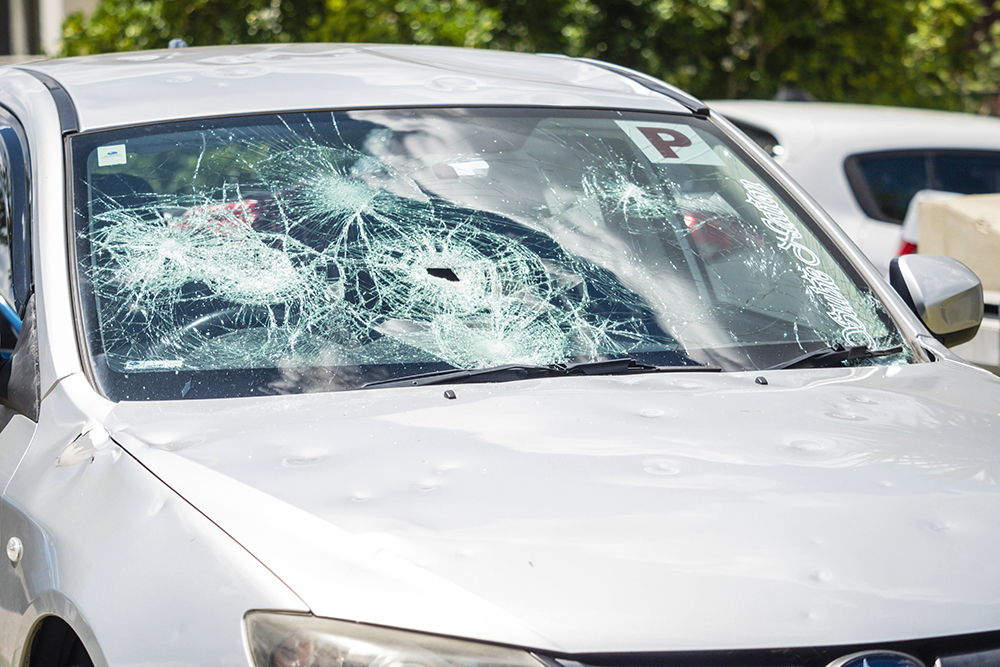
Taking a few preventative steps can help protect your vehicle, improve safety and reduce the risk of expensive repairs.
Park smart to protect your vehicle
One of the easiest ways to reduce the risk of weather-related damage is by choosing where you park.
During storm season, a garage or carport can help shield your vehicle from hail, strong winds and falling debris.
If you don't have access to covered parking at home, consider using undercover parking facilities when severe weather is forecast.
Avoid parking beneath trees, particularly during storms and strong winds, as falling branches can cause significant damage to vehicle body panels, windscreens and roofs. Check local council flood mapping and avoid parking in flood-prone areas.
Check your vehicle's essential safety features
Inspect components that are critical during wet-weather driving, including:
- Windscreen wipers
- Tyres and tread depth
- Headlights and brake lights.
Replacing worn wiper blades and ensuring your tyres have adequate tread can significantly improve visibility and grip during heavy rain.
Be prepared for hail and heavy rain
If hail is forecast, consider using a purpose-built hail cover to help protect your vehicle if you can’t park under cover.
In an emergency, thick blankets or padded coverings may provide some protection for vulnerable areas such as the roof and bonnet.
Windscreens are particularly susceptible to damage during hailstorms, so any extra protection can be worthwhile.
Drive safely during summer storms
If you find yourself driving during a severe storm or hail, slow down, turn your lights on, double your following distance to the car in front to at least four seconds (allow more space if you are towing) and find a safe spot to stop well away from high-speed traffic, not on the side of a highway or motorway.
It's also important to remember: if it's flooded, forget it. Never drive through floodwater.
Road conditions beneath the water may have been damaged or washed away, and even shallow water can cause a vehicle to lose traction. Floodwater can also cause severe damage to engines, electrical systems and safety components.
Don’t attempt to start a water-damaged vehicle
If your vehicle has been damaged during a severe weather event, it’s important to ensure it is safe to start before turning the key.
If there has been any water in the interior of the car, the engine bay or exhaust, do not attempt to start it.
Take photos for an insurance claim
Once it’s safe to do so, document any flood damage before moving, cleaning or drying your vehicle.
Take photos and videos of the car from all angles, including waterline marks, interior damage, debris and any affected mechanical areas, as this evidence can be critical when lodging an insurance claim.
It's also helpful to photograph the surrounding environment, such as flooded streets or nearby waterways, to support how and where the damage occurred.
Detailed records can help insurers accurately assess the claim and reduce the likelihood of disputes during the process.
Contact your insurer as soon as possible to start the claim process.

*Insurance products issued by RACQ Insurance Limited ABN 50 009 704 152. Conditions, limits and exclusions apply. This is general advice only and does not take into account your personal objectives, financial situation or needs and you will need to consider whether the advice is appropriate for you. Consider the PDS. PDS and TMD available at racq.com. Excesses and exclusions may apply. Refer to your Certificate of Insurance. For detailed terms, conditions, limitations, and exclusions, please read the Product Disclosure Statement.

More articles
Related topics
Things to note
The information in this article has been prepared for general information purposes only and is not intended as legal advice or specific advice to any particular person. Any advice contained in the document is general advice, not intended as legal advice or professional advice and does not take into account any person’s particular circumstances. Before acting on anything based on this advice you should consider its appropriateness to you, having regard to your objectives and needs.
Insurance Products (excluding Travel Insurance) are issued by RACQ Insurance Limited ABN 50 009 704 152 (RACQI) and arranged by RACQ Distribution Services Pty Ltd (RDS) ABN 35 116 361 650, AFSL 567130 and RDS' authorised representatives (including RACQ Operations Pty Ltd ABN 80 009 663 414, AR No. 234978 (RACQO)). Conditions, limits and exclusions apply.
Any advice provided by RDS and RACQO is general advice only and does not take into account your personal objectives, financial situation or needs and you will need to consider whether the advice is appropriate for you. Read the Product Disclosure Statement (PDS) before making a purchase decision on the product. You can also access our Target Market Determinations on this website.
RDS receives a commission from RACQI for the policies it arranges. RACQO receives fees paid for services it provides to RDS. Further details about remuneration are available on request prior to purchasing.
Banking and loan products issued by Members Banking Group Limited ABN 83 087 651 054 AFSL/Australian credit licence 241195 trading as RACQ Bank. Terms, conditions, fees, charges and lending policies apply. This is general advice only and may not be right for you. This information does not take your personal objectives, circumstances or needs into account. Read the disclosure documents for your selected product or service, including the Financial Services Guide and the Terms and Conditions, and consider if appropriate for you before deciding.
Except for RACQ Bank, any RACQ entity referred to on this page is not an authorised deposit-taking institution for the purposes of the Banking Act 1959 (Cth). That entity’s obligations do not represent deposits or other liabilities of RACQ Bank. RACQ Bank does not guarantee or otherwise provide assurance in respect of the obligations of that entity, unless noted otherwise.
RACQ Bank subscribes to the Customer Owned Banking Code of Practice which establishes higher standards than the law requires. The Code reflects modern consumer expectations and developments in approaches to issues such as consumer vulnerability, guarantors, and supporting customers through financial hardship. Please read our Customer Owned Banking Code of Practice page for more information.
RACQ Operations Pty Ltd (ABN 80 009 663 414, AR No. 234978) and Members Travel Group Pty Ltd (ABN 45 144 538 803, AR No.432492) (RACQ) are authorised representatives of the RACQ Travel Insurance insurer Tokio Marine & Nichido Fire Insurance Co., Ltd. (ABN 80 000 438 291 AFSL 246 548) (Tokio Marine). Tokio Marine Management (Australasia) Pty Ltd (ABN 69 001 488 455, AR No. 1313066) is an authorised representative of Tokio Marine, and administers RACQ Travel Insurance as the managing agent on behalf of Tokio Marine. Terms, conditions (including eligibility criteria), exclusions, limits and sub-limits apply. Any advice is general advice only, and does not take into account your specific objectives, financial situation or needs. Before you purchase, please consider the Combined Product Disclosure Statement (PDS) / Financial Services Guide (FSG) and Target Market Determinations (TMDs) available at racq.com or on request from RACQ.