

Your home battery questions answered
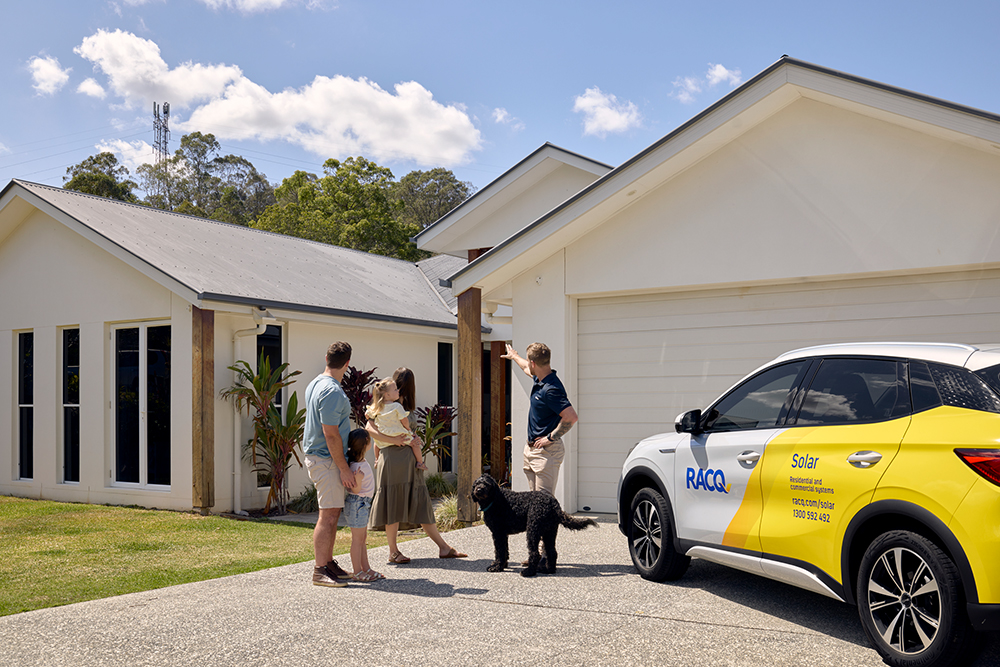
Here are the RACQ Solar team’s answers to seven of the most common questions RACQ members ask about home batteries.
1. How does the Cheaper Home Batteries Program work?
The Cheaper Home Batteries Program is a Federal Government initiative designed to reduce the upfront cost of installing home battery storage.
The program works in a similar way to the Federal Government’s solar rebate. It uses Small-scale Technology Certificates (STCs) to provide an upfront discount on eligible battery systems, which is typically applied directly to your invoice by the installer. The rebate can only be claimed once per premises.
The number of STCs your system creates is based on your battery’s usable capacity (measured in kilowatt hours, or kWh). Only the first 50 kWh of usable capacity is eligible.
An STC factor is applied to calculate how many certificates are created per kWh and tapers according to the amount of capacity installed:
- 0–14 kWh: STC factor applied at 100%
- 14–28 kWh: STC factor applied at 60%
- 28–50 kWh: STC factor applied at 15%
2. Has the rebate changed recently?
Yes. In December 2025, the Federal Government updated how the program phases down over time.
Under the new rules, the rebate decreases every six months. These step-downs began in May 2026 and will continue every January and July until the program is scheduled to end in December 2030.
The changes help ensure the discount aligns with falling battery costs over time and remains about 30% across battery sizes.
3. How much does a home battery cost in Queensland?
While home batteries were once considered expensive, government incentives have made them far more accessible.
Currently:
- 10 kWh systems: approximately $6,000–$8,000 installed
- 20 kWh systems: approximately $13,000–$19,000 installed
Pricing depends on the brand and installation requirements.
4. What size battery do most homes install?
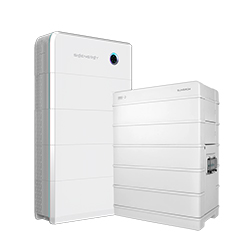
Most Queensland households install batteries between 10 kWh and 20 kWh.
This size typically stores excess solar energy generated during the day for use later in the evening when electricity prices are highest.
The right battery size depends on:
- Household daily electricity use
- Solar system size
- Whether backup power is required during outages
A qualified installer can assess your home and recommend a system tailored to your energy needs.
5. Will a home battery eliminate my electricity bill?
A battery can reduce how much electricity you need to buy from the grid, but it usually won’t eliminate your bill entirely.
You may still need grid power:
- If you use more electricity than your solar generates or stores
- During low solar production (e.g. cloudy weather)
Batteries allow you to store and use your own solar energy, which is generally more cost-effective than exporting it at a lower rate and buying it back later at a higher price.
6. Will my battery work during a power outage?
Some batteries can keep parts of your home running during a blackout, but not all systems include backup power by default.
If outage protection is important, your system must include:
- A battery with backup capability
- A configuration that powers essential circuits only. Backing up too many circuits can cause overloads and drain the battery quickly.
Whole-of-home backup is possible but requires active management to prioritise essential circuits, especially during extended outages or poor weather conditions.
7. How long does it take for a battery to pay for itself?
Payback times vary depending on household usage, but many Queensland homes see a return in approximately 7–12 years.
Factors influencing payback include:
- Household energy consumption
- Solar system size
- Battery size
- Weather patterns
- Electricity prices and feed-in tariffs
- Available government incentives
Visit RACQ Solar for panels and batteries packages
Related topics
Things to note
The information in this article has been prepared for general information purposes only and is not intended as legal advice or specific advice to any particular person. Any advice contained in the document is general advice, not intended as legal advice or professional advice and does not take into account any person’s particular circumstances. Before acting on anything based on this advice you should consider its appropriateness to you, having regard to your objectives and needs.
Insurance Products (excluding Travel Insurance) are issued by RACQ Insurance Limited ABN 50 009 704 152 (RACQI) and arranged by RACQ Distribution Services Pty Ltd (RDS) ABN 35 116 361 650, AFSL 567130 and RDS' authorised representatives (including RACQ Operations Pty Ltd ABN 80 009 663 414, AR No. 234978 (RACQO)). Conditions, limits and exclusions apply.
Any advice provided by RDS and RACQO is general advice only and does not take into account your personal objectives, financial situation or needs and you will need to consider whether the advice is appropriate for you. Read the Product Disclosure Statement (PDS) before making a purchase decision on the product. You can also access our Target Market Determinations on this website.
RDS receives a commission from RACQI for the policies it arranges. RACQO receives fees paid for services it provides to RDS. Further details about remuneration are available on request prior to purchasing.
Banking and loan products issued by Members Banking Group Limited ABN 83 087 651 054 AFSL/Australian credit licence 241195 trading as RACQ Bank. Terms, conditions, fees, charges and lending policies apply. This is general advice only and may not be right for you. This information does not take your personal objectives, circumstances or needs into account. Read the disclosure documents for your selected product or service, including the Financial Services Guide and the Terms and Conditions, and consider if appropriate for you before deciding.
Except for RACQ Bank, any RACQ entity referred to on this page is not an authorised deposit-taking institution for the purposes of the Banking Act 1959 (Cth). That entity’s obligations do not represent deposits or other liabilities of RACQ Bank. RACQ Bank does not guarantee or otherwise provide assurance in respect of the obligations of that entity, unless noted otherwise.
RACQ Bank subscribes to the Customer Owned Banking Code of Practice which establishes higher standards than the law requires. The Code reflects modern consumer expectations and developments in approaches to issues such as consumer vulnerability, guarantors, and supporting customers through financial hardship. Please read our Customer Owned Banking Code of Practice page for more information.
RACQ Operations Pty Ltd (ABN 80 009 663 414 AR 000234978) and Members Travel Group Pty Ltd (ABN 45 144 538 803 AR 000432492) are acting as an Authorised Representative of the issuer of the insurance, Tokio Marine & Nichido Fire Insurance Co., Ltd. (ABN 80 000 438 291 AFSL 246 548). Any advice set out above is general in nature only, and does not take into account your objectives, financial situation or needs. Before purchasing any travel products, please consider the RACQ Travel Insurance Product Disclosure Statement (PDS) and the Target Market Determinations (TMDs) that apply to these products. Whilst the PDS outlines the Terms and Conditions of these products, the TMDs outline the intended class of customers that comprise the target market for these travel products. This will allow you to consider which products best suit your objectives, financial situation and needs and consider the products appropriateness to your personal circumstances. TMDs also outline matters involving the distribution and the review of these products. The PDS, Supplementary PDS and TMDs for each travel product can be found here.