

Beginner’s guide to Portugal: Lisbon, Porto and Algarve itinerary
That was not the outcome I wanted from my first-ever visit to Portugal in April (spring).
So how did I strike the right balance?
I took advice from those who had been and narrowed it down to three stops: Lisbon (three nights), Porto (four nights), and the Algarve region in the south (four nights).
Lisbon itinerary and highlights
As the second-oldest European capital city (after Athens), Portugal’s capital, Lisbon, has character, charm, a relaxed vibe, and plenty of hills.
A port city at the mouth of the Tagus River where it meets the Atlantic Ocean, the area has a long history of occupation, including Phoenician traders, Celtic and Iberian peoples, Romans, and later Germanic tribes.
In 1143, Portugal became an independent kingdom, and in 1256 King Afonso III moved the capital from Coimbra to Lisbon.
In 1755, a massive earthquake, followed by a tsunami and six days of fires, destroyed 85% of Lisbon.
Rebuilding the city resulted in a modernised Lisbon with earthquake‑resistant architecture, known as Pombaline, which can be seen in many of Lisbon’s older neighbourhoods.
Many of Lisbon’s popular sights are in the city centre.
This is a walkable city – provided you can manage the cobblestone pavements and the seven hills. If these are too challenging, you can take a trolley (tram) or an inexpensive tuk‑tuk.
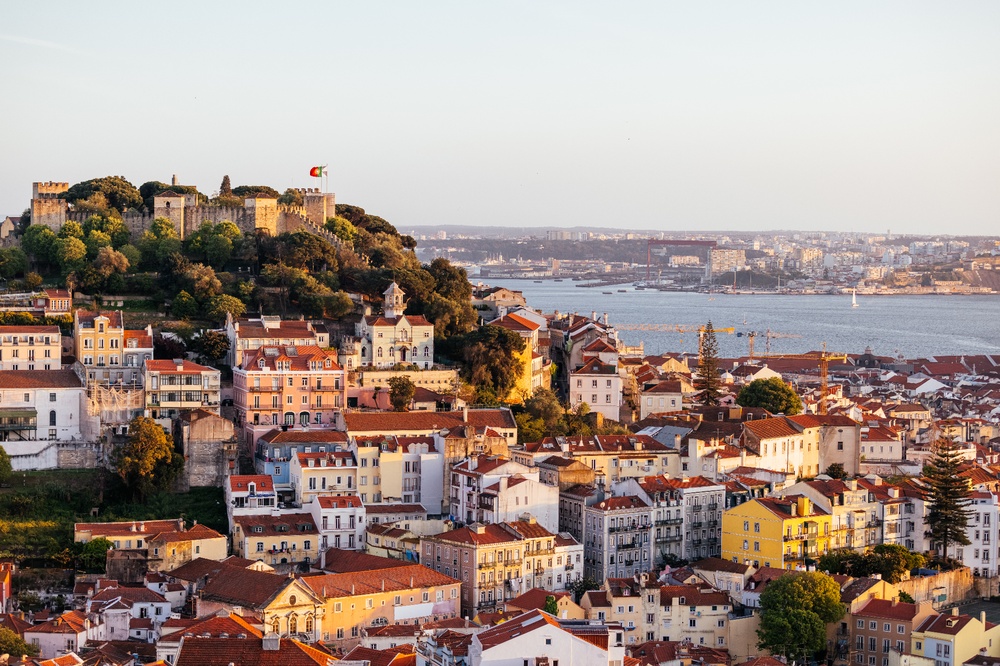
Lisbon skyline with São Jorge Castle at sunset, Portugal.
Exploring Lisbon neighbourhoods
On my first afternoon, I left my guesthouse in the trendy Príncipe Real neighbourhood, a residential area crammed with restaurants, art galleries, and shops, to wander the narrow streets of the bohemian Bairro Alto, full of vintage shops and street art.
With the sun setting around 8pm, evenings were luxuriously long with daylight.
My afternoon stroll ended at Time Out Market Lisboa in Mercado da Ribeira around 6pm—perfect timing for an early dinner and my first glass of port in Portugal.
On the way back, I paused at the Miradouro de São Pedro de Alcântara, a garden terrace offering panoramic views of São Jorge Castle, Alfama, and the Baixa district.
Small groups, families, and friends mingled casually on the benches and around the water fountain. My last stop was the Moorish building next to my guesthouse, Embaixada. Built in 1877 as a mansion, when exotic neo‑Moorish architecture was fashionable, the stunning building is now an innovative shopping gallery where several national brands and artists share their creations.
Downstairs is a restaurant and bar – casual and very relaxed. I ended the evening with a cocktail nightcap.
Best way to experience Lisbon
The best way to appreciate the history and culture of Lisbon is to take a guided walking tour. On the second day, I met my guide, Pedro Osório Graça, organised by Divita Tours. For four hours, Pedro led me around the steep and hilly neighbourhoods of Bairro Alto, Chiado, and Baixa. We wandered up and down medieval streets, eventually ending at a high point in Bairro Alto overlooking the Tagus River.Must-see attractions in Lisbon
- Casa das Velas Loreto – the oldest shop in Lisbon, selling handmade beeswax candles made by the same family since 1789 (no photos allowed inside).
- Livraria Bertrand – the oldest operating bookstore in the world (Guinness World Records, 2011).
- Tram 25 – a less-crowded alternative to Tram 28, running between Prazeres and Campo das Cebolas.
Day trips from Lisbon
From Lisbon, there are many day trips:
- Sintra – touristy but worthwhile, especially for the National Palace of Sintra
- Cabo da Roca – the westernmost point in mainland Europe with Atlantic views
- Cascais – a chic coastal town near Sintra
Because of the late sunset, you can do both Cascais and Sintra in one day. It’s busy but fun.
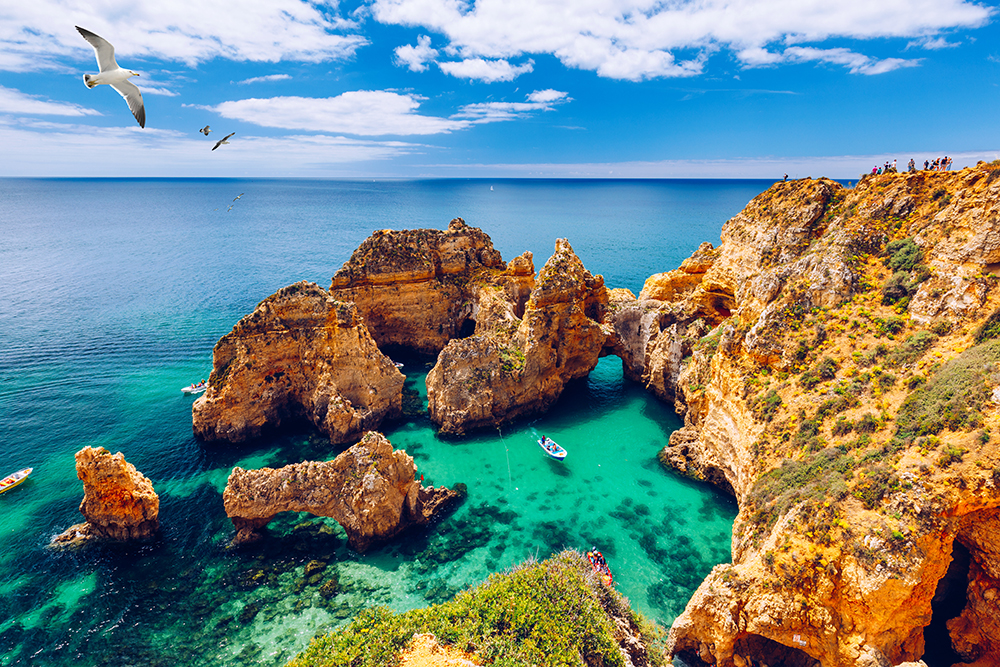 Ponta da Piedade near Lagos features some of the Algarve’s most striking coastal cliffs and rock formations.
Algarve road trip guide
I caught the train from Lisbon to Faro, hired a car at Faro Airport, and drove to Lagos.
Aside from the adjustment to driving on the right, driving in the Algarve region presented minimal challenges.
I based myself in Lagos’s old town.
One morning, I walked from the old town to Ponta da Piedade, a clifftop walk following dramatic limestone cliffs and offering coastal views over turquoise water.
From Lagos, I drove west to Sagres and, braving strong winds, visited the headland at Cape St Vincent, the southwesternmost point of mainland Europe.
The sun may set over the Atlantic in Sagres, but not on the cloudy day of my visit.
On the drive back to Faro, I stopped in Silves, the oldest city in the Algarve, to visit the Moorish Castle – a beautiful Muslim fortification on a hilltop overlooking the town.
Porto travel guide
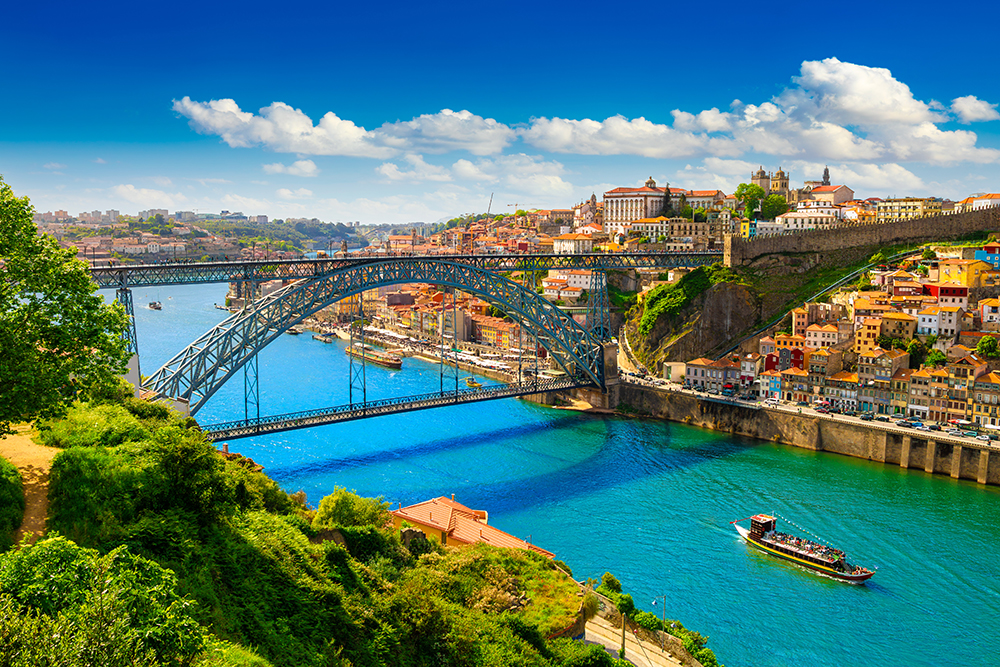
Like Lisbon, the charming river city of Porto is best experienced slowly, with many attractions on either side of the Douro River.
Porto’s central neighbourhoods each have their own charm and vitality.
Ribeira is one of Porto’s most photographed neighbourhoods because of its colourful houses. It is relatively flat but can be touristy.
Baixa, where I stayed, sits just above Ribeira.
To visit downtown Porto’s attractions, you need to climb up to Baixa to find Porto Cathedral, which features an interesting mix of architectural styles: Romanesque foundations support Gothic vaults and delicate Baroque decorations. Construction began in 1108 and was completed in the 13th century.
Also in Baixa is the Livraria Lello bookstore, which has become a major tourist draw thanks to Harry Potter fans who believe its red staircase inspired Hogwarts (pre‑purchased tickets are the easiest way to enter).
To move between the hills, cross Avenida dos Aliados – a wide avenue worth strolling along, lined with cafes, exclusive hotels, and boutiques housed in architecturally impressive buildings.
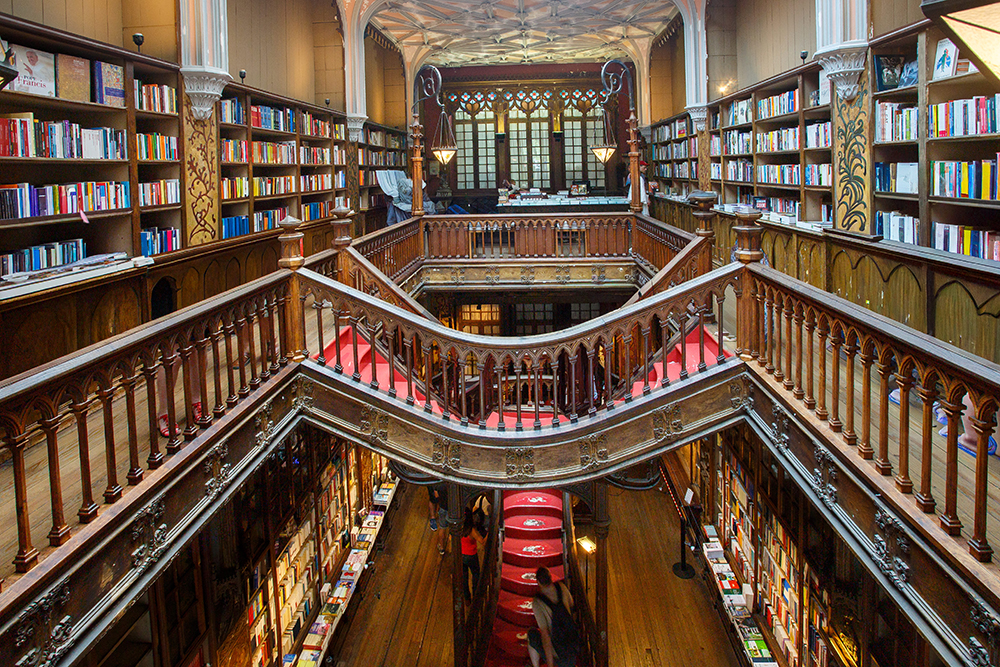 The ornate interior of Livraria Lello in Porto, one of the world’s most beautiful bookstores and a major tourist attraction.
Vila Nova de Gaia and port wine
On the other side of the river, Vila Nova de Gaia is home to the city’s port cellars and tasting houses, reached by walking across the magnificent double‑decker Dom Luís I Bridge.
For panoramic city views, take the cable car, rising 45m above the river.
In Porto, I attended a Fado performance, a traditional Portuguese music genre originating in early‑19th‑century Lisbon.
Fado features a solo singer (fadista) accompanied by a Portuguese guitar and classical guitar. The music is mournful and emotional, expressing saudade – deep longing, nostalgia, or melancholy.
Douro Valley day trip
From Porto, I recommend a full‑day excursion to the Douro Valley, a UNESCO World Heritage site with breathtaking landscapes and excellent wine and port tastings. It’s a long day, but worth the effort.
Final thoughts on travelling Portugal
Portugal’s cities and villages are vibrant destinations with complex layers – a unique culture shaped by fascinating historical ties.
Expect friendly, open‑minded people and be pleasantly surprised by their design flair and attention to detail.
My three destination choices were the ideal introduction to Portugal and have left me wanting more.
Portugal FAQ: Know before you go
When is the best time to visit Portugal?
The best time to visit Portugal is spring (March to May) and early autumn (September to October), when the weather is warm, but not hot and the crowds are smaller. Spring is especially ideal for city exploration and coastal trips. March-April is shoulder season in the Algarve where the atmosphere is not as busy as the summer months, but not all activities will be open.
How many days do you need in Portugal?
Most travellers need 12-14 days to explore Portugal at a relaxed pace. A good balance would be four days in Lisbon, Porto, and the Algarve, this allows time for day trips such as Sintra or the Douro Valley. If you want a more relaxed pace and time to experience the character of a place, allow more time
Is Portugal a good destination for first-time visitors to Europe?
Yes, Portugal is an excellent destination for first-time visitors thanks to its affordability, friendly locals, ease of travel, and diverse experiences ranging from historic cities to beaches and wine regions.
Is Portugal safe for tourists?
Yes, Portugal is considered one of the safest countries in Europe. Violent crime is rare, though travellers should stay alert for petty theft such as pickpocketing in busy tourist areas and on public transport.
Do people speak English in Portugal?
Yes, English is widely spoken, especially in Lisbon, Porto, and the Algarve. Most people working in tourism and hospitality speak good English, making communication easy.


Related topics
Things to note
The information in this article has been prepared for general information purposes only and is not intended as legal advice or specific advice to any particular person. Any advice contained in the document is general advice, not intended as legal advice or professional advice and does not take into account any person’s particular circumstances. Before acting on anything based on this advice you should consider its appropriateness to you, having regard to your objectives and needs.
Insurance Products (excluding Travel Insurance) are issued by RACQ Insurance Limited ABN 50 009 704 152 (RACQI) and arranged by RACQ Distribution Services Pty Ltd (RDS) ABN 35 116 361 650, AFSL 567130 and RDS' authorised representatives (including RACQ Operations Pty Ltd ABN 80 009 663 414, AR No. 234978 (RACQO)). Conditions, limits and exclusions apply.
Any advice provided by RDS and RACQO is general advice only and does not take into account your personal objectives, financial situation or needs and you will need to consider whether the advice is appropriate for you. Read the Product Disclosure Statement (PDS) before making a purchase decision on the product. You can also access our Target Market Determinations on this website.
RDS receives a commission from RACQI for the policies it arranges. RACQO receives fees paid for services it provides to RDS. Further details about remuneration are available on request prior to purchasing.
Banking and loan products issued by Members Banking Group Limited ABN 83 087 651 054 AFSL/Australian credit licence 241195 trading as RACQ Bank. Terms, conditions, fees, charges and lending policies apply. This is general advice only and may not be right for you. This information does not take your personal objectives, circumstances or needs into account. Read the disclosure documents for your selected product or service, including the Financial Services Guide and the Terms and Conditions, and consider if appropriate for you before deciding.
Except for RACQ Bank, any RACQ entity referred to on this page is not an authorised deposit-taking institution for the purposes of the Banking Act 1959 (Cth). That entity’s obligations do not represent deposits or other liabilities of RACQ Bank. RACQ Bank does not guarantee or otherwise provide assurance in respect of the obligations of that entity, unless noted otherwise.
RACQ Bank subscribes to the Customer Owned Banking Code of Practice which establishes higher standards than the law requires. The Code reflects modern consumer expectations and developments in approaches to issues such as consumer vulnerability, guarantors, and supporting customers through financial hardship. Please read our Customer Owned Banking Code of Practice page for more information.
RACQ Operations Pty Ltd (ABN 80 009 663 414, AR No. 234978) and Members Travel Group Pty Ltd (ABN 45 144 538 803, AR No.432492) (RACQ) are authorised representatives of the RACQ Travel Insurance insurer Tokio Marine & Nichido Fire Insurance Co., Ltd. (ABN 80 000 438 291 AFSL 246 548) (Tokio Marine). Tokio Marine Management (Australasia) Pty Ltd (ABN 69 001 488 455, AR No. 1313066) is an authorised representative of Tokio Marine, and administers RACQ Travel Insurance as the managing agent on behalf of Tokio Marine. Terms, conditions (including eligibility criteria), exclusions, limits and sub-limits apply. Any advice is general advice only, and does not take into account your specific objectives, financial situation or needs. Before you purchase, please consider the Combined Product Disclosure Statement (PDS) / Financial Services Guide (FSG) and Target Market Determinations (TMDs) available at racq.com or on request from RACQ.