

Uzbekistan: Exploring the Silk Road’s rising tourism star
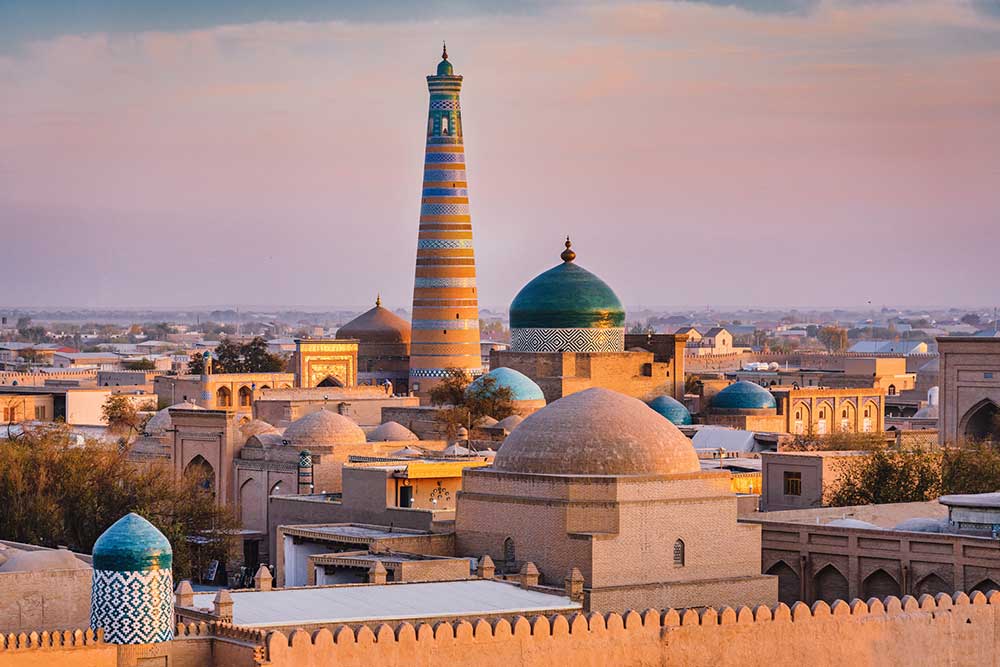
The result is a country rapidly emerging as one of the world’s most compelling tourism hotspots.
Why visit Uzbekistan now?
Since gaining independence from the Soviet Union in 1991, Uzbekistan has transformed into an open, secular Islamic state with a growing tourism sector.
Investment in transport, hotels and visitor infrastructure has made travelling here easier than ever before.
For travellers seeking history, culture and authenticity without the crowds of Europe’s more established destinations, Uzbekistan delivers in abundance.
Tashkent: A modern gateway to the Silk Road
Most journeys begin in Tashkent, Uzbekistan’s capital and most modern city.
Rebuilt after a devastating 1966 earthquake, Tashkent has an increasing number of four- and five-star hotels, making it a comfortable base for exploring the country.
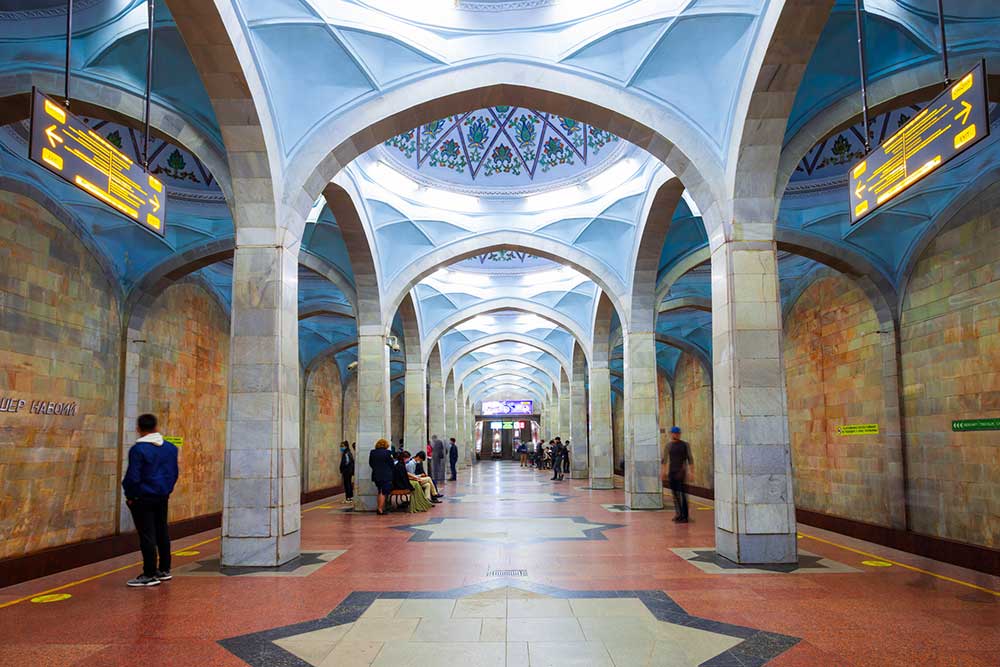
Inside the Alisher Navoiy metro station in Tashkent. Photo Getty Images.
Tashkent Metro: The world’s most beautiful underground gallery
One of the standout attractions in Tashkent – and one of the most unique things to do in Uzbekistan – is exploring the Tashkent Metro. Constructed between 1977 and 1991, the metro stations are far more than transport hubs. Each is a work of art, combining Soviet Realism with traditional Uzbek design elements such as mosaics, marble, chandeliers and ornate detailing.Must-see metro stations
- Alisher Navoiy: Named after Uzbekistan’s greatest poet and philosopher, this station is where Soviet social realism meets traditional Uzbek artistry and culture.
- Kosmonavtlar: A striking ‘space station’ celebrating Soviet space achievements.
- Gafur Gulom: Honouring one of Uzbekistan’s most beloved 20th-century poets known for his works celebrating Uzbek identity and nature.
- Xalqlar Do’stligi: Boasts amazing mosaics and bronze reliefs depicting international unity and brotherhood. The name literally means ‘Friendship of Nations.’
- Mustaqillik Maydoni: A station in white marble with a massive dome covered in gold mosaic tiles that create a sunburst pattern.
- Tashkent Station: A station memorial to the city’s resilience following the devastating 1966 with themes of reconstruction, hope, and city pride.
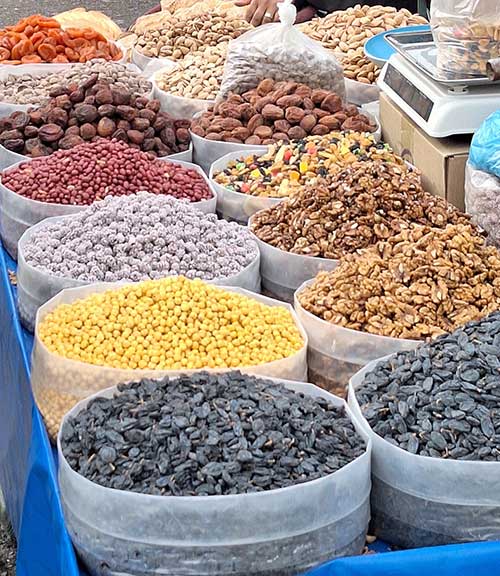
The colours and flavours of Chorsu Bazaar.
Chorsu Bazaar: A classic Silk Road market
No visit to Tashkent is complete without a stop at Chorsu Bazaar. The Silk Road, the route of overland trade between China and Europe and all points in between, means you cannot visit Tashkent and not explore one of the city’s bazaars. The largest is the rambling and bustling Chorsu Bazaar, served by its own metro station. From fresh fruits and meat, to clothing, souvenirs and carpets there isn’t much that you won’t see on sale at Chorsu.A new cultural landmark
The Centre for Islamic Civilisation in Tashkent is set to become one of the country’s most significant cultural attractions. The centre, opened in March, showcases Uzbekistan’s role in the intellectual and scientific achievements of the Islamic world, highlighting contributions to astronomy, mathematics and philosophy during the Eastern Renaissance.Beyond Tashkent: The Great Silk Road cities
While Tashkent offers a modern introduction, the true highlights of Uzbekistan lie in its historic Silk Road cities.Samarkand: The Jewel of Central Asia
Easily reached via the high-speed Afrasiab train, Samarkand is one of the world’s oldest inhabited cities, with origins dating back to the 7th-8th centuries BC.
At the heart of the city is Registan Square, one of the most breathtaking architectural ensembles in the Islamic world.
Here, three grand madrassas dominate the skyline:
- Ulugh Beg Madrasah (1417–1420)
- Sher-Dor Madrasah (1619–1636)
- Tilya-Kori Madrasah (1646–1660).
Their intricate tilework, vast courtyards and golden interiors reflect the grandeur of the Timurid Empire, which once ruled across much of Central Asia.
Today, Registan is rightly a UNESCO World Heritage site and one of the defining images of Silk Road travel.
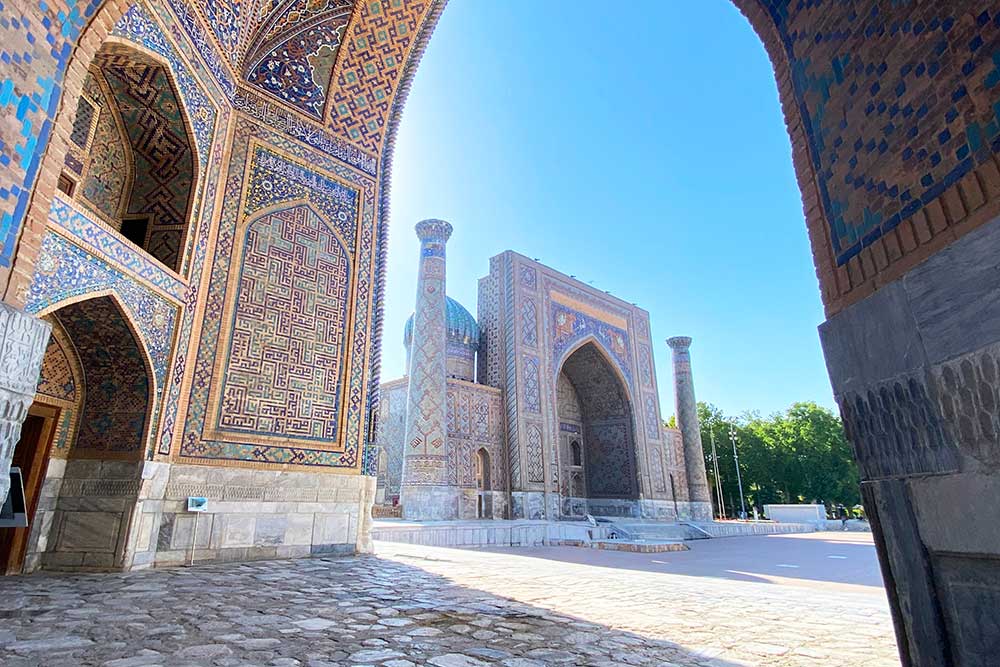
The view of Registan Square and Sherdor Madrasah from Tillya Kori Madrasah. Photo Getty Images.
Khiva: An open-air museum
Khiva, the most remote of the three major Silk Road cities, is well worth the journey. It is a slower trip on a regional rail.
Encircled by ancient walls, the old town – known as Itchan Kala – is effectively an open-air museum. Its minarets, palaces and madrassas are remarkably intact, offering a vivid glimpse into life along the Silk Road.
Bukhara: A living medieval city
Further to the west on the fast and modern Afrasiab rail is the ancient city of Bukhara, widely regarded as the best-preserved medieval city in Central Asia.
Here you have the tomb of Ismail Samani, a masterpiece of 10th-century Muslim architecture, and a number of 17th-century madrassas.
Getting around Uzbekistan
- Travelling between Uzbekistan’s major cities is straightforward.
- High-speed Afrasiab trains connect Tashkent, Samarkand and Bukhara.
- Regional rail services extend to Khiva.
- Domestic flights are also available for quicker travel.
The rail system, in particular, makes it easy to explore multiple destinations in a single trip.
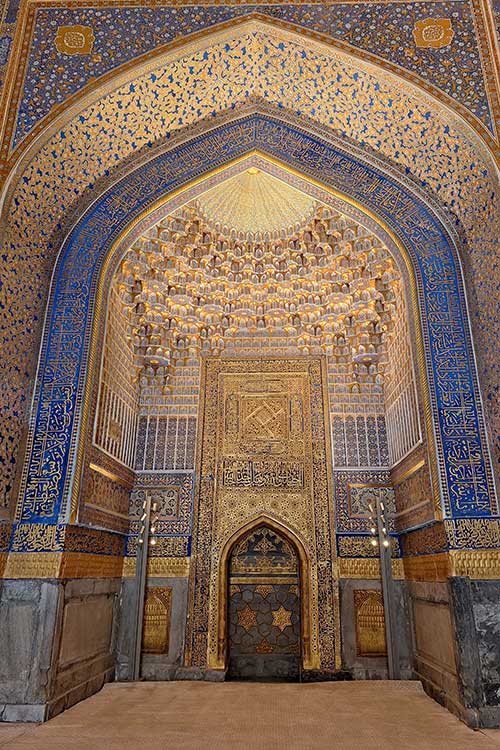
Inside the Tillah Kari Mosque in Registan Square, Samarkand.
Uzbek food: A highlight of the journey
Uzbek cuisine reflects the country’s position at the crossroads of the Silk Road, blending influences from the Middle East, China and India.
Must-try dishes
- Plov: The national dish, a rich rice dish with meat and vegetables.
- Manty: Steamed dumplings filled with meat.
- Shashlik: Skewered and grilled meats or vegetables.
- Lagman: Hearty noodle soup.
- Samsa: Baked pastries similar to a pasty, often sold as street food.
Why Uzbekistan should be on your travel list
With its combination of ancient cities, striking architecture, rich cuisine and improving infrastructure, Uzbekistan offers one of the most rewarding travel experiences in Central Asia.
From the marble halls of the Tashkent Metro to the timeless beauty of Registan Square, it is a destination where history is not just preserved, it is lived.
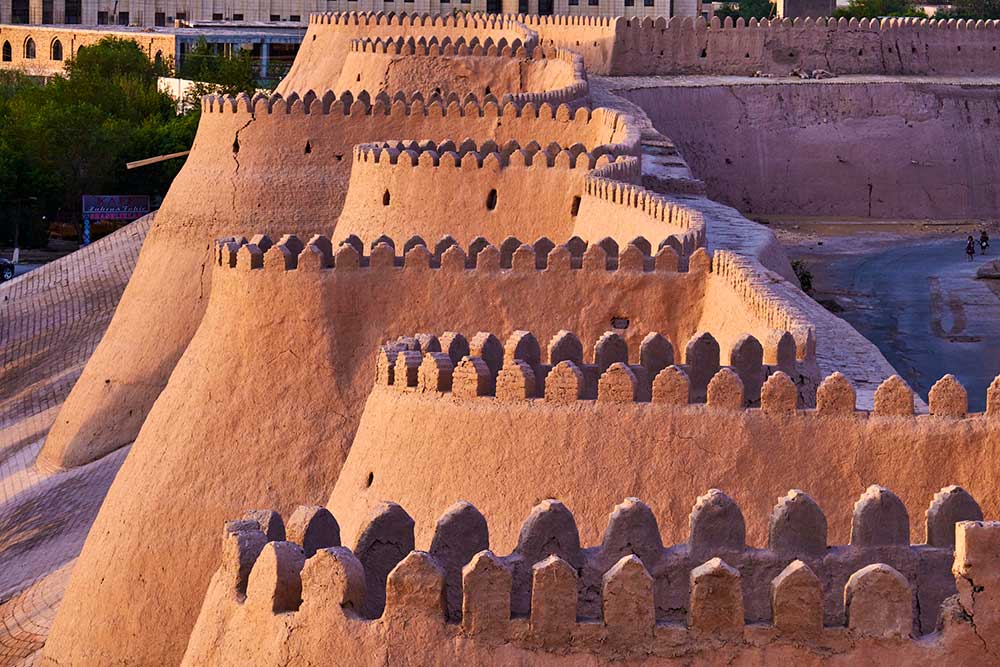
The ancient walls in the city of Khiva. Photo Getty Images.
FAQs about visiting Uzbekistan
Is it safe to visit Uzbekistan?
The main cities in Uzbekistan have travel safety ratings on par with European cities. Borders areas with volatile neighbours should be avoided. Always check with the Australian Government's Smart Traveller website.
When is best time to visit?
The best times to visit Uzbekistan is anytime outside of the hot summer months of June to August and the peak winter in January. Other winter months are generally cold, like Canberra, which allows you to avoid the increasing number of tourists.
How do I get to Uzbekistan?
Getting to Uzbekistan is usually through Tashkent International Airports which has global connections including with Dubai, Doha, Istanbul, Bangkok and Kuala Lumpur.
Is it an expensive country to visit?
Uzbekistan is affordable place to visit, though global hotel chain prices are comparable with many other countries.
Michael Kane

Related topics
Things to note
The information in this article has been prepared for general information purposes only and is not intended as legal advice or specific advice to any particular person. Any advice contained in the document is general advice, not intended as legal advice or professional advice and does not take into account any person’s particular circumstances. Before acting on anything based on this advice you should consider its appropriateness to you, having regard to your objectives and needs.
Insurance Products (excluding Travel Insurance) are issued by RACQ Insurance Limited ABN 50 009 704 152 (RACQI) and arranged by RACQ Distribution Services Pty Ltd (RDS) ABN 35 116 361 650, AFSL 567130 and RDS' authorised representatives (including RACQ Operations Pty Ltd ABN 80 009 663 414, AR No. 234978 (RACQO)). Conditions, limits and exclusions apply.
Any advice provided by RDS and RACQO is general advice only and does not take into account your personal objectives, financial situation or needs and you will need to consider whether the advice is appropriate for you. Read the Product Disclosure Statement (PDS) before making a purchase decision on the product. You can also access our Target Market Determinations on this website.
RDS receives a commission from RACQI for the policies it arranges. RACQO receives fees paid for services it provides to RDS. Further details about remuneration are available on request prior to purchasing.
Banking and loan products issued by Members Banking Group Limited ABN 83 087 651 054 AFSL/Australian credit licence 241195 trading as RACQ Bank. Terms, conditions, fees, charges and lending policies apply. This is general advice only and may not be right for you. This information does not take your personal objectives, circumstances or needs into account. Read the disclosure documents for your selected product or service, including the Financial Services Guide and the Terms and Conditions, and consider if appropriate for you before deciding.
Except for RACQ Bank, any RACQ entity referred to on this page is not an authorised deposit-taking institution for the purposes of the Banking Act 1959 (Cth). That entity’s obligations do not represent deposits or other liabilities of RACQ Bank. RACQ Bank does not guarantee or otherwise provide assurance in respect of the obligations of that entity, unless noted otherwise.
RACQ Bank subscribes to the Customer Owned Banking Code of Practice which establishes higher standards than the law requires. The Code reflects modern consumer expectations and developments in approaches to issues such as consumer vulnerability, guarantors, and supporting customers through financial hardship. Please read our Customer Owned Banking Code of Practice page for more information.
RACQ Operations Pty Ltd (ABN 80 009 663 414, AR No. 234978) and Members Travel Group Pty Ltd (ABN 45 144 538 803, AR No.432492) (RACQ) are authorised representatives of the RACQ Travel Insurance insurer Tokio Marine & Nichido Fire Insurance Co., Ltd. (ABN 80 000 438 291 AFSL 246 548) (Tokio Marine). Tokio Marine Management (Australasia) Pty Ltd (ABN 69 001 488 455, AR No. 1313066) is an authorised representative of Tokio Marine, and administers RACQ Travel Insurance as the managing agent on behalf of Tokio Marine. Terms, conditions (including eligibility criteria), exclusions, limits and sub-limits apply. Any advice is general advice only, and does not take into account your specific objectives, financial situation or needs. Before you purchase, please consider the Combined Product Disclosure Statement (PDS) / Financial Services Guide (FSG) and Target Market Determinations (TMDs) available at racq.com or on request from RACQ.