
What is car insurance excess
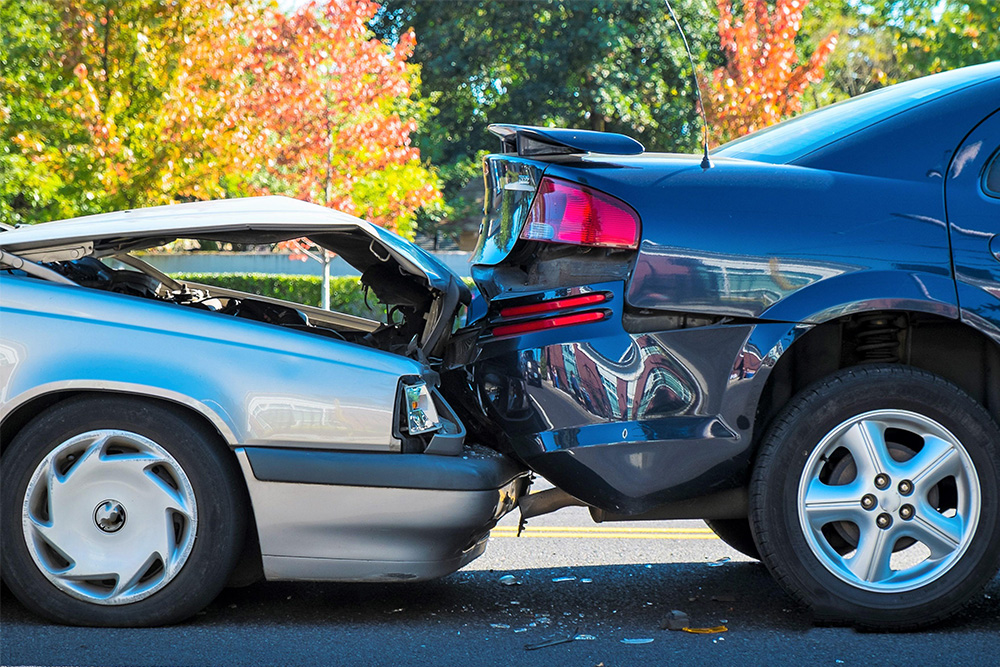
Understanding how car insurance excess impacts your premium or claim
Imagine this: you’re in a minor car accident. Thankfully you have comprehensive motor vehicle insurance so you’ll be able to get your car repaired. When you call your insurer, they inform you that you need to pay an excess of $1,000. Thankfully, the excess amount can be paid to the repairer when the work is complete. You also learn that if your car is written off instead of repaired, the excess may be deducted from any settlement. Would you be able to cover this cost without it blowing your budget?
While the above is an imaginary scenario, the potential effect of the excess you select when you buy car insurance is very real. According to the Australian Prudential Regulation Authority (APRA), insurers paid out a total of $11.565 billion in car insurance claims from September 2023 to September 2024. With approximately 18.13 million policies in place, this suggests the average claim can run into the thousands. In other words, if an incident occurs, you’ll likely be responsible for paying the full excess if you choose the standard $1,000 excess as in the scenario above. This is why it’s so important to make sure your car insurance suits your circumstances and budget.
Knowing what your car insurance covers can also help you understand how and what excesses may apply in different situations as outlined in your Product Disclosure Statement (PDS). Read on to learn more about the impact of excess on your motor vehicle cover.
In this article, you will learn:
- Key takeaways
- What is car insurance excess?
- How does car insurance excess work?
- The different types of car insurance excesses
- When you will and won't need to pay excess
- RACQ's tips for choosing the right excess for your needs
- Answers to frequently asked questions
Key Takeaways
- The excess on your car insurance policy is the amount you contribute towards the cost of each claim you make.
- Choosing a higher excess generally results in a lower premium, while a lower excess leads to a higher premium.
- There are different types of excess, including basic, age-related, and special excesses which apply in different situations.
- RACQ offers optional ‘Excess free glass repair’ for an additional premium, which can save you from paying excess on minor damage to windscreens and auto glass*.
What is excess in car insurance?
Excess is the upfront amount you must contribute when making a claim on your car insurance. Think of it as your share of the cost before your insurer steps in to cover the remaining expenses.
For example, if your car is comprehensively insured for an agreed value of $25,000 and your basic excess is $1,000, and your car is damaged in an accident or an insured event with repair costs assessed at $6,500, you would pay the first $1,000. Your insurer would cover the remaining $5,500.
How does car insurance excess work?
When a claim is made, an excess is usually paid. This excess amount would have been agreed upon at the time of taking out the insurance policy. However, what excess is paid and when it is paid depends on the circumstances of the claim.
For example:
- If you’re at fault in an accident, you’ll need to pay your excess before your insurer covers the remaining costs, as mentioned above.
- If you’re not at fault and can identify the other driver, you may not need to pay an excess.
- If your car is stolen or vandalised, you’ll likely need to pay your excess.
Types of car insurance excess
Your Certificate of Insurance (COI) will show the types and amounts of excesses that may apply. In some cases, more than one excess may be payable.
Basic or standard excess
The basic excess applies to all claims, no matter who or what caused the damage. It’s the amount you pay before the insurer covers the rest.
Additional Excesses
The following types of excesses may apply on top of your basic excess:
- Age excess – Extra cost if the driver is young or inexperienced, whether listed on your COI or not.
- Inexperienced driver excess – Applies if the driver is 25 or older but has not held a full or open Australian license for the preceding two consecutive years.
- High-performance excess – Applies to certain high-performance vehicles and is listed as a non-removable excess on your COI.
- Listed driver excess – applies based off claims, traffic and criminal history and the amount is listed on your COI under the name of the listed driver.
When you will and won't need to pay excess
On certain occasions you need to pay a basic excess when making a claim, such as if you're at fault in an accident and your vehicle is repairable or written off, stolen or vandalised. That same basic excess would also apply if a listed driver on your policy causes an accident. This amount is your contribution towards the repair or replacement costs before your insurer covers the rest.
However, there may be cases where you won’t need to pay an excess. If another driver is entirely responsible for the accident and you provided all the required details of the third party driver, as per policy requirements, you may not have to pay an excess, regardless if the at-fault driver is insured or not. Some policies also offer the optional benefit of excess free glass repair, meaning auto glass can be repaired or replaced once without a charge.
RACQ's tips for choosing the right excess
- Assess your risk tolerance: If you prefer to reduce upfront expenses, a lower excess might be worth the higher premiums.
- Consider optional add-on: RACQ offers an optional benefit for car insurance called ‘Excess free glass repair’ which can save you from paying an excess on one glass repair or replacement.
- Factor in how often and how far you drive: Your driving frequency and location may factor into the likelihood of being involved in an incident. Frequent drivers might choose a lower excess if they feel being on the road more makes an incident more likely, whereas infrequent drivers may feel comfortable with a higher excess due to them being on the road less.
FAQs
Can I pay my car insurance excess in instalments?
Yes, if you’re insured with RACQ Car Insurance, you have the option to pay your excess in instalments. For other insurers, you’ll want to discuss with them ahead of time or choose your excess accordingly if you anticipate paying the full amount upfront may be a problem.
What if I can't afford my car insurance excess?
If you need to make a claim and are unable to afford the excess, you may be able to negotiate a payment plan for your excess. At RACQ we understand that sometimes people experience financial hardship. You can find support information on our webpage for supporting vulnerability and hardship.
Who pays the excess if I’m not at fault?
If another driver is entirely at fault and you’ve provided all the required details of the other party, you generally won’t need to pay an excess upfront — even if the at-fault driver is uninsured. However, if liability is unclear or you're found to be at fault, you may be required to pay the excess.
Does excess change for learner or P-plate drivers?
Higher excesses may apply if a young or inexperienced driver was involved in an accident. Learner drivers are the exception, generally an additional excess does not apply for them.
Please review our Product Disclosure Statement (PDS), any applicable Supplementary PDS and Target Market Determinations for details.
Conclusion
Understanding car insurance excess can help you make more informed decisions about your coverage, premiums and potential claims. Take the time to review your policy and choose an excess that aligns with your budget and risk comfort.
If you need additional information to help you decide which level of cover or excess to choose, reach out to our helpful RACQ team on 13 1905 or get your quote online.


More articles
Related topics
Things to note
The information in this article has been prepared for general information purposes only and is not intended as legal advice or specific advice to any particular person. Any advice contained in the document is general advice, not intended as legal advice or professional advice and does not take into account any person’s particular circumstances. Before acting on anything based on this advice you should consider its appropriateness to you, having regard to your objectives and needs.
Insurance Products (excluding Travel Insurance) are issued by RACQ Insurance Limited ABN 50 009 704 152 (RACQI) and arranged by RACQ Distribution Services Pty Ltd (RDS) ABN 35 116 361 650, AFSL 567130 and RDS' authorised representatives (including RACQ Operations Pty Ltd ABN 80 009 663 414, AR No. 234978 (RACQO)). Conditions, limits and exclusions apply.
Any advice provided by RDS and RACQO is general advice only and does not take into account your personal objectives, financial situation or needs and you will need to consider whether the advice is appropriate for you. Read the Product Disclosure Statement (PDS) before making a purchase decision on the product. You can also access our Target Market Determinations on this website.
RDS receives a commission from RACQI for the policies it arranges. RACQO receives fees paid for services it provides to RDS. Further details about remuneration are available on request prior to purchasing.
Banking and loan products issued by Members Banking Group Limited ABN 83 087 651 054 AFSL/Australian credit licence 241195 trading as RACQ Bank. Terms, conditions, fees, charges and lending policies apply. This is general advice only and may not be right for you. This information does not take your personal objectives, circumstances or needs into account. Read the disclosure documents for your selected product or service, including the Financial Services Guide and the Terms and Conditions, and consider if appropriate for you before deciding.
Except for RACQ Bank, any RACQ entity referred to on this page is not an authorised deposit-taking institution for the purposes of the Banking Act 1959 (Cth). That entity’s obligations do not represent deposits or other liabilities of RACQ Bank. RACQ Bank does not guarantee or otherwise provide assurance in respect of the obligations of that entity, unless noted otherwise.
RACQ Bank subscribes to the Customer Owned Banking Code of Practice which establishes higher standards than the law requires. The Code reflects modern consumer expectations and developments in approaches to issues such as consumer vulnerability, guarantors, and supporting customers through financial hardship. Please read our Customer Owned Banking Code of Practice page for more information.
RACQ Operations Pty Ltd (ABN 80 009 663 414, AR No. 234978) and Members Travel Group Pty Ltd (ABN 45 144 538 803, AR No.432492) (RACQ) are authorised representatives of the RACQ Travel Insurance insurer Tokio Marine & Nichido Fire Insurance Co., Ltd. (ABN 80 000 438 291 AFSL 246 548) (Tokio Marine). Tokio Marine Management (Australasia) Pty Ltd (ABN 69 001 488 455, AR No. 1313066) is an authorised representative of Tokio Marine, and administers RACQ Travel Insurance as the managing agent on behalf of Tokio Marine. Terms, conditions (including eligibility criteria), exclusions, limits and sub-limits apply. Any advice is general advice only, and does not take into account your specific objectives, financial situation or needs. Before you purchase, please consider the Combined Product Disclosure Statement (PDS) / Financial Services Guide (FSG) and Target Market Determinations (TMDs) available at racq.com or on request from RACQ.