

Celebrating 100 years of roadside assistance
Helping Queenslanders get back on the road since 1925
For a century, RACQ Roadside Assistance has been there for Queenslanders
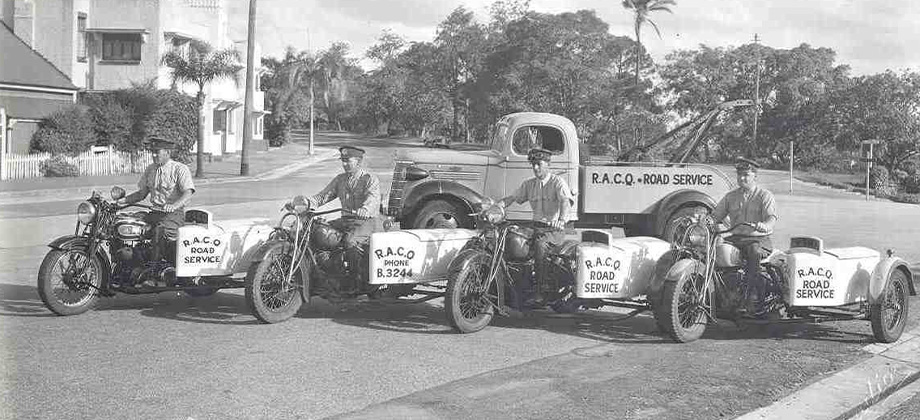
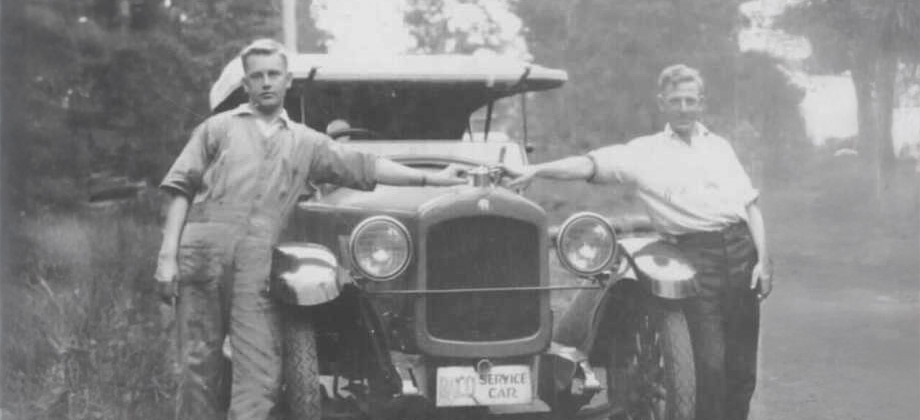
It was 1925 when the Club appointed its first two mechanics, George Clark and Eddie Henderson, to patrol Brisbane on motorcycles, helping motorists in need of assistance.
Over the decades, RACQ evolved to meet growing demand, expanding its reach to every corner of Queensland while adapting its service to better suit the needs of members.
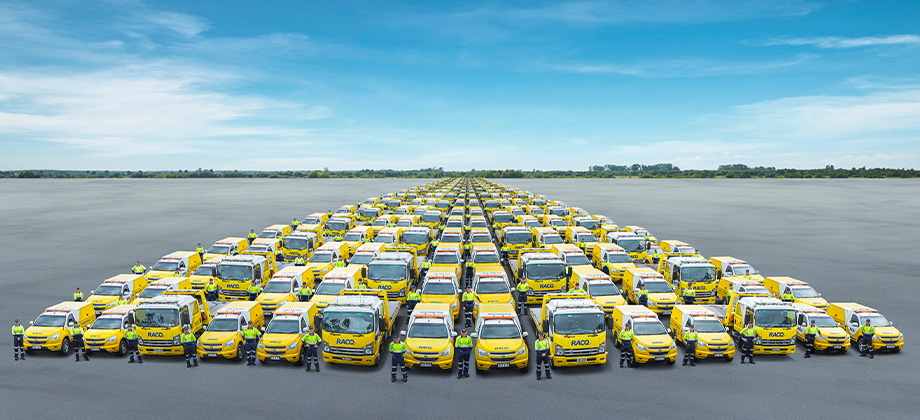
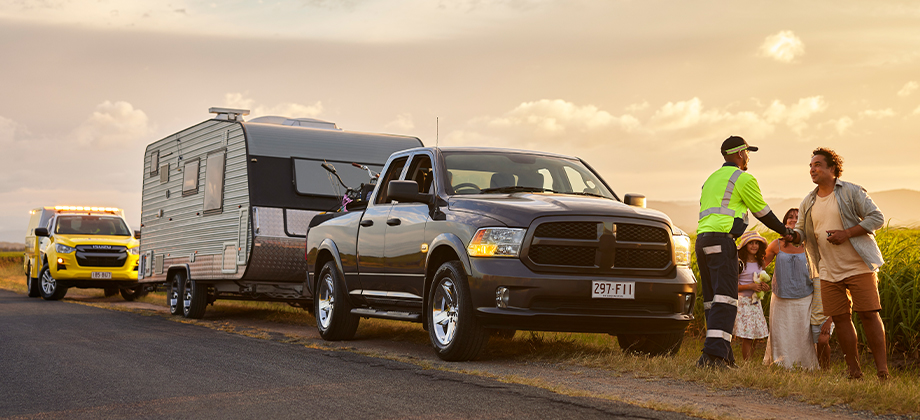
Today, we continue this important role for our more than 1.2 million roadside assistance members with a fleet of over 750 roadside patrols, external service providers and tow trucks operating across the State.
As we mark a century of service, we thank our members for being part of our journey. With the same dedication and commitment, we look forward to the road ahead – ready to serve you for the next 100 years.
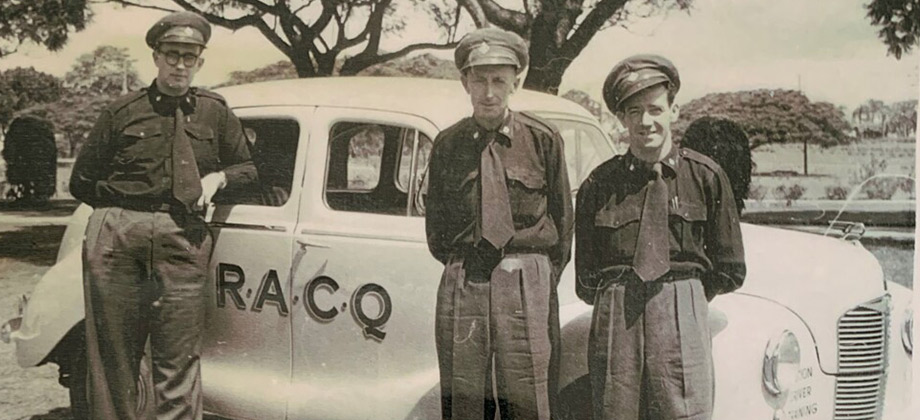
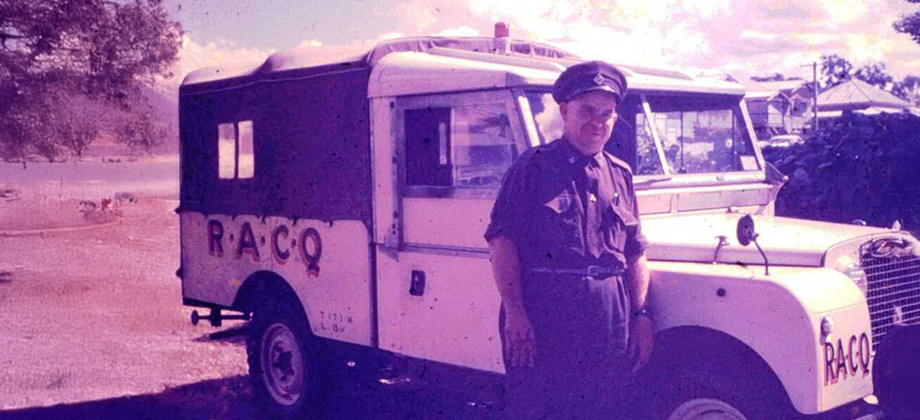
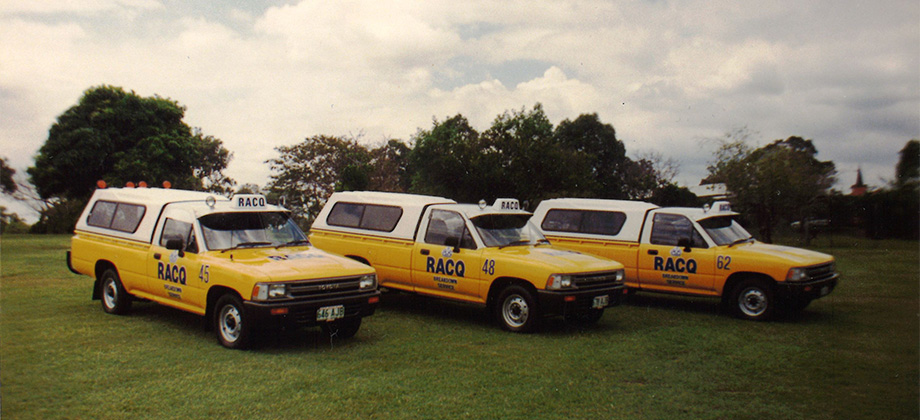
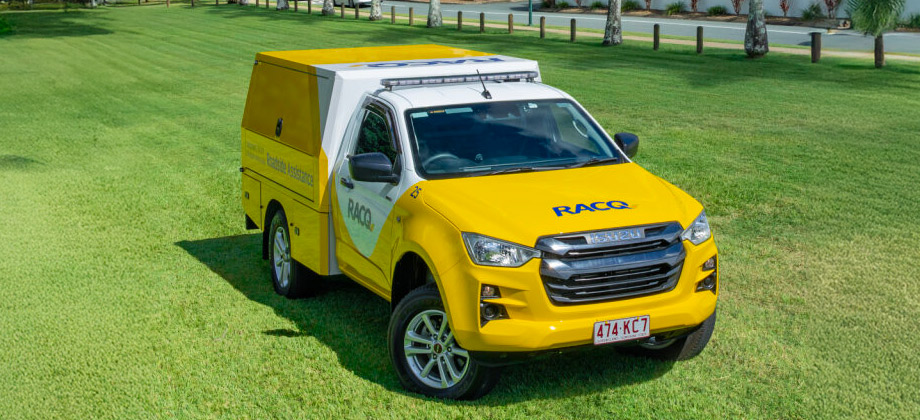
From motorcycles to modern patrols, see how our fleet has evolved to deliver the “yellow truck feeling” for motorists – the relief of knowing help has arrived and you're in safe hands.
Celebrating 100 Years of Roadside Assistance
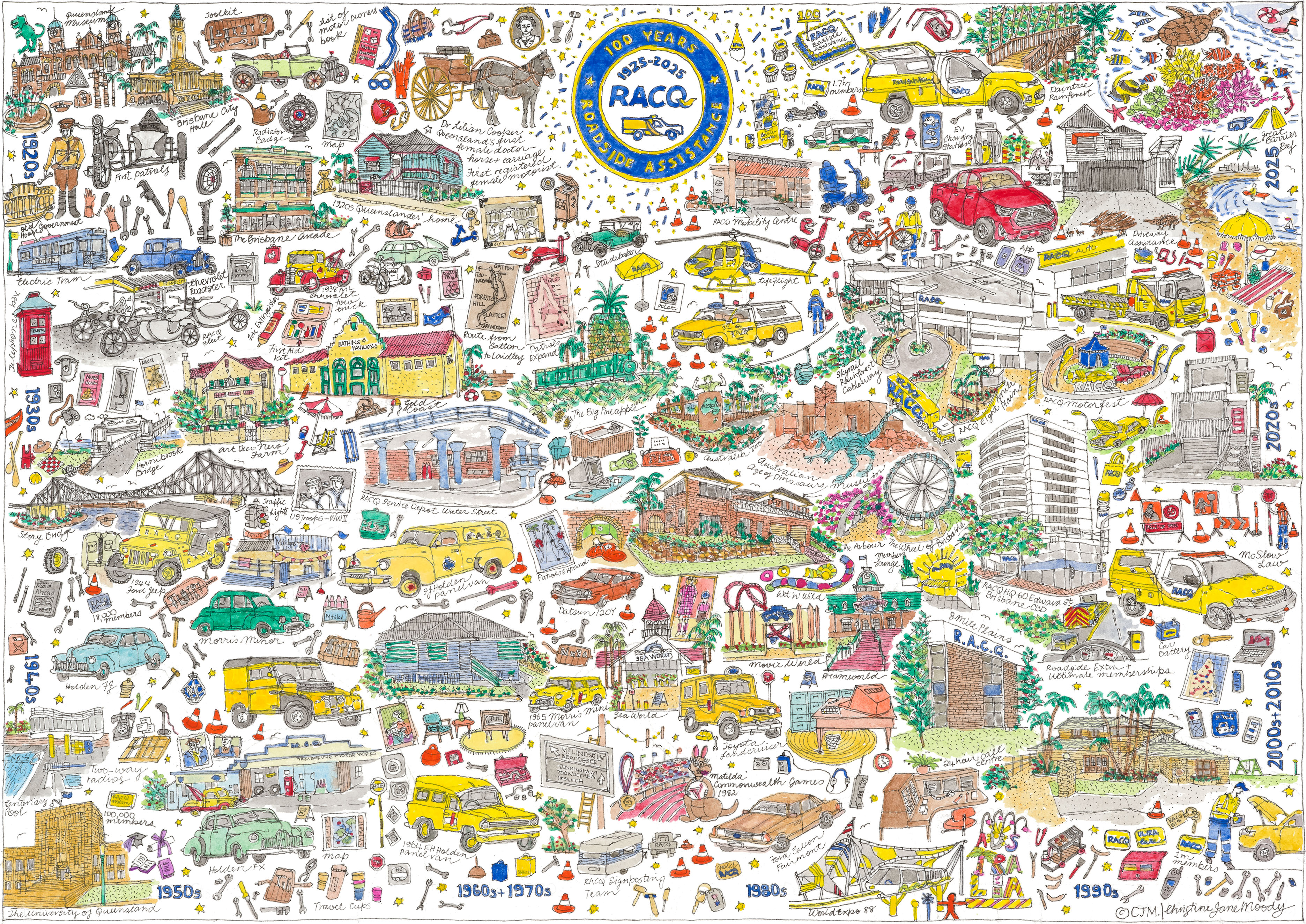
To mark our 100th year of RACQ Roadside Assistance, we commissioned this special illustration by Christine Moody, capturing the milestones, moments, and machines that have shaped a century of service.
See the story come to life – move your cursor across the page then click to reveal key moments from our journey. Discover how far we’ve come in keeping Queensland moving.
Want to keep a piece of history?
Download a printable version of the illustration and join us in celebrating 100 years on the road.

1905 - Dr Lillian Cooper
Dr Lilian Cooper, Queensland’s first registered female doctor (1891), was the only woman among 18 founding ACQ members in 1905. She was also the State’s first recorded female motorist. The medical practitioners saw motor cars as better form of transport to carry out their duties than the horse and buggy.
1910 - Queensland’s Government House
Fernberg, Queensland’s Government House since 1910, is a heritage-listed estate in Paddington. On 15 April 1919, the ACQ asked Governor Sir Hamilton Goold-Adams to support adding ‘royal’ to its name, citing WWI service. King George V approved it in 1921, and ACQ became RACQ.
1920s - New beginnings
In 1925, RACQ’s first two mechanics, George Clark and Eddie Henderson, patrolled Brisbane on motorcycles. Demand saw more patrols added, and by late 1927 the service expanded beyond Brisbane, operating 24/7. By 1929, 180 garages across Queensland were helping RACQ members.
1930 - Expanding patrols
In 1930, RACQ bought its first patrol motorcycles and sidecars, replacing officers’ own bikes. A 1937 AJS from this era is now in RACQ’s historic collection. Rising demand saw service hours extended to 8:30am–11:30pm by 1932, and in 1935 the first fleet car, a Chevrolet roadster, joined the mainly motorcycle-based patrols.
1935 - Chevrolet tow truck
In 1935, the first fleet car, a Chevrolet roadster, was introduced, though motorcycles and sidecars remained the main model of patrol vehicle for some time.
1940s - Wartime challenges
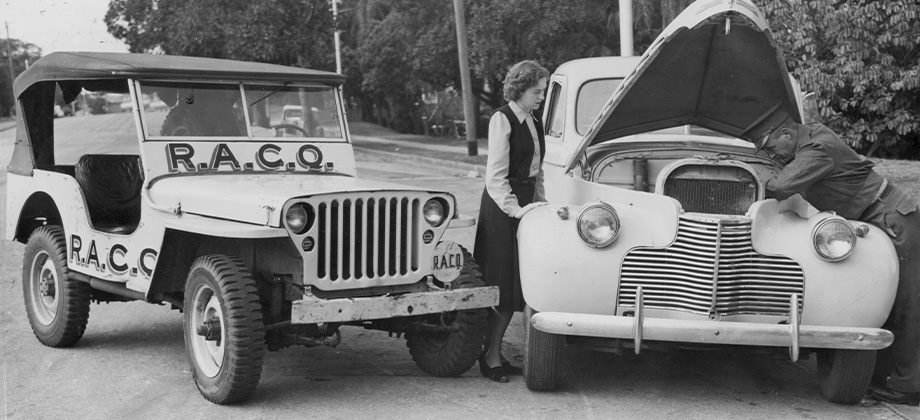
WWII caused mechanic and parts shortages, yet roadside assistance demand stayed high. RACQ accepted receipts from unlisted repairers to keep up with demand and petrol rationing saw some patrol bikes altered to run on charcoal gas. By 1947, uniformed patrols reached cities like Toowoomba and Townsville. Ex-war Jeeps began replacing motorcycles.
1942 - US Sailors in Brisbane
During WWII, Brisbane was a key US base in the Pacific. Naval Base Brisbane, set up in 1942 on the Brisbane River, supported submarine ops, aircraft patrols, and convoy escorts. Facilities included repair depots, seaplane bases, and Camp Seabee at Eagle Farm for staging construction battalions.x
1950s-60s - Modernisation
In 1955, RACQ made a major leap in communication with two-way radios in patrol vehicles, enabling direct contact with despatchers. Roadside assistance now reached towns across Queensland, from Cairns to Warwick. Membership grew rapidly too — from 18,000 in 1945 to 100,000 by 1957.
1987 – Tech-driven progress
In 1987, RACQ introduced a computer-aided dispatch system, marking a new era in roadside assistance efficiency. This advancement enabled faster, more reliable service for members by improving patrol coordination and communication across Queensland.
1990s – A million members
Throughout the 1990s, RACQ launched Ultra Care and Show Your Card and Save. Membership exceeded one million in 1995. In 1998, the 24-hour call centre at Eight Mile Plains opened, enhancing support and service for members statewide.
1998 – 24-hour call centre
RACQ's Eight Mile Plains head office evolved in 1998 when a 24-hour call centre was opened. This call centre still operates today from the same location.
2016 – RACQ app launch
RACQ launched its roadside assistance app in 2016, letting members request help with one tap. GPS detects location, and real-time updates are shared with users and their contacts. The app also serves as a digital membership card, offers discounts, and allows non-members to join RACQ.
2019 - RACQ Mobility Centre
RACQ took over the Mt Cotton facility from the State Government in 2019, reopening it in 2020 as the RACQ Mobility Centre of Excellence after a $15M upgrade. Set on 45ha of bushland, it features a 3.5km circuit replicating QLD roads, plus 4WD tracks, skidpans, and training areas for large vehicles and caravans.
2020s - Next-gen assistance
RACQ expanded its roadside services in 2023 to cover the next generation of transportation including e-scooters, mobility devices, SUVs and caravans. By 2024, RACQ patrols began training in EV skills, keeping pace with Queensland’s rapidly evolving transport landscape.
2025 – Driving forward
Today, RACQ Roadside Assistance has more than 1 million members. It has a fleet of over 750 roadside patrols, external service providers and tow trucks operating across the State. We want to ensure that no matter how the world of motoring changes, Queenslanders will always have a trusted partner on the road.
RACQ Roadside Assistance over the years
Since 1925, we’ve witnessed the evolution of transport from horse and cart, to motor vehicles, and to e-mobility. Yet, through it all, RACQ has never stopped serving Queenslanders in their times of need, no matter where they are or when they need us.
-

26 March 1925 – RACQ launched its roadside assistance service.
The Club appointed two mechanics, George Clark and Eddie Henderson, to patrol Brisbane on motorcycles, helping motorists in need.
The service quickly gained popularity, so much so that by September, a third patrol officer was added.
By November, support was limited to RACQ members, and five more officers joined the team the following year.
In late 1927, the service expanded beyond Brisbane after the Toowoomba branch suggested a statewide, 24-hour roadside assistance program. The idea was approved, and by 1929, RACQ had 180 garages across Queensland providing assistance to members.
-

1930s
In 1930, RACQ took a major step buying its first motorcycles and sidecars, moving away from the earlier practice of patrol officers using their own motorcycles.
The fleet continued to grow throughout the 1930s, with one of these early motorcycles, a 1937 AJS, now part of RACQ's historic vehicle collection.
As demand for roadside assistance grew, RACQ extended its service hours. By 1932, the service was available from 8:30am to 11:30pm.
In 1935, the first fleet car, a Chevrolet roadster, was introduced, though motorcycles and sidecars remained the main model of patrol vehicle for some time.
-

1940s
World War II brought its challenges, including a shortage of mechanics and fuel rationing.
Despite fewer vehicles on the road, demand for roadside assistance remained high due to poor maintenance and a shortage of tyres and parts.
To adapt, RACQ began accepting receipts from unlisted repairers in 1944 when members couldn’t access approved garages.
Petrol rationing saw several motorcycle patrols converted to run on charcoal gas. After the war, the roadside service continued to grow.
By 1946, uniformed patrols were introduced in Toowoomba and Rockhampton, and by 1947, they expanded to Ipswich and Townsville.
During the late 1940s, RACQ started replacing motorcycles with ex-war Jeeps, which they used into the 1950s.
-
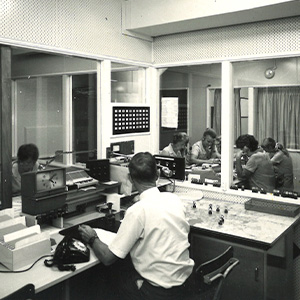
1950s
In 1955, a big leap forward was made with communication when two-way radios were installed in patrol vehicles, allowing officers to communicate directly with despatchers.
By this point, RACQ’s roadside assistance had expanded across Queensland, including in Cairns, Mackay, Bundaberg, Maryborough, Nambour, the Gold Coast, and Warwick.
From a membership base of 18,000 in 1945, the Club grew to 100,000 members by 1957.
-
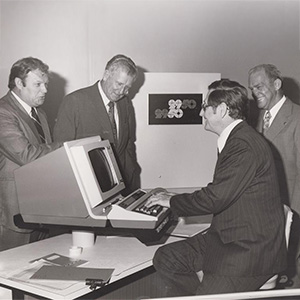
1960s-1970s
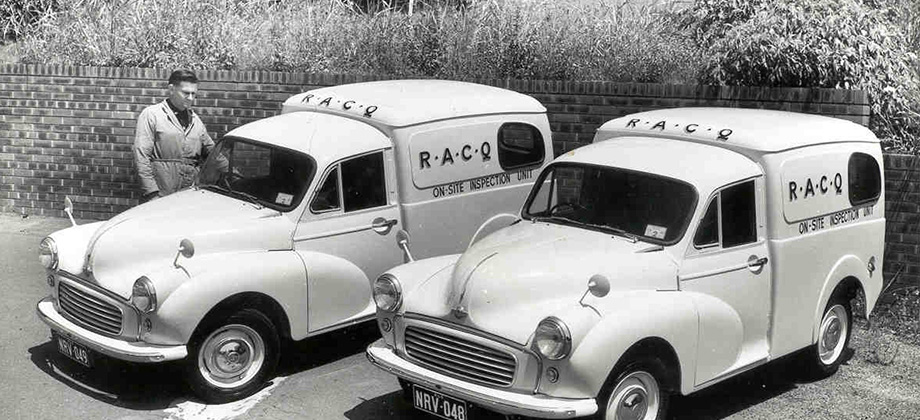
The 1960s and 1970s marked a period of significant technological advancements and service expansions for RACQ. In 1965, the organisation commissioned its first computer and by 1975, RACQ introduced a 24-hour telephone road information service. These innovations paved the way for enhanced member services and set the foundation for future digital advancements.
-
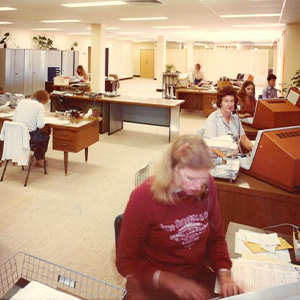
1980s
Roadside service took another major leap forward in efficiency in 1987 when a computer-aided despatch system was introduced. This innovation streamlined patrol despatching, enhanced communication, and ultimately provided members with a quicker and more reliable service.
-

1990s
Throughout the 1990s, there was a focus on creating new services and products.
In 1995, Ultra Care, a premium roadside assistance product, was introduced, as well as the Show Your Card and Save member benefits program. In 1995, RACQ membership surpassed one million, more than one quarter of Queensland’s total population.
The next evolution occurred in 1998 when a 24-hour call centre was opened at Eight Mile Plains.
-
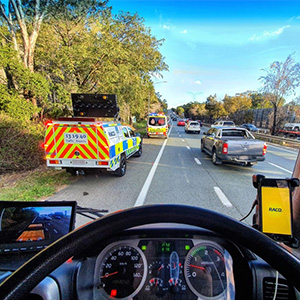
2000s-2010s
In 2009, RACQ expanded its roadside assistance offerings with the introduction of Roadside Extra and Ultimate memberships, providing members with enhanced benefits and greater peace of mind on the road.
In 2011, embracing the rise of mobile technology, RACQ launched its first smartphone app, making it easier than ever for members to access services, request assistance, and stay informed while on the go.
Continuing its commitment to road safety, RACQ began advocating in 2017 for legislation requiring motorists to slow down and move over when passing roadside incidents. This critical safety measure, designed to protect roadside workers and motorists, was officially adopted by the Queensland Government in September 2022 with the implementation of the MoSlow Law.
-
2020s
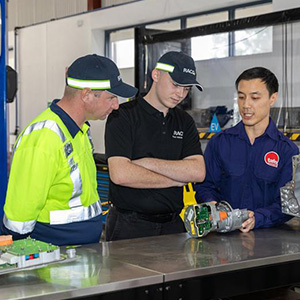
In 2023, RACQ introduced an updated suite of roadside assistance products, catering for everything from e-scooters and mobility devices to large SUVs and caravans. This was hailed as the biggest development in roadside assistance since George Clark and Eddie Henderson first started patrolling Brisbane’s dusty streets in 1925.
In 2024, RACQ patrols were among the first apprentices to join TAFE Queensland’s inaugural EV skills program, equipping them to meet the demands of an increasingly electrified transport industry.
-
2025
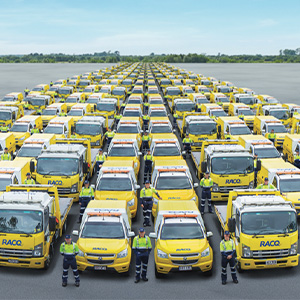
Today, RACQ Roadside Assistance has more than 1.2 million members with a fleet of over 750 roadside patrols, external service providers and tow trucks operating across the State. As we look to the future, the legacy of RACQ’s early pioneers continues to drive the evolution of roadside assistance, ensuring that no matter how the world of motoring changes, Queenslanders will always have a trusted partner on the road.

Read more about 100 years of RACQ Roadside Assistance
Things to note
Terms, conditions and exclusions apply. For full details read the Roadside Terms and Conditions.
RACQ may need to collect personal information from you to support you with your inquiry, assess your eligibility for any of our products or services, or to provide general support. By providing your details, you agree to RACQ collecting, holding, using, and disclosing your personal information pursuant to our Privacy Statement and Assistance Privacy Collection Notice, available from racq.com or you can request a copy.
Video credit: 7NEWS Brisbane Flashback 23 March 2025