
Reform critical after Qld e-mobility injuries almost double
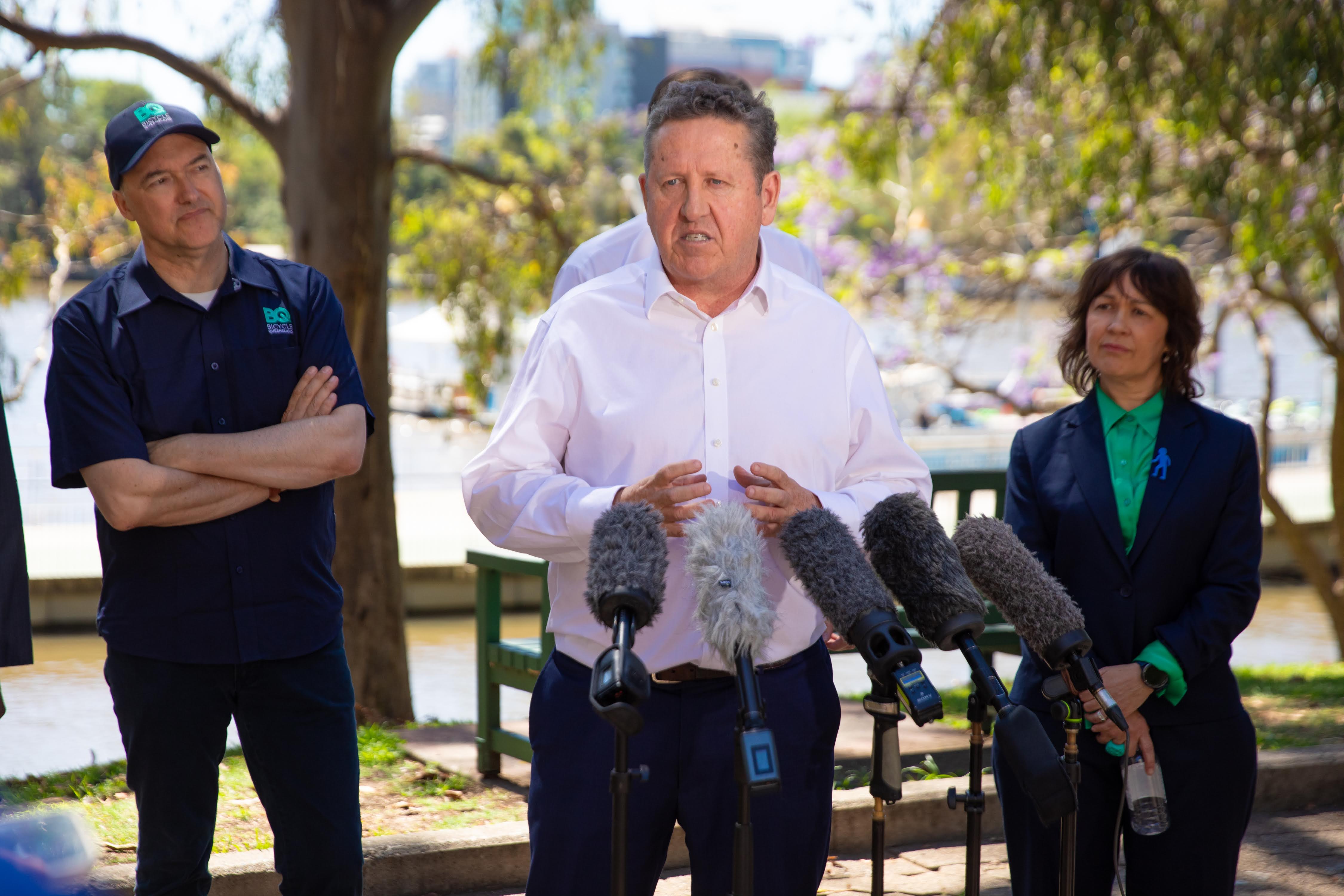
RACQ and its partners say enforcement, retail, education, infrastructure and hire schemes are the areas which the Government can address to protect Queenslanders as new data revealed a surge in hospitalisations.
Queensland Injury Surveillance Unit (QISU) research showed 2,000 people presented to Emergency Departments (EDs) across Queensland in 2025 with e‑mobility‑related injuries. This represents a 23% increase on 2024 (1,626) and a 45% increase on 2023 (1,380).*
The data is collected from around 36 hospitals and only accounts for an estimated 25-30% of all emergency department presentations, meaning the number of e-mobility-related injuries across Queensland is likely much higher.
RACQ Head of Public Policy, Dr Michael Kane, said the figures highlight a rapidly worsening situation.
“Queensland’s e-mobility crisis has reached tipping point, the upcoming report provides a clear-cut opportunity to change course,” Dr Kane said.
“We welcome the Queensland Premier’s commitment to provide the strongest response in the nation, especially considering the rate of hospitalisations in Queensland.
“At least 2,000 Queenslanders were admitted to hospital in 2025 due to e-mobility injuries, but as emphasised during the inquiry last year, these figures represent real individuals whose lives have been upended.”
One written submission described a Queenslander being struck by an e‑scooter travelling around 50km/h while riding home from work, causing serious spinal injuries and ongoing rehabilitation.
Another submission detailed a similar collision in which a cyclist was hit by an e‑scooter, resulting in an eight‑week hospital stay and months of recovery, leaving them unable to walk independently.
RACQ, together with Bicycle Queensland and Queensland Walks, are calling on the Parliamentary Committee to ensure its forthcoming report delivers strong and immediate measures to protect the community against further harm.
“A full suite of reforms is required to reverse this trend,” Dr Kane said.
“These should include a major crackdown on illegal high‑powered devices, cleaning up the retail market to stop unsafe products from being sold, and a comprehensive overhaul of hire schemes to improve safety and reduce footpath clutter.
“We’re also calling for better data transparency, statewide education campaigns, and major investment in safer footpaths, shared paths and separated bike lanes.
“Without these reforms, Queensland will continue to see preventable tragedies.”
Key reforms required:
1. Stronger Enforcement needed to stop illegal e-devices and illegal behaviour to protect Queenslanders
Tougher enforcement against illegal high-powered e-motorbikes and unsafe riding, including impounding illegal devices, clearly defining legal e-bikes and e-scooters, requiring full-face helmets for stand-up scooters, giving QPS staff and authorised transport officers powers to enforce rules to boost resources and enable community hotspot reporting.
2. Stop dangerous devices at the source: crack down on rogue e-mobility retailers
The Government must restrict e-moped and e-motorbike sales to licensed dealers, empower the Office of Fair Trading to target irresponsible sellers, and push the Commonwealth to tighten import laws so only compliant and standards-approved devices enter Australia.
3. Strengthen data and education to drive safer e-mobility use
The committee must recommend better statewide reporting of crashes and hospital admissions across all hospitals, supported by a transparent public facing data dashboard and proactive education program.
4. Invest in safer footpaths to protect Queenslanders
Ongoing investment into higher-quality footpaths and separate lanes to reduce collisions between pedestrians, cyclists and e-mobility devices is vital
5. Revamp hire schemes to improve safety and reduce clutter
Reset e-scooter hire schemes to include dedicated parking funded by operator revenue, a transition to safer sit-down shared scooters, tech-based AI enforcement, and greater transparency to ensure operators meet community safety and compliance expectations.
*QISU collects injury data from emergency departments (ED) at participating hospitals across Queensland. The data is estimated to represent 25-30% of all ED injury presentations in the state depending on the age group and injury type studied. The QISU database contains injury data collected since 1999. Not all hospitals have participated in data collection during this period.
Related topics
Things to note
The information in this article has been prepared for general information purposes only and is not intended as legal advice or specific advice to any particular person. Any advice contained in the document is general advice, not intended as legal advice or professional advice and does not take into account any person’s particular circumstances. Before acting on anything based on this advice you should consider its appropriateness to you, having regard to your objectives and needs.
Insurance Products (excluding Travel Insurance) are issued by RACQ Insurance Limited ABN 50 009 704 152 (RACQI) and arranged by RACQ Distribution Services Pty Ltd (RDS) ABN 35 116 361 650, AFSL 567130 and RDS' authorised representatives (including RACQ Operations Pty Ltd ABN 80 009 663 414, AR No. 234978 (RACQO)). Conditions, limits and exclusions apply.
Any advice provided by RDS and RACQO is general advice only and does not take into account your personal objectives, financial situation or needs and you will need to consider whether the advice is appropriate for you. Read the Product Disclosure Statement (PDS) before making a purchase decision on the product. You can also access our Target Market Determinations on this website.
RDS receives a commission from RACQI for the policies it arranges. RACQO receives fees paid for services it provides to RDS. Further details about remuneration are available on request prior to purchasing.
Banking and loan products issued by Members Banking Group Limited ABN 83 087 651 054 AFSL/Australian credit licence 241195 trading as RACQ Bank. Terms, conditions, fees, charges and lending policies apply. This is general advice only and may not be right for you. This information does not take your personal objectives, circumstances or needs into account. Read the disclosure documents for your selected product or service, including the Financial Services Guide and the Terms and Conditions, and consider if appropriate for you before deciding.
Except for RACQ Bank, any RACQ entity referred to on this page is not an authorised deposit-taking institution for the purposes of the Banking Act 1959 (Cth). That entity’s obligations do not represent deposits or other liabilities of RACQ Bank. RACQ Bank does not guarantee or otherwise provide assurance in respect of the obligations of that entity, unless noted otherwise.
RACQ Bank subscribes to the Customer Owned Banking Code of Practice which establishes higher standards than the law requires. The Code reflects modern consumer expectations and developments in approaches to issues such as consumer vulnerability, guarantors, and supporting customers through financial hardship. Please read our Customer Owned Banking Code of Practice page for more information.
RACQ Operations Pty Ltd (ABN 80 009 663 414, AR No. 234978) and Members Travel Group Pty Ltd (ABN 45 144 538 803, AR No.432492) (RACQ) are authorised representatives of the RACQ Travel Insurance insurer Tokio Marine & Nichido Fire Insurance Co., Ltd. (ABN 80 000 438 291 AFSL 246 548) (Tokio Marine). Tokio Marine Management (Australasia) Pty Ltd (ABN 69 001 488 455, AR No. 1313066) is an authorised representative of Tokio Marine, and administers RACQ Travel Insurance as the managing agent on behalf of Tokio Marine. Terms, conditions (including eligibility criteria), exclusions, limits and sub-limits apply. Any advice is general advice only, and does not take into account your specific objectives, financial situation or needs. Before you purchase, please consider the Combined Product Disclosure Statement (PDS) / Financial Services Guide (FSG) and Target Market Determinations (TMDs) available at racq.com or on request from RACQ.