
Fuel excise explained
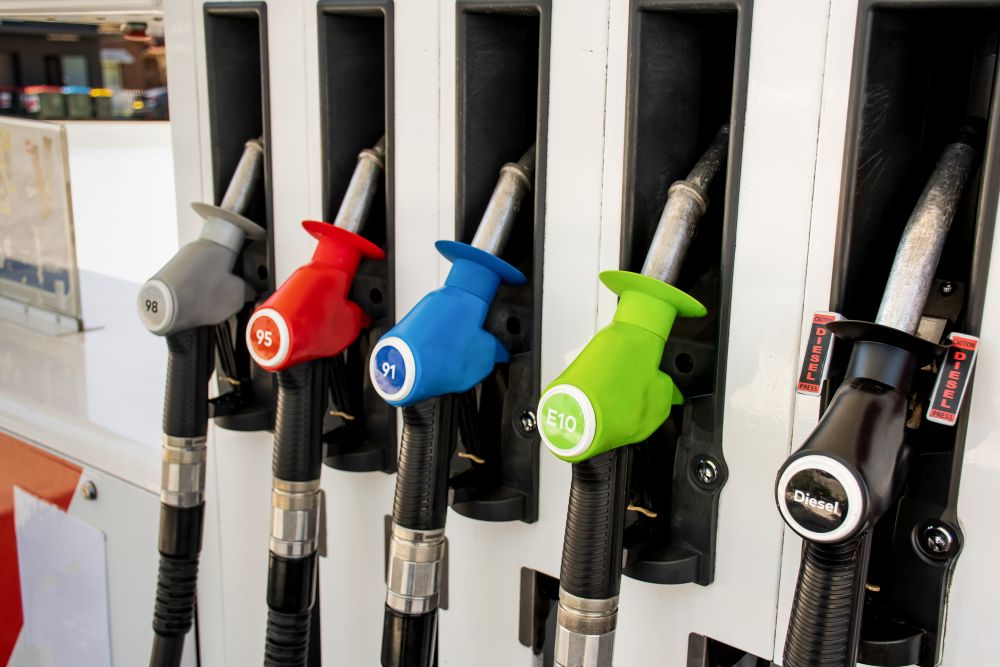
On 1 July, the government’s fuel excise discount was extended at a reduced rate of 16 cents per litre (cpl) – it’s been 32cpl since April – the move is part of a gradual return to full priced fuel.
So, how does the fuel excise work? Where does the funding go? How does global conflict impact fuel prices?
We put these questions to RACQ Principal Economic and Affordability Specialist Dr Ian Jeffreys.
How much will you save on a tank of fuel with the reduced excise discount?
With a reduced 16cpl excise discount, motorists will save around $9 per fill up, based on a 50-litre tank compared to the full excise rate. At the previous 32cpl excise discount, drivers were saving $18 per tank.
What is the fuel excise?
Fuel excise is a tax the Australian Government applies to petrol and diesel sold through retail fuel sites.
The excise is collected at the wholesale level and passed onto motorists at the bowser.
It is charged at a flat rate and indexed twice a year.
The full excise rate for petrol and diesel is 52.6cpl. In April the Australian Government reduced excise to 20.6cpl. From July 1, the excise increased to 36.6cpl – a 16cpl discount off the full rate.
Where does the funding from the fuel excise go?
Fuel excise is collected by the Australian Government and paid into consolidated revenue. This revenue helps fund government spending, including investment in land transport such as road and infrastructure upgrades.
Analysis of the May 2026 Australian Government Budget papers showed that in FY26, fuel excise raised $17.2 billion, with $13.9 billion spent on land transport. This means around 81% of fuel excise revenue was directed to land transport.
Do fuel excise cuts lower petrol prices? How does this impact the fuel price cycle in SEQ?
The excise reduction lowered the wholesale price of fuel, allowing savings to be passed on to motorists through lower retail prices.
There is no direct link between the excise reduction and the fuel price cycle in South East Queensland. When the excise was last reduced in 2022 to help offset fuel price increases from global conflict, Greater Brisbane’s fuel price cycle continued.
However, the sudden price spike in early March disrupted the SEQ price cycle. Fuel companies have tried to re-establish a cycle, but those attempts have so far been unsuccessful.
How does conflict, similar to what we’ve seen in the Middle East, impact fuel prices more broadly?
The recent conflict in the Middle East caused a major disruption to oil and refined fuel supplies. We haven’t seen a disruption of this scale since the oil crisis of the early 1970s.
By comparison, the start of the Russia-Ukraine war also caused a sharp increase in oil prices, but the impact was less pronounced than the recent Middle East crisis.
Unlike the Russia-Ukraine war, the Middle East conflict caused the fuel price cycle in SEQ to break down. This has created a flatter market, similar to what we see in larger regional centres.
It also shows the cycle is an artificial system maintained by fuel companies, which can reduce real competition and hurt consumers. That’s why RACQ believes Queensland’s fuel market needs stronger regulation to encourage genuine competition and end unfair fuel price cycles.
What happens to the fuel excise as electric vehicles (EVs) become more common on our roads?
As more EVs flood the market, fuel excise revenue will decline over time because fewer motorists will be buying petrol and diesel.
However, this shift is not yet clear in the data. Last month’s Federal Budget forecast fuel excise revenue to increase across all years of the forward estimates, although the annual increases are expected to be below inflation. This suggests electrification is already having a modest impact on revenue growth.
Long-term, RACQ is asking for fuel excise to be replaced by a universal per kilometre Road User Charge. Initially a new Road User Charge should be applied on EVs and incrementally expanded to include all vehicles.

More articles
Related topics
Things to note
The information in this article has been prepared for general information purposes only and is not intended as legal advice or specific advice to any particular person. Any advice contained in the document is general advice, not intended as legal advice or professional advice and does not take into account any person’s particular circumstances. Before acting on anything based on this advice you should consider its appropriateness to you, having regard to your objectives and needs.
Insurance Products (excluding Travel Insurance) are issued by RACQ Insurance Limited ABN 50 009 704 152 (RACQI) and arranged by RACQ Distribution Services Pty Ltd (RDS) ABN 35 116 361 650, AFSL 567130 and RDS' authorised representatives (including RACQ Operations Pty Ltd ABN 80 009 663 414, AR No. 234978 (RACQO)). Conditions, limits and exclusions apply.
Any advice provided by RDS and RACQO is general advice only and does not take into account your personal objectives, financial situation or needs and you will need to consider whether the advice is appropriate for you. Read the Product Disclosure Statement (PDS) before making a purchase decision on the product. You can also access our Target Market Determinations on this website.
RDS receives a commission from RACQI for the policies it arranges. RACQO receives fees paid for services it provides to RDS. Further details about remuneration are available on request prior to purchasing.
Banking and loan products issued by Members Banking Group Limited ABN 83 087 651 054 AFSL/Australian credit licence 241195 trading as RACQ Bank. Terms, conditions, fees, charges and lending policies apply. This is general advice only and may not be right for you. This information does not take your personal objectives, circumstances or needs into account. Read the disclosure documents for your selected product or service, including the Financial Services Guide and the Terms and Conditions, and consider if appropriate for you before deciding.
Except for RACQ Bank, any RACQ entity referred to on this page is not an authorised deposit-taking institution for the purposes of the Banking Act 1959 (Cth). That entity’s obligations do not represent deposits or other liabilities of RACQ Bank. RACQ Bank does not guarantee or otherwise provide assurance in respect of the obligations of that entity, unless noted otherwise.
RACQ Bank subscribes to the Customer Owned Banking Code of Practice which establishes higher standards than the law requires. The Code reflects modern consumer expectations and developments in approaches to issues such as consumer vulnerability, guarantors, and supporting customers through financial hardship. Please read our Customer Owned Banking Code of Practice page for more information.
RACQ Operations Pty Ltd (ABN 80 009 663 414, AR No. 234978) and Members Travel Group Pty Ltd (ABN 45 144 538 803, AR No.432492) (RACQ) are authorised representatives of the RACQ Travel Insurance insurer Tokio Marine & Nichido Fire Insurance Co., Ltd. (ABN 80 000 438 291 AFSL 246 548) (Tokio Marine). Tokio Marine Management (Australasia) Pty Ltd (ABN 69 001 488 455, AR No. 1313066) is an authorised representative of Tokio Marine, and administers RACQ Travel Insurance as the managing agent on behalf of Tokio Marine. Terms, conditions (including eligibility criteria), exclusions, limits and sub-limits apply. Any advice is general advice only, and does not take into account your specific objectives, financial situation or needs. Before you purchase, please consider the Combined Product Disclosure Statement (PDS) / Financial Services Guide (FSG) and Target Market Determinations (TMDs) available at racq.com or on request from RACQ.