

6 of the Best: Cheapest cars to own for 2025
The survey looks at purchase price, loan repayments (assuming 100% finance or a novated lease), registration and insurances, fuel, servicing and even tyres.
Calculations are based on privately owned new vehicles, operating for five years, and travelling 15,000km per year.
The costings are indicative only for comparison purposes, and not necessarily an indicator of actual costs.
For full details of methodology, category winners and comparative cost breakdowns, visit racq.com/voc.
Below is the list of top performers from six of those new-vehicle categories.
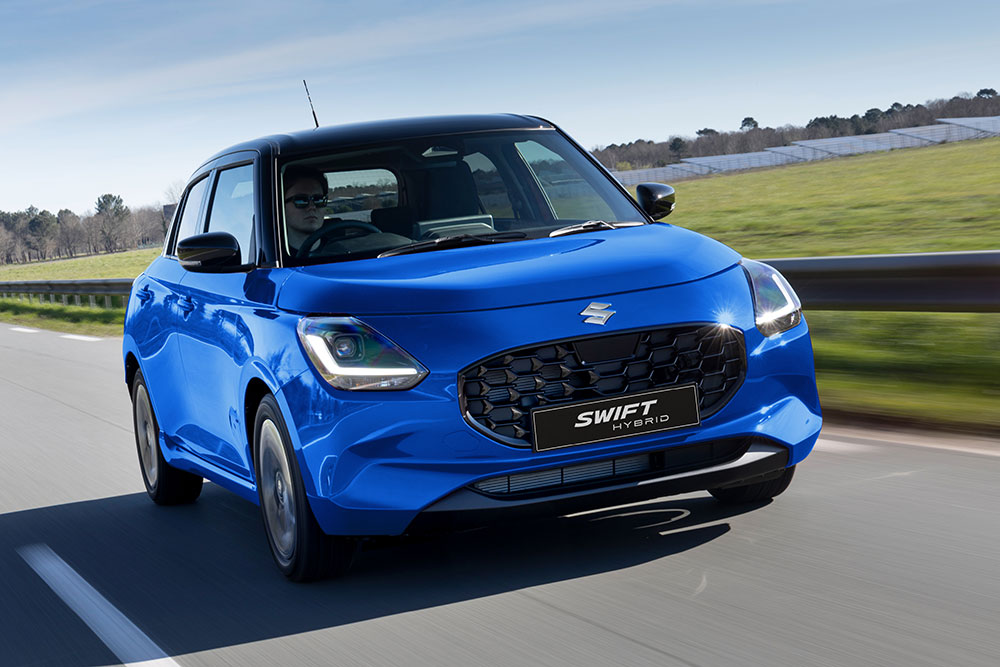
Light Car: Suzuki Swift Hybrid Hatchback (MY25)
Queensland’s least expensive car to own and operate is once again the Suzuki Swift – a small three-cylinder powered five-door hatchback boasting a CVT transmission and fuel-saving mild-hybrid technology.
In a category where purchase price ranges from the Swift’s $28,350 to stablemate the Suzuki Jimny’s $40,195, the former’s combination of low sticker price, and reasonable fuel efficiency helped place it ahead of the second-placed Hyundai Venue and third-placed Toyota Yaris.
The Yaris’s podium place is impressive given its relatively high $33,770 purchase price, with the Toyota fighting back courtesy of having the best fuel efficiency and the lowest servicing costs.
A word of caution with the Suzuki is that it carries only a three-star ANCAP safety rating, where the Venue is a four-star car and the Yaris boasts a five-star rating.
For buyers on a budget the Swift makes an unassailable case but those who can find the extra $64 a month for the Yaris will have the peace of mind of its superior safety rating.
Among the other notable take-outs from this category is the MG MG3 Hybrid, which has the highest registration and insurance costs and highest servicing costs, but manages to fight its way back into fourth spot overall.
- Specification: 1.2-litre inline three-cylinder petrol, mild-hybrid (61kW/112Nm), CVT transmission
- Price: $28,350 (estimated on-road)
- Monthly: $874 (category average $979)
- Annual: $10,494 (category average $11,749)
- Five-year total: $52,468
- Residual: $13,500.
Small Passenger and SUV: BYD Dolphin Essential (MY25)
Proponents of electric vehicles (EVs) have long argued that despite their higher purchase price, EVs are more cost effective over the long haul.
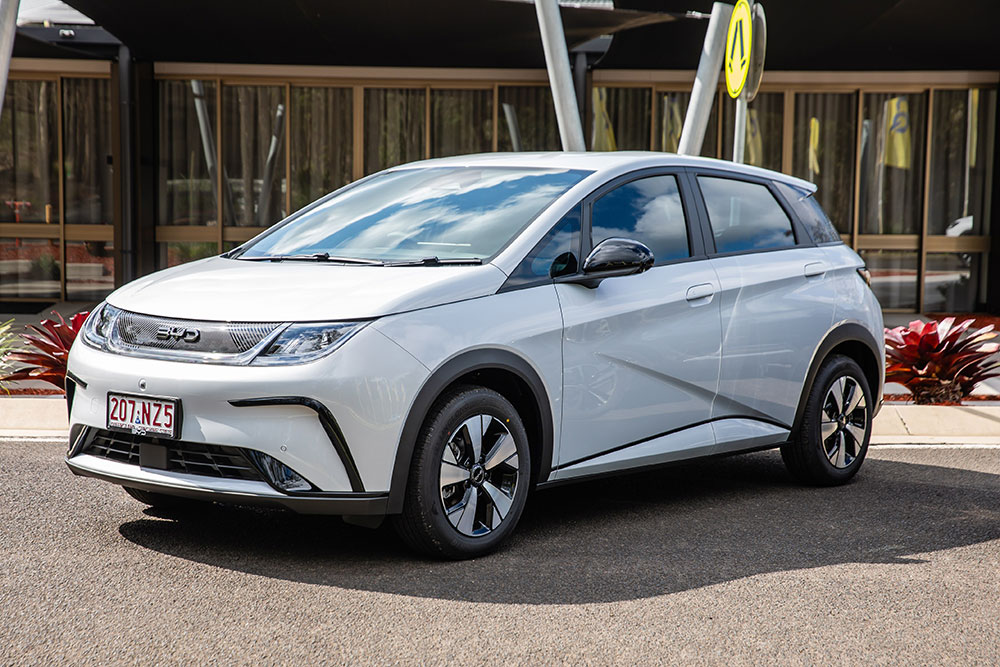
It’s a position backed up by this research which places BYD’s compact electric hatchback on the top step of the affordability podium in the Small Passenger and SUV segment.
Despite being ranked fourth on purchase price behind category rivals the Chery Tiggo 4, Hyundai i30 and Mitsubishi ASX, the
Dolphin came storming back into contention courtesy of having both the segment’s lowest fuel costs and the lowest servicing costs.
For readers wondering how we calculate fuel costs of electric vehicles, it’s based on the vehicle’s official power consumption as provided by the manufacturer and an averaged domestic electricity tariff of 32.99c/kWh.
A similar weighted average fuel cost is used for combustion-powered vehicles, such as the second-placed Chery Tiggo 4 Urban, and third-placed Hyundai i30 Sedan.
The front-wheel drive BYD Dolphin has a claimed 427km (WLTP) range, a five-star ANCAP safety rating, and comes with an eight-year or 160,000km battery warranty and a six-year or 150,000km vehicle warranty.
- Specification: Single electric motor (70kW/180Nm), front-wheel drive, 44.9kWh battery
- Price: $32,509 (estimated on-road)
- Monthly: $890 (category average $1039)
- Annual: $10,677 (category average $12,465)
- Five-year total: $53,384
- Residual: $14,500.
Medium Passenger and SUV: Mazda CX-5 G20 Maxx (MY 25)
Medium SUVs remain one of the biggest selling and most competitive segments of the Australian new car market and this year we’ve added medium sedans to the mix, with 14 different models analysed.
Confirming that Australians have never had more choice when it comes to powertrains, the segment includes five battery-electric models, four hybrids, one plug-in hybrid and four ICE-powered vehicles.
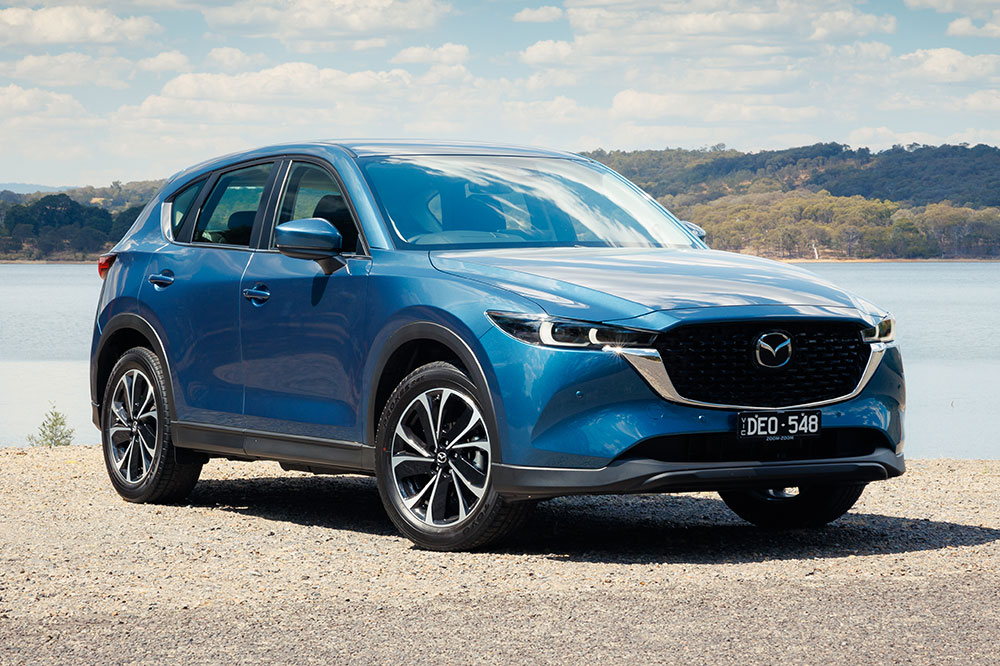
Mazda’s popular and dependable ICE-powered CX-5 medium SUV was judged the most cost-effective vehicle to own and operate, edging out the second-placed BYD Sealion 6 PHEV and third-placed Nissan X-Trail, thanks in large part to having the group’s lowest purchase price.
Had BYD sharpened its pen a bit more on the Sealion 6’s retail price, its significantly lower fuel and servicing costs would have swung the balance in its favour.
Meanwhile, the four-cylinder petrol-powered CX-5 remains a firm favourite with Aussie buyers, ranking second only to the spectacularly popular Toyota RAV4 in overall segment sales.
The Toyota’s popularity has seen its price edge up in recent years to the point where it sits sixth in this survey on purchase price, so even its relatively low fuel and servicing costs weren’t enough to bring it back into contention.
- Specification: 2.0L four-cylinderpetrol (115kW/200Nm), six- speed automatic, front-wheel drive
- Price: $39,165 (estimated on-road)
- Monthly: $1,154 (category average $1,306)
- Annual: $13,852 (category average $15,674)
- Five-year total: $69,261
- Residual: $17,900.
Large SUV: Subaru Outback AWD (MY25)
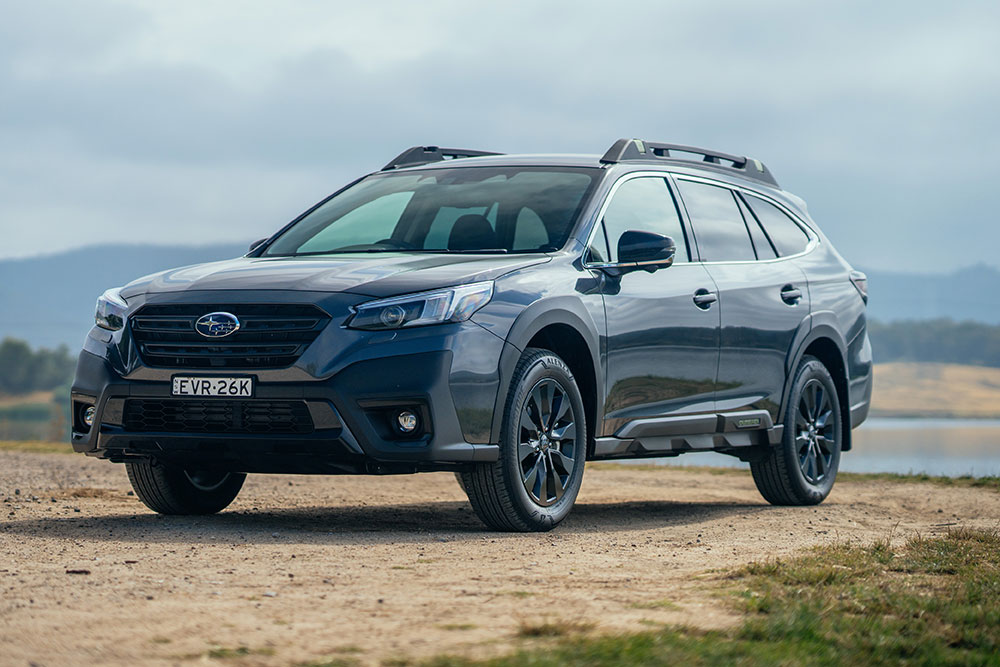
Like the Suzuki Swift in the small car segment, the Outback seems to have a lock on the top step of the vehicle operating costs podium.
This year marks the fifth year in a row Subaru’s versatile wagon has topped the table as Australia’s most cost-effective large SUV.
It’s true that the vagaries of official vehicle segments give the Outback an advantage by placing it alongside bigger and more expensive seven-seat SUVs and 4x4s, but that’s no fault of Subaru’s.
In the 12 months since our last survey the Outback’s price has crept up $1,192 but it’s still $9,000 less expensive than the seven-seat turbodiesel-powered Kia Sorento which claimed silver, and $12,500 less expensive than the third-placed Isuzu MU-X LS-M 4x4 wagon.
That sort of price advantage is more than enough to compensate for the fact the high-riding Outback’s horizontally opposed four-cylinder engine is not especially economical, ranking third in terms of fuel expenses, while its servicing costs are ranked fourth.
Fans of V8 power, towing performance and off-road ability probably don’t care to compare the costs of owning the likes of a burly Nissan Patrol, but we’ll do it for them; at $2,836 the Patrol’s monthly running costs are $1,444 higher than the Outback, a variance which blows out to $86,654 over five years.
- Specification: 2.5-litre four-cylinder petrol (138kW/245Nm), CVT transmission, AWD
- Price: $50,065 (estimated on-road)
- Monthly: $1392 (category average $1955)
- Annual: $16,704 (category average $23,460)
- Five-year total: $83,519
- Residual: $24,900.
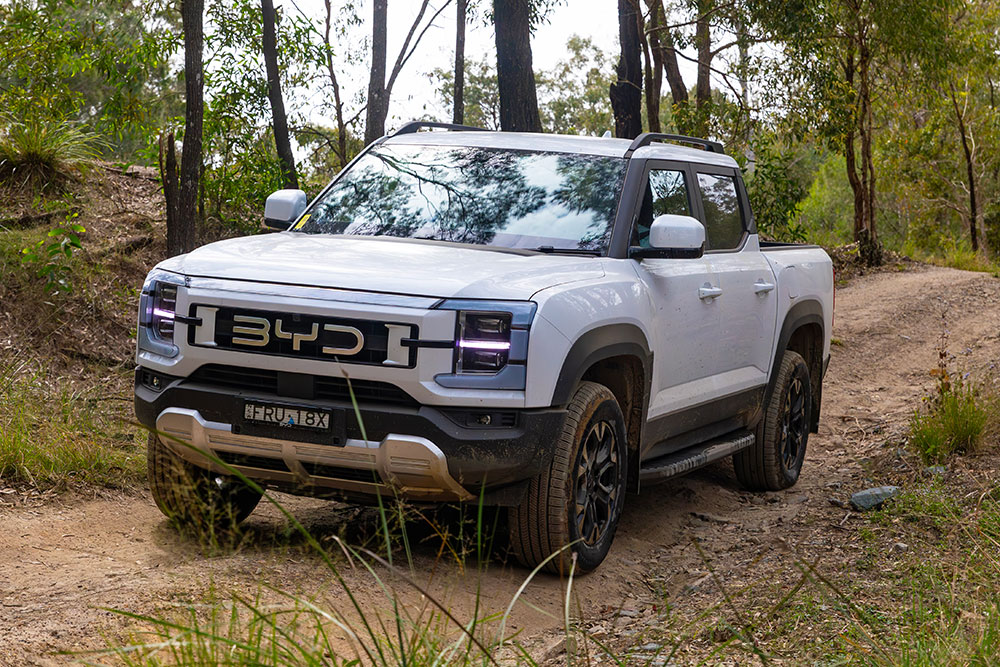
Light Commercial 4x4: BYD Shark 6 Premium (MY25)
The arrival of alternative powertrain technology to Australia’s enduringly popular ute segment has been one of the big stories of 2025, with BYD beating rivals to the draw by becoming the first brand to launch a petrol-electric plug-in hybrid (PHEV) ute.
Consumers have responded positively to the Shark 6’s impressive combination of performance and efficiency, with September sales figures showing the Chinese ute has come from nowhere to establish itself as the country’s fourth-best selling ute.
No doubt a big part of the appeal is the Shark 6’s price, which is around $7,500 less expensive than the second-placed Mitsubishi Triton GSR, but it’s also due to the BYD’s impressive fuel efficiency, courtesy of its PHEV drivetrain.
The latter combines a 1.5-litre turbo-petrol engine with a 29.58kWh LFP battery and twin electric motors to deliver fuel consumption as low as 2.0L/100km when driving with a fully charged battery.
The Shark 6 can also travel up to 100km (NEDC) on battery power alone.
It’s not like BYD is short-changing consumers on safety or features, either, with the Shark 6 boasting a five-star ANCAP rating and a generous level of equipment in its singular Premium variant.
- Specification: Plug-in hybrid, twin electric motors (321kW/650Nm), all-wheel drive, 1.5-litre turbo-petrol engine, 29.58kWh LFP battery.
- Price: $61,217 (estimated on-road)
- Monthly: $1,571 (category average $1,911)
- Annual: $18,854 (category average $22,932)
- Five-year total: $94,272 Residual: $29,500.
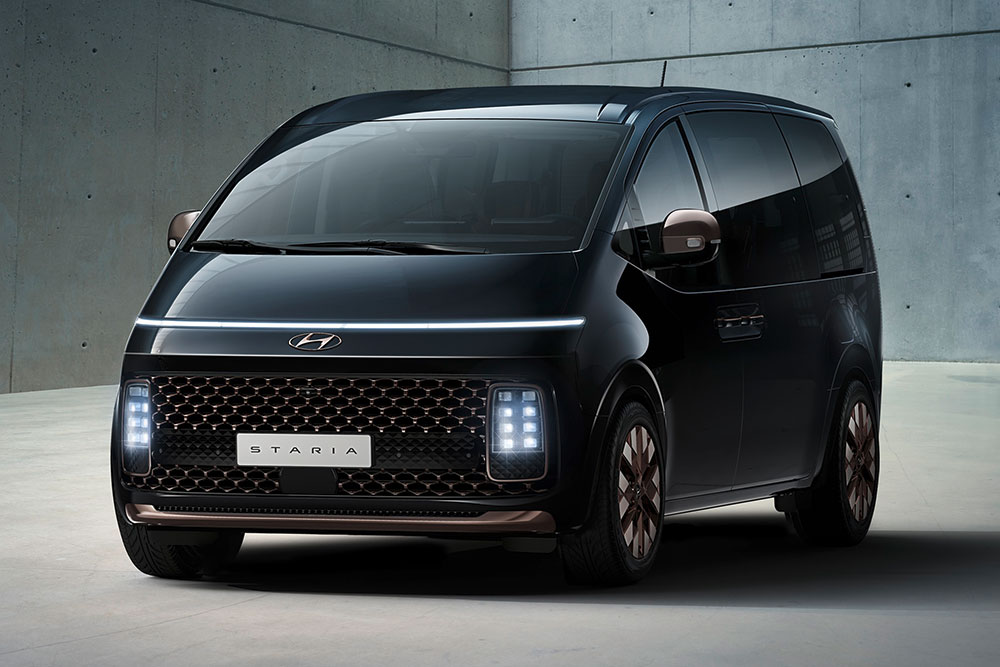
People Movers: Hyundai Staria Base
Anyone who has shopped for a people mover in recent times will know that the pickings are slim in the sub-$70k segment, despite this vehicle style arguably being better suited to ferrying kids to school than the ubiquitous large SUV.
Korean cousins Hyundai and Kia offer some of the segment’s best options in the form of the Staria and Carnival respectively, with the Ford Transit-based Tourneo the only other vehicle reviewed this year.
The segment-winning Staria offers both 3.5-litre V6 petrol and 2.2-litre turbodiesel powertrain choices, but only the V6 in its most affordable variant. Fuel efficiency isn’t a particular strength of the V6, with the Staria’s $235 monthly fuel cost higher than both the Carnival with the same engine and the Ford with its thriftier 2.0-litre turbodiesel.
The Staria holds a slight edge with servicing costs, as it does with its purchase price which undercuts the Carnival by $2,000 and the Tourneo by a massive $18,000. Whether it’s a lack of choice in this segment, the unfashionability of the vehicle style, or the fact running costs aren’t that much cheaper than for a large SUV, September year-to-date sales of 9,764 people movers versus 106,321 sub-$80k large SUVs indicates which Aussies prefer.
- Specification: 3.5-litre naturally aspirated petrol V6 (200kW/ 331Nm), eight-speed automatic, front-wheel drive
- Price: $55,708 (estimated on-road)
- Monthly: $1,580 (category average $1714)
- Annual: $18,968 (category average $20,565)
- Five-year total: $94,842
- Residual: $24,000.
Novated Lease category winners
- Light Passenger Car: Suzuki Swift Hybrid ($694pm)
- Small Passenger/SUV: BYD Dolphin Essential ($541pm)
- Medium Passenger/SUV: BYD Seal Dynamic ($746pm)
- People Movers: Hyundai Staria Base ($1,223pm)
- Large SUV: Subaru Outback AWD ($1,078pm)
- Light Commercial 4x2: Mazda BT-50 XS ($938pm)
- Light Commercial 4x4: BYD Shark 6 Premium ($1,196pm).

Related topics
Things to note
The information in this article has been prepared for general information purposes only and is not intended as legal advice or specific advice to any particular person. Any advice contained in the document is general advice, not intended as legal advice or professional advice and does not take into account any person’s particular circumstances. Before acting on anything based on this advice you should consider its appropriateness to you, having regard to your objectives and needs.
Insurance Products (excluding Travel Insurance) are issued by RACQ Insurance Limited ABN 50 009 704 152 (RACQI) and arranged by RACQ Distribution Services Pty Ltd (RDS) ABN 35 116 361 650, AFSL 567130 and RDS' authorised representatives (including RACQ Operations Pty Ltd ABN 80 009 663 414, AR No. 234978 (RACQO)). Conditions, limits and exclusions apply.
Any advice provided by RDS and RACQO is general advice only and does not take into account your personal objectives, financial situation or needs and you will need to consider whether the advice is appropriate for you. Read the Product Disclosure Statement (PDS) before making a purchase decision on the product. You can also access our Target Market Determinations on this website.
RDS receives a commission from RACQI for the policies it arranges. RACQO receives fees paid for services it provides to RDS. Further details about remuneration are available on request prior to purchasing.
Banking and loan products issued by Members Banking Group Limited ABN 83 087 651 054 AFSL/Australian credit licence 241195 trading as RACQ Bank. Terms, conditions, fees, charges and lending policies apply. This is general advice only and may not be right for you. This information does not take your personal objectives, circumstances or needs into account. Read the disclosure documents for your selected product or service, including the Financial Services Guide and the Terms and Conditions, and consider if appropriate for you before deciding.
Except for RACQ Bank, any RACQ entity referred to on this page is not an authorised deposit-taking institution for the purposes of the Banking Act 1959 (Cth). That entity’s obligations do not represent deposits or other liabilities of RACQ Bank. RACQ Bank does not guarantee or otherwise provide assurance in respect of the obligations of that entity, unless noted otherwise.
RACQ Bank subscribes to the Customer Owned Banking Code of Practice which establishes higher standards than the law requires. The Code reflects modern consumer expectations and developments in approaches to issues such as consumer vulnerability, guarantors, and supporting customers through financial hardship. Please read our Customer Owned Banking Code of Practice page for more information.
RACQ Operations Pty Ltd (ABN 80 009 663 414, AR No. 234978) and Members Travel Group Pty Ltd (ABN 45 144 538 803, AR No.432492) (RACQ) are authorised representatives of the RACQ Travel Insurance insurer Tokio Marine & Nichido Fire Insurance Co., Ltd. (ABN 80 000 438 291 AFSL 246 548) (Tokio Marine). Tokio Marine Management (Australasia) Pty Ltd (ABN 69 001 488 455, AR No. 1313066) is an authorised representative of Tokio Marine, and administers RACQ Travel Insurance as the managing agent on behalf of Tokio Marine. Terms, conditions (including eligibility criteria), exclusions, limits and sub-limits apply. Any advice is general advice only, and does not take into account your specific objectives, financial situation or needs. Before you purchase, please consider the Combined Product Disclosure Statement (PDS) / Financial Services Guide (FSG) and Target Market Determinations (TMDs) available at racq.com or on request from RACQ.