
Leapmotor B10 Design Long Range MY26 review
The Leapmotor B10 is a new electric SUV that offers decent space, modern technology and relaxed driving manners, albeit with some frustrating usability quirks.
Chinese carmaker Leapmotor was among the wave of new brands that arrived on the Australian market in late 2024 and early 2025, launching initially with the C10 medium SUV in battery-electric form and following soon after with a range-extender (EREV) version of the same vehicle.
Sales of both variants in 2025 were a modest 644 units but the brand naturally has bigger ambitions and has opened the batting in 2026 with the launch of a second model line in the form of the Leapmotor B10.
Unlike the C10, which is designed to go head-to-head with the similarly-sized Tesla Model Y and BYD Sealion 6 and is priced between $45,888 and $49,888, the B10 is smaller, more affordable and available exclusively as an electric vehicle (EV).
Importer and distributor Stellantis says the B10 enters the Australian market with a clear brief: to deliver a genuinely affordable electric SUV without the compromises typically associated with budget EVs.
The Stellantis name may be familiar to some readers, as the international automotive conglomerate comprising brands including Abarth, Alfa Romeo, Fiat, and Jeep.
Stellantis paid A$2.5 billion in late 2023 for a 20 percent stake in Leapmotor and has the right to sell and manufacture the vehicles exclusively outside China.
Importantly, the deal gives Leapmotor access to an established network of 20 sales, service and parts dealerships throughout Australia, including six in Queensland.
Tell me about the Leapmotor B10 Design Long Range
The B10 is built on Leapmotor’s LEAP 3.5 architecture, which means it’s a rear‑wheel drive vehicle with close to 50:50 weight distribution. Its C-segment SUV styling means it’s a competitor for electrically-powered compact crossovers like the MG S5, BYD Atto 3 and Chery E5, as well as ICE-powered models including the Toyota Corolla Cross and Mazda CX-30.
How much does a Leapmotor B10 Design Long Range cost?
Like its larger stablemate, the B10 is offered in a simple two variant lineup encompassing the B10 Style from $37,888 (MRLP) and the B10 Design Long Range from $40,888 (MRLP).
Both variants use a 160kW/240Nm rear‑mounted electric motor, with the Style featuring a 56.2kWh battery with 361km driving range on the WLTP cycle, and the Design Long Range upgrading to a 67.1kWh battery delivering a range of 434km (WLTP).
Charging capability is strong for the price point, with 11kW AC charging standard and DC fast‑charging of up to 140kW (Style) or 168kW (Design LR), allowing a 30 to 80% charge in around 20 minutes under ideal conditions.
What features does the Leapmotor B10 Design have?
Even the base Style comes well equipped with features including a 14.6-inch touchscreen, an 8.8-inch instrument cluster, wireless charger, panoramic sunroof (with electric shade), and a 360-degree camera.
Over and above this the B10 Design Long Range adds synthetic leather in place of cloth, heated and ventilated electric front seats, heated steering wheel, electric folding mirrors, rain-sensing wipers, 12-speaker sound system, power tailgate, and ambient interior lighting.
The B10 also offers vehicle‑to‑load (V2L) at 3.2kW, along with camping mode, guard (pet) mode and programmable routines, adding useful flexibility beyond basic transport.
Leapmotor B10 Design Long Range exterior design
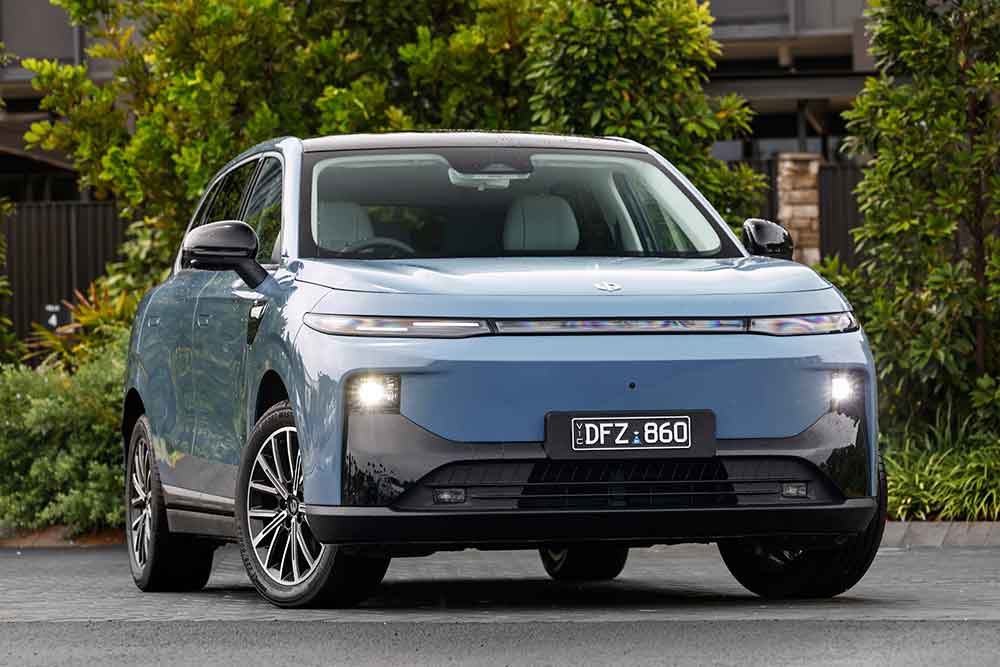
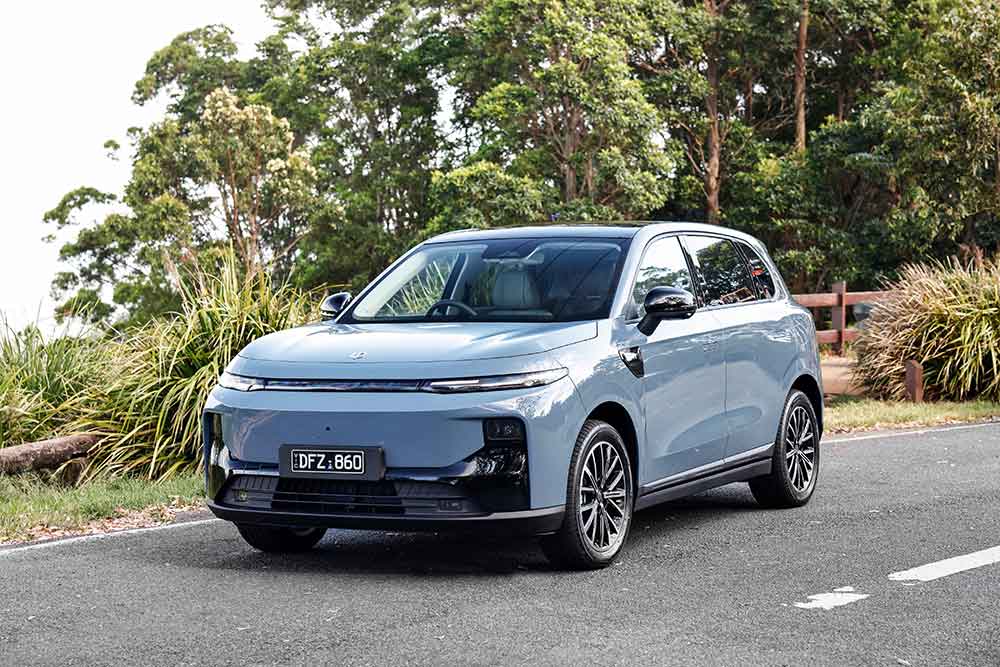
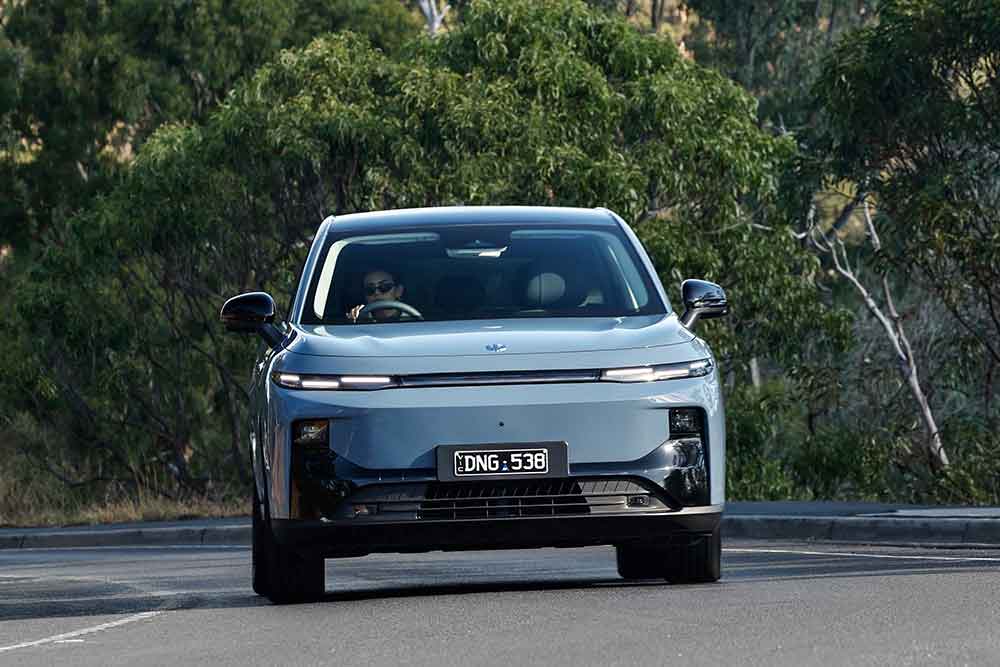
The B10’s exterior design is clean, modern and attractive with well balanced and contemporary proportions.
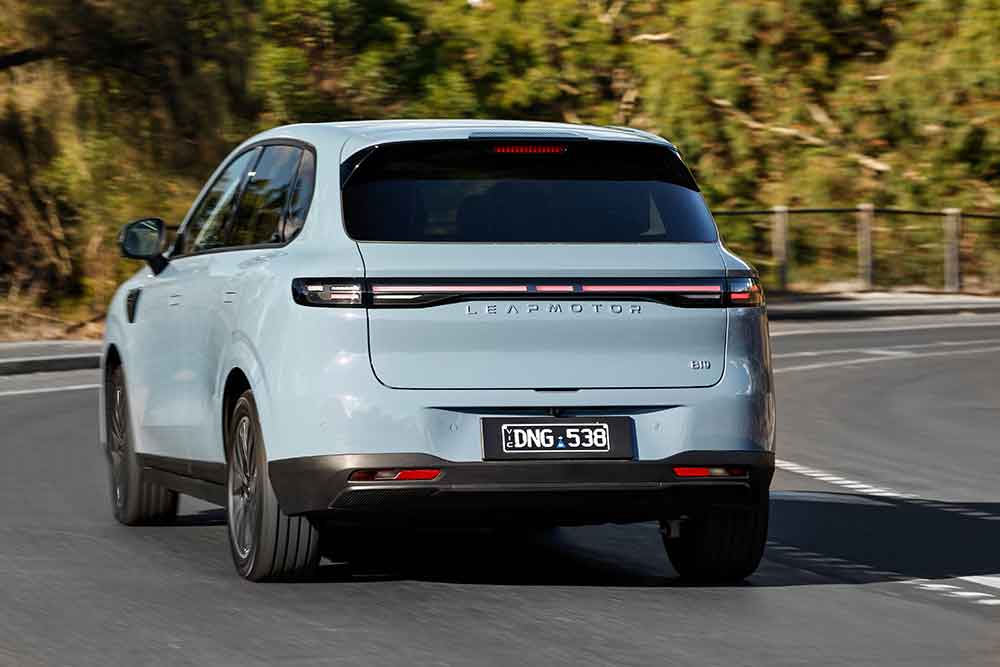
Styling cues such as Wingstar LED taillights, star‑sports alloy wheels and the star‑ring dynamic fender add subtle identity without resorting to gimmicks. At 4515mm long, the B10 is large for a small SUV, and it carries its size well on the road.
What is the Leapmotor B10 Design Long Range like inside?
Space and practicality are immediate highlights of the B10.
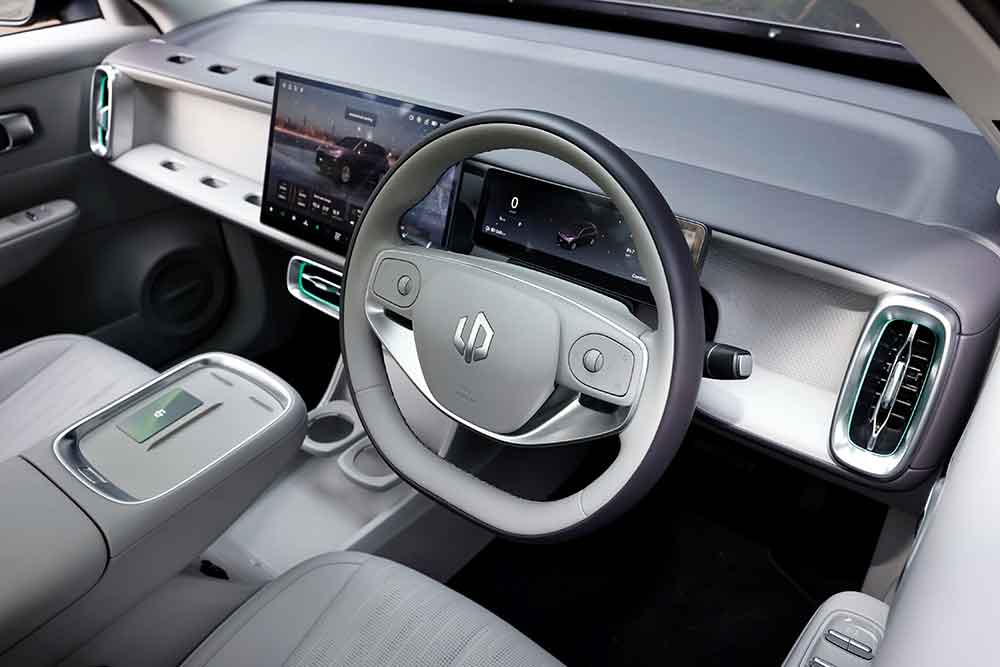
The dashboard is dominated by a 14.6‑inch central touchscreen and an 8.8‑inch digital driver display, both powered by a Qualcomm Snapdragon processor which ensures visually sharp graphics and quick responses to inputs.
There are 22 storage spaces throughout the interior, including a glovebox that fits a 14‑inch laptop, and a dual phone tray with one wireless charging pad.
The wireless charger is quite small, however, meaning a large‑format phone such as a Samsung Galaxy Ultra sits precariously, while the shallow tray means phones can slide onto the floor in corners.
The test cars we drove were supplied with a RFID (Radio Frequency Identification) card that provided access to the vehicle by placing the key card against the driver's side door or B-pillar sensor to unlock the vehicle.
That’s fine, but the card must then be placed on the same pad as the phone when starting, meaning the phone and key end up competing for space.
This proved frustrating but is unlikely to be a problem for owners using the Leapmotor App, which allows users to access and drive the vehicle with a smartphone on their person.
The app can also be used to remotely start the car, activate air conditioning, or heat the seats and steering wheel before entering.
Material quality throughout the cabin is a mixed bag.
In both variants there’s a fair amount of hard plastic across the dash and door cards, which lowers the perceived quality.
There are also some ergonomic issues, notably the lack of physical switchgear and the use of Tesla-style multipurpose rotary dials on the steering wheel to control commonly used functions like side-mirror adjustment.
This necessitates first finding the appropriate menu item in the touchscreen, selecting, and then adjusting the mirrors using the steering-wheel dials.
It’s certainly not safer, easier or more effective than well-proven door-mounted switches.
Most everyday functions including audio and climate controls are also housed in the central touchscreen, making simple tasks like selecting a radio station unnecessarily finicky.
Granted, these are things regular users will soon master, but there is a growing body of evidence that such systems can be distracting for drivers.
The B10’s power window switches also feel counter‑intuitive: push forward to close, pull back to open, rather than the more common pivoting motion (forward/down to open, back/up to close).
Finally, there’s no height adjustment for the front seatbelts, making an ideal fit harder for taller or shorter drivers.
Leapmotor B10 Design Long Range practicality and cargo space
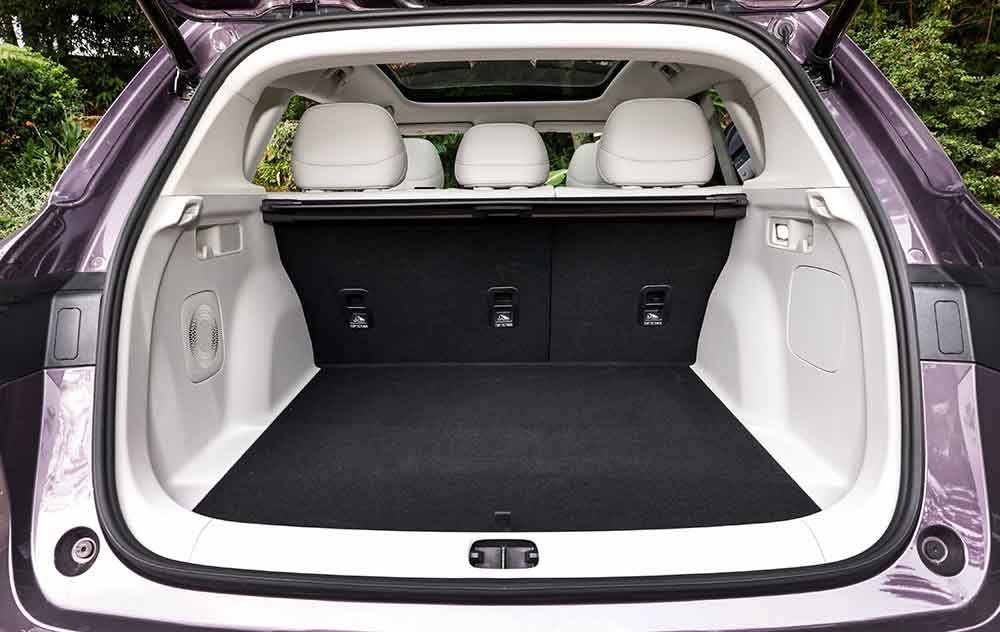
The B10’s boot capacity is a generous 490 litres with the seats in position, expanding to 1475 litres with the rear seats folded.
The low, wide boot opening and level load floor makes the space practical and easy to use.
There’s also a small frunk (front trunk) for stowing charging cables.
What about the Leapmotor B10’s performance and range?
With 160kW and 240Nm driving the rear wheels the B10 delivers adequate rather than exhilarating performance.
A claimed 0–100km/h time of around 8.0 seconds is sufficient for everyday driving, and the electric drivetrain is smooth and quiet.
There are three drive modes, three steering settings and three levels of regenerative braking available.
The calibration is inconsistent, however, with Sport mode making the throttle overly touchy and smooth acceleration difficult.
Maintaining a steady speed while in Sport mode and with the maximum regenerative braking mode engaged is challenging, since the light throttle input accelerates the car quickly and lifting off slightly causes aggressive deceleration.
Fortunately, reducing regen and switching to Comfort mode improves drivability considerably.
Is the Leapmotor B10 Design Long Range good to drive?
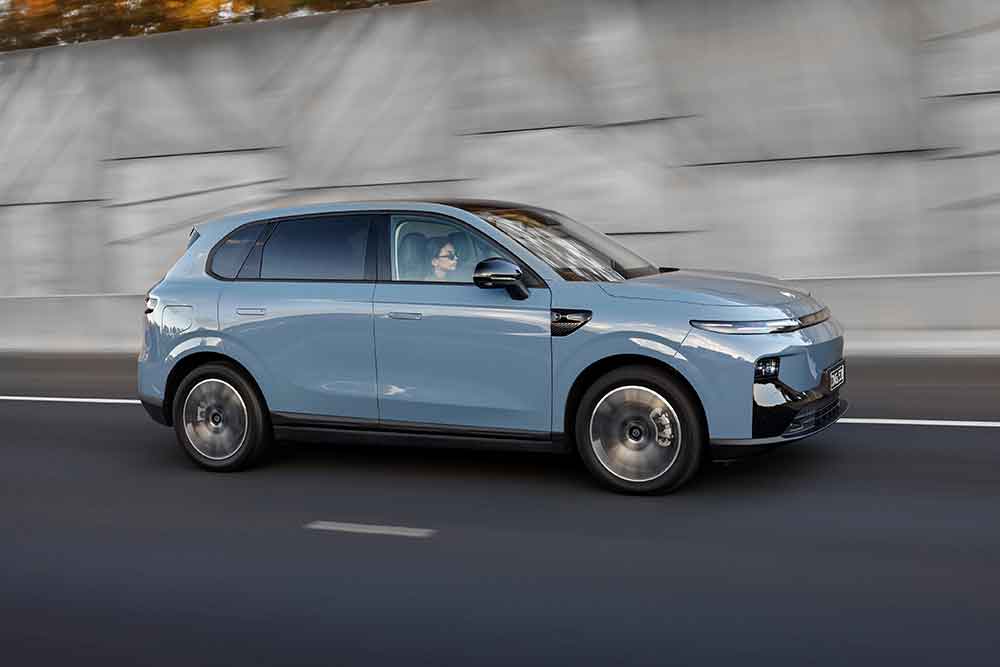
The B10 is tuned for comfort and around town it succeeds at this mission.
The ride is very soft, soaking up urban bumps nicely, but the soft suspension becomes a negative on winding, uneven roads where the body feels under‑damped and a touch floaty.
The steering is light and accurate but offers very little feel, even in the sportiest setting, which dulls driver confidence at higher speeds.
Standard-fitment Linglong tyres further lower the B10’s dynamic ceiling, losing grip early under firm braking and squealing easily when cornering.
The choice of rubber is a curious one, given that the larger C10 rolls on higher‑quality Dunlop tyres.
The B10 would likely benefit from a better tyre spec to unlock more of its chassis balance.
What safety features does the Leapmotor B10 Design Long Range have?
The B10 has achieved a five‑star ANCAP safety rating, supported by seven airbags and 17 advanced driver assistance systems.
A 360‑degree camera system with a wheel‑focus view helps prevent kerb strikes, and an integrated 360‑degree dashcam can record to a USB drive (not supplied), however this then stops the only front USB A port being used by other devices.
As with several other Chinese cars we’ve driven, the B10’s driver assistance systems, notably lane‑keep assist (LKA) are overly intrusive.
The system chimes frequently and aggressively, even when you seem well‑centered in the lane.
It’s possible to program a steering‑wheel shortcut to disable the technology each time you get behind the wheel, but it’s not good enough that drivers must consider switching off a vehicle safety feature to avoid becoming distracted by it.
A press release that arrived after we had driven the vehicle advised that a subsequent Over the Air (OTA) update had addressed this issue, along with other refinements to the ADAS system, but we haven’t independently verified this.
Should I buy a Leapmotor B10 Design Long Range?
The Leapmotor B10 delivers excellent value, strong charging capability and genuine family‑friendly space.
It’s comfortable, quiet and easy to live with for the type of buyer it’s aimed at.
However, several usability and calibration issues – particularly around Lane Keep Assist behaviour, control layout, throttle tuning, tyre choice and interior materials – prevent it from feeling truly polished.
The good news for Leapmotor and local importer-distributor Stellantis is that much of this can be improved.
Tyres are a straightforward upgrade, and software calibration (throttle/regen and LKA) could be refined over the air.
If Leapmotor acts on those items, the B10’s solid fundamentals means it has the potential to be a class benchmark on value.
As it stands, it’s a good car with clear potential, but with some notable shortcomings.
Key statistics
- PRICE: $40,888 (MRLP).
- WARRANTY: Six years/150,000km (vehicle); Eight years/160,000km (battery)
- POWERTRAIN: Single rear‑mounted electric motor (160kW/240Nm); rear wheel drive; 67.1kWh Lithium Iron Phosphate (LFP) battery
- RANGE & ENERGY CONSUMPTION: 434km (WLTP); 17.3kWh/100km (WLTP)
- ANCAP CRASH RATING: Five stars (2025)
- FOR: Excellent value; strong charging performance for the price; spacious cabin; quiet and comfortable urban ride; useful V2L (3.2kW), Camping and Guard modes for daily life.
- AGAINST: Tyres lack grip and squeal easily; intrusive lane‑keep assist; touchscreen‑only controls; small wireless charger doesn’t secure phone; soft suspension feels under‑damped on challenging roads; steering lacks feel; touchy throttle in Sport; hard interior plastics; no front seatbelt height adjustment; no spare tyre (mobility kit).


More articles
Related topics
Things to note
The information in this article has been prepared for general information purposes only and is not intended as legal advice or specific advice to any particular person. Any advice contained in the document is general advice, not intended as legal advice or professional advice and does not take into account any person’s particular circumstances. Before acting on anything based on this advice you should consider its appropriateness to you, having regard to your objectives and needs.
Insurance Products (excluding Travel Insurance) are issued by RACQ Insurance Limited ABN 50 009 704 152 (RACQI) and arranged by RACQ Distribution Services Pty Ltd (RDS) ABN 35 116 361 650, AFSL 567130 and RDS' authorised representatives (including RACQ Operations Pty Ltd ABN 80 009 663 414, AR No. 234978 (RACQO)). Conditions, limits and exclusions apply.
Any advice provided by RDS and RACQO is general advice only and does not take into account your personal objectives, financial situation or needs and you will need to consider whether the advice is appropriate for you. Read the Product Disclosure Statement (PDS) before making a purchase decision on the product. You can also access our Target Market Determinations on this website.
RDS receives a commission from RACQI for the policies it arranges. RACQO receives fees paid for services it provides to RDS. Further details about remuneration are available on request prior to purchasing.
Banking and loan products issued by Members Banking Group Limited ABN 83 087 651 054 AFSL/Australian credit licence 241195 trading as RACQ Bank. Terms, conditions, fees, charges and lending policies apply. This is general advice only and may not be right for you. This information does not take your personal objectives, circumstances or needs into account. Read the disclosure documents for your selected product or service, including the Financial Services Guide and the Terms and Conditions, and consider if appropriate for you before deciding.
Except for RACQ Bank, any RACQ entity referred to on this page is not an authorised deposit-taking institution for the purposes of the Banking Act 1959 (Cth). That entity’s obligations do not represent deposits or other liabilities of RACQ Bank. RACQ Bank does not guarantee or otherwise provide assurance in respect of the obligations of that entity, unless noted otherwise.
RACQ Bank subscribes to the Customer Owned Banking Code of Practice which establishes higher standards than the law requires. The Code reflects modern consumer expectations and developments in approaches to issues such as consumer vulnerability, guarantors, and supporting customers through financial hardship. Please read our Customer Owned Banking Code of Practice page for more information.
RACQ Operations Pty Ltd (ABN 80 009 663 414, AR No. 234978) and Members Travel Group Pty Ltd (ABN 45 144 538 803, AR No.432492) (RACQ) are authorised representatives of the RACQ Travel Insurance insurer Tokio Marine & Nichido Fire Insurance Co., Ltd. (ABN 80 000 438 291 AFSL 246 548) (Tokio Marine). Tokio Marine Management (Australasia) Pty Ltd (ABN 69 001 488 455, AR No. 1313066) is an authorised representative of Tokio Marine, and administers RACQ Travel Insurance as the managing agent on behalf of Tokio Marine. Terms, conditions (including eligibility criteria), exclusions, limits and sub-limits apply. Any advice is general advice only, and does not take into account your specific objectives, financial situation or needs. Before you purchase, please consider the Combined Product Disclosure Statement (PDS) / Financial Services Guide (FSG) and Target Market Determinations (TMDs) available at racq.com or on request from RACQ.