

Six of the best: Low-emission vehicles
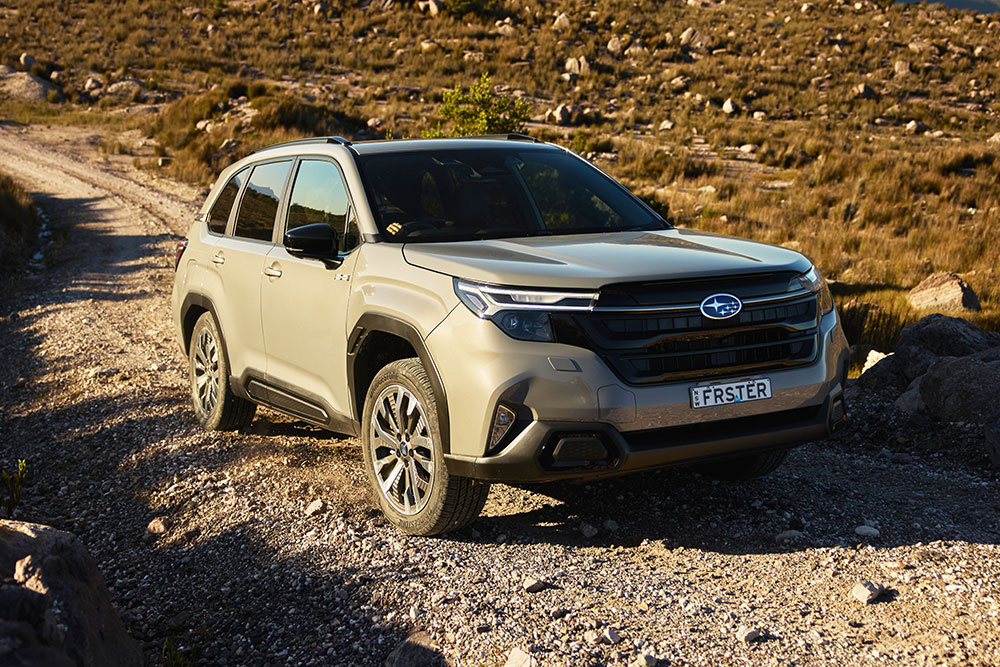
Subaru Forester AWD Hybrid
Subaru’s Forester has been a favourite of families and adventurers for almost two decades, with the recently launched sixth-generation model introducing a Toyota-derived hybrid drivetrain that promises more power and efficiency.
The improved hybrid drivetrain features on three of the seven variants and combines the company’s familiar 2.5-litre flat four-cylinder engine with an 88kW electric motor and a 1.1kWh battery system.
The new hybrid drivetrain is around 0.5L/100km more fuel efficient than the previous Forester hybrid, returning combined cycle fuel consumption of 6.7L/100km versus 7.9L/100km for the non-hybrid variants.
Hybrid models also boast a meaningful increase in power and torque, with maximum power of 145kW versus 136kW for the non-hybrid, and the electric motor contributing an additional 276Nm to the combustion engine’s 212Nm, where the non-hybrid offers 247Nm all up.
Pricing for the new hybrid lineup starts at $46,490 for the Forester AWD Hybrid and tops out at $55,990 for the Forester AWD Hybrid Touring.
Specifications
Price: $46,490 (MRLP)
Powertrain: 2.5L horizontally opposed four-cylinder petrol, 88kW electric motor, 1.1kW battery, eight-speed CVT, all-wheel drive (145kW/212Nm+276Nm combined)
Fuel consumption: 6.7L/100km (combined cycle)
Range: 1,000km (estimated)
ANCAP safety Rating: Five stars (2024)
Warranty: Five years/unlimited km
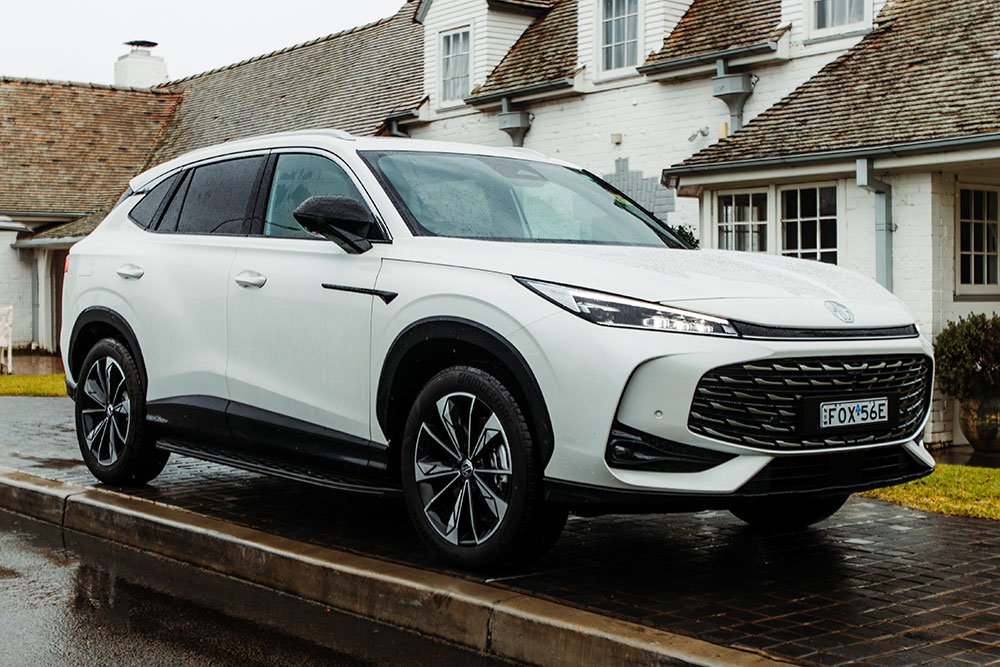
MG HS Essence Super Hybrid
Despite the heroic ‘Super Hybrid’ nomenclature the MG HS is a conventional plug-in hybrid electric vehicle (PHEV) that combines a 1.5-litre turbocharged petrol four-cylinder engine with a 24.7kWh battery and a front-mounted electric motor.
Combined outputs are a healthy 220kW/350Nm with the battery-electric combination good for up to 135km (NEDC) of electric driving, or up to 1,000km of range with a fully charged battery and a brimmed 55-litre fuel tank.
MG’s adoption of the Super Hybrid moniker stems from the fact it is tuned to drive more like a conventional hybrid with a long-range battery, as opposed to PHEVs which tend to prioritise EV mode.
You can choose to use the EV-only mode until the battery is depleted, after which the MG HS simply switches to a conventional (plug-less) hybrid mode, when it sips a still frugal 4.5L/100km.
The MG HS comes in Excite and Essence trim variants with a $3,000 price difference between the two. The MG impressed with its smoothness and its roomy, well-finished interior.
Specifications
Price: $55,990 (driveaway)
Powertrain: 1.5L turbocharged petrol four-cylinder, front-mounted electric motor, 24.7kWh battery (220kW/350Nm combined)
Fuel consumption: 0.7L/100km (with full charge), 4.5L/100km (in hybrid mode)
Range: 135km (EV-only, NEDC) / 1,000km combined (estimated)
ANCAP safety rating: Five stars (2024)
Warranty: 10 years/250,000km (vehicle and battery)
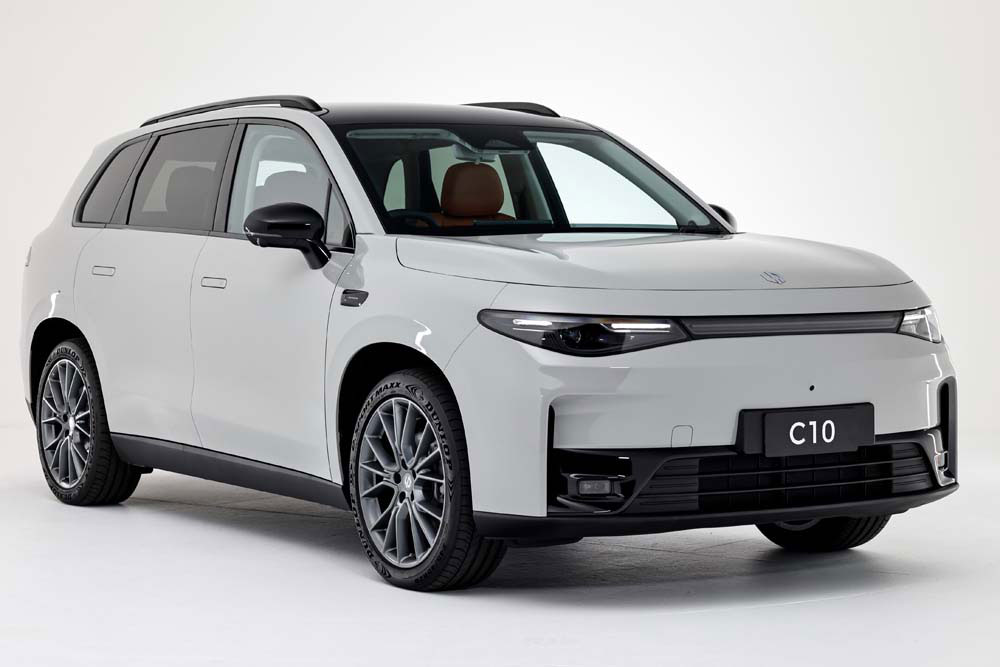
Leapmotor C10 Design REEV Ultra Hybrid
Chinese carmaker Leapmotor has followed up its first Australian model, the battery-electric C10, with a petrol-electric version featuring range-extender technology.
Leapmotor calls its new model the C10 REEV, or Range Extender Electric Vehicle.
The C10 REEV is smooth, quiet and responsive with its 28.4kWh battery able to deliver an electric driving range of 170km (NEDC).
The car can be plugged in to recharge but when the battery charge gets low the C10 uses its 1.5-litre petrol four-cylinder engine as a generator, charging the battery and delivering a combined cycle driving range of up to 1,150km (NEDC).
Unlike a regular or plug-in hybrid, the combustion engine in the C10 REEV never directly drives the wheels and only generates electricity to charge the battery.
The result is a similarly smooth driving experience to an EV, with the C10’s 158kW electric motor driving the rear wheels, and the combination delivering impressively frugal combined cycle fuel consumption of just 0.9L/100km.
Specifications
Price: $49,990 (driveaway)
Powertrain: 1.5L petrol four-cylinder (generator only), single rear-mounted electric motor, rear-wheel drive (158kW/320Nm)
Fuel consumption: 0.9L/100km (official), 6.5L/100km (real-world estimate)
Range: 170km (EV-only, NEDC) / up to 1,150km combined (NEDC)
ANCAP safety rating: Not yet rated Warranty: Six years/150,000km (vehicle), eight years/160,000km (battery)

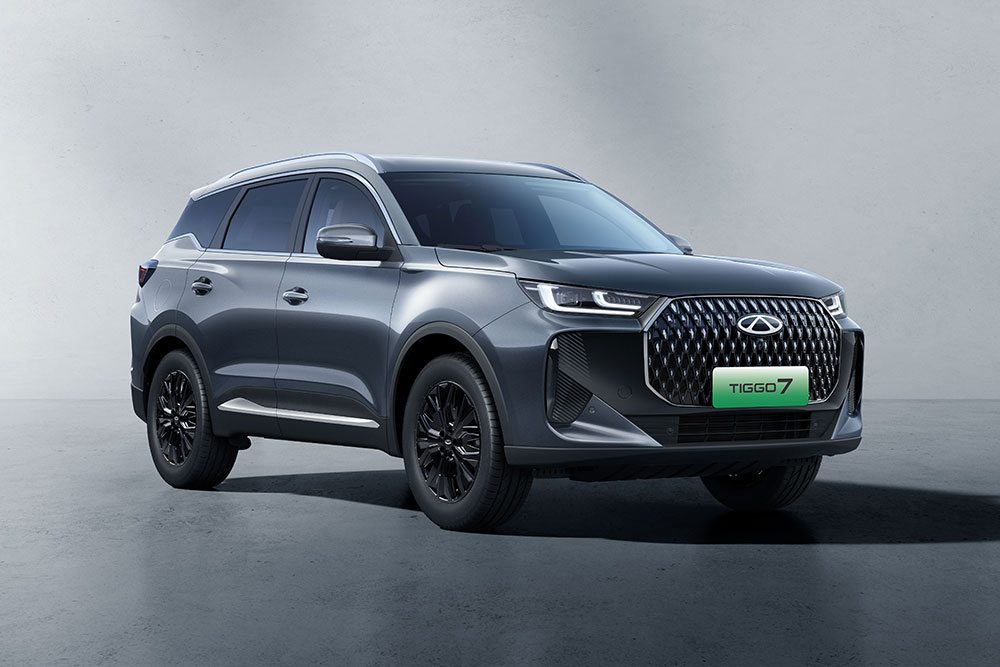
Chery Tiggo 7 Super Hybrid Ultimate
Along with MG, Chery is another Chinese carmaker to embrace the ‘Super Hybrid’ monicker for its recently launched and sharply priced Tiggo 7 medium SUV.
oasting driveaway pricing for the entry-level Urban model under $40,000, a seriously packed features list in the more expensive Ultimate grade, and a bold 1,200km range claim, it has
certainly got the on-paper goods to turn some heads.
Under the bonnet is a 1.5-litre turbocharged four-cylinder petrol engine which puts out 105kW/215Nm and is mated to a 150kW electric motor, with drive channelled to the front wheels via a single speed dedicated hybrid transmission.
An 18.3kWh battery provides a claimed electric only range of 93km (NEDC), with the Tiggo 7 able to run on electric or petrol power, or a mix of both.
There is no ANCAP rating yet but the Super Hybrid shares the same platform and safety technology as the conventionally powered Tiggo 7 Pro, which has a five-star rating. Safety kit includes eight airbags and a full ADAS suite.
Specifications
Price: $43,990 (driveaway)
Powertrain: 1.5L turbo petrol four-cylinder (105kW/215Nm), front-mounted electric motor (150kW/310Nm), 18.3kWh battery
Fuel consumption: 1.4L/100km (with full charge), 5.5L/100km (in hybrid mode)
Range: 93km (EV-only, NEDC) / up to 1,200km combined (NEDC)
ANCAP safety rating: Not yet rated
Warranty: Seven years/unlimited km (vehicle), eight years/unlimited km (battery)
Nissan Qashqai E-Power Ti
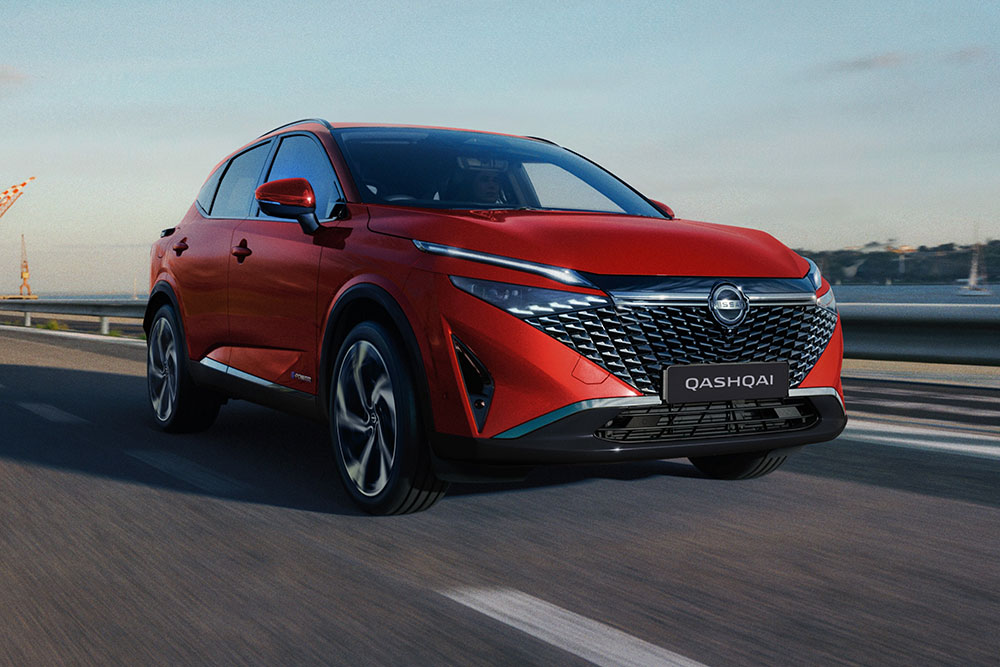
If you’re willing to try low-emissions vehicle technology but prefer to opt for a brand that’s better known than the new Chinese models, Nissan has a quality offering, the Qashqai e-Power.
The Qashqai is smaller than the other models mentioned here but if size is a deal breaker the same e-Power drivetrain technology can be had in the larger X-Trail.
The name e-Power is basically Nissan’s trademarked description for its series hybrid technology, which is similar to extended-range EV technology.
What this means in practice is that the Qashqai’s 1.5-litre petrol engine is connected in series, and the engine only acts as a generator and never actually drives the wheels.
The generator supplies charge to a front-mounted electric motor that delivers a spritely 140kW/330Nm.
You can’t plug the Qashqai in to recharge so the engine regularly recharges the small battery while driving, with the battery able to provide power for a few kilometres of electric-only driving but mainly supporting the electric motor during acceleration and regenerative braking.
Specifications
Price: $47,165 (MRLP)
Powertrain: 1.5L three-cylinder turbocharged petrol, front-mounted electric motor (140kW/330Nm), 2.1kWh lithium-ion battery
Fuel consumption: 4.8L/100km
Range: 1,000km (estimated)
ANCAP safety rating: Five stars (2021)
Warranty: 10 years/300,000km (when servicing with Nissan)
BYD Sealion 6 Premium AWD
BYD has been battling fellow Chinese brand Chery for the title of Australia’s fastest growing car brand, but its sales easily eclipse Chery which has a smaller range and no rival for the strong-selling BYD Shark 6 PHEV ute.
In the popular medium SUV segment, BYD is particularly well represented, offering the Atto 3 EV, Sealion 6 PHEV and Sealion 7 EV.
As at June this year the Sealion 6 rated as Australia’s second most popular PHEV, trailing the Shark 6.
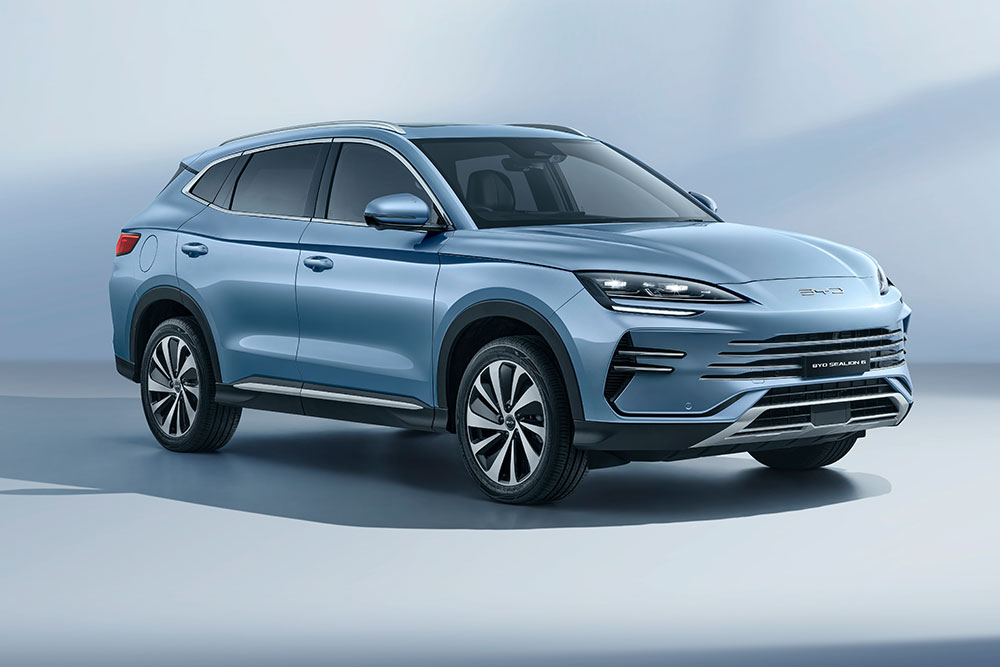
The Sealion 6 is available in Essential grade with a single electric motor and a $42,990 sticker price, while the Premium adds a healthy $10k to that but brings one extra electric motor for all-wheel drive capability and additional kit.
The drivetrain comprises a 1.5-litre turbocharged petrol engine, dual electric motors, and an 18.3kWh battery that can be charged via the petrol engine or external charging.
Combined outputs are a healthy 238kW/550Nm which is enough to shift the 2,100kg SUV from 0-100km/h in a brisk 5.9 seconds. Electric driving range is a useful 81km with combined cycle consumption of 1.4L/100km.
Specifications
Price: $52,990 (MRLP)
Powertrain: 1.5L turbocharged petrol four-cylinder (96kW/220Nm), dual electric motors (F 150kW/399Nm, R 120kW/250Nm), 18.3kWh battery
Fuel consumption: 1.4L/100km (full charge), 5.8L/100km (battery below 25%)
Range: 1,277km (claimed)
ANCAP safety rating: Five stars (2023)
Warranty: Six years/150,000km (vehicle), eight years/160,000km (battery)
Next story →

Related topics
Things to note
The information in this article has been prepared for general information purposes only and is not intended as legal advice or specific advice to any particular person. Any advice contained in the document is general advice, not intended as legal advice or professional advice and does not take into account any person’s particular circumstances. Before acting on anything based on this advice you should consider its appropriateness to you, having regard to your objectives and needs.
Insurance Products (excluding Travel Insurance) are issued by RACQ Insurance Limited ABN 50 009 704 152 (RACQI) and arranged by RACQ Distribution Services Pty Ltd (RDS) ABN 35 116 361 650, AFSL 567130 and RDS' authorised representatives (including RACQ Operations Pty Ltd ABN 80 009 663 414, AR No. 234978 (RACQO)). Conditions, limits and exclusions apply.
Any advice provided by RDS and RACQO is general advice only and does not take into account your personal objectives, financial situation or needs and you will need to consider whether the advice is appropriate for you. Read the Product Disclosure Statement (PDS) before making a purchase decision on the product. You can also access our Target Market Determinations on this website.
RDS receives a commission from RACQI for the policies it arranges. RACQO receives fees paid for services it provides to RDS. Further details about remuneration are available on request prior to purchasing.
Banking and loan products issued by Members Banking Group Limited ABN 83 087 651 054 AFSL/Australian credit licence 241195 trading as RACQ Bank. Terms, conditions, fees, charges and lending policies apply. This is general advice only and may not be right for you. This information does not take your personal objectives, circumstances or needs into account. Read the disclosure documents for your selected product or service, including the Financial Services Guide and the Terms and Conditions, and consider if appropriate for you before deciding.
Except for RACQ Bank, any RACQ entity referred to on this page is not an authorised deposit-taking institution for the purposes of the Banking Act 1959 (Cth). That entity’s obligations do not represent deposits or other liabilities of RACQ Bank. RACQ Bank does not guarantee or otherwise provide assurance in respect of the obligations of that entity, unless noted otherwise.
RACQ Bank subscribes to the Customer Owned Banking Code of Practice which establishes higher standards than the law requires. The Code reflects modern consumer expectations and developments in approaches to issues such as consumer vulnerability, guarantors, and supporting customers through financial hardship. Please read our Customer Owned Banking Code of Practice page for more information.
RACQ Operations Pty Ltd (ABN 80 009 663 414, AR No. 234978) and Members Travel Group Pty Ltd (ABN 45 144 538 803, AR No.432492) (RACQ) are authorised representatives of the RACQ Travel Insurance insurer Tokio Marine & Nichido Fire Insurance Co., Ltd. (ABN 80 000 438 291 AFSL 246 548) (Tokio Marine). Tokio Marine Management (Australasia) Pty Ltd (ABN 69 001 488 455, AR No. 1313066) is an authorised representative of Tokio Marine, and administers RACQ Travel Insurance as the managing agent on behalf of Tokio Marine. Terms, conditions (including eligibility criteria), exclusions, limits and sub-limits apply. Any advice is general advice only, and does not take into account your specific objectives, financial situation or needs. Before you purchase, please consider the Combined Product Disclosure Statement (PDS) / Financial Services Guide (FSG) and Target Market Determinations (TMDs) available at racq.com or on request from RACQ.