

Subaru Outback Wilderness Apex MY26 review
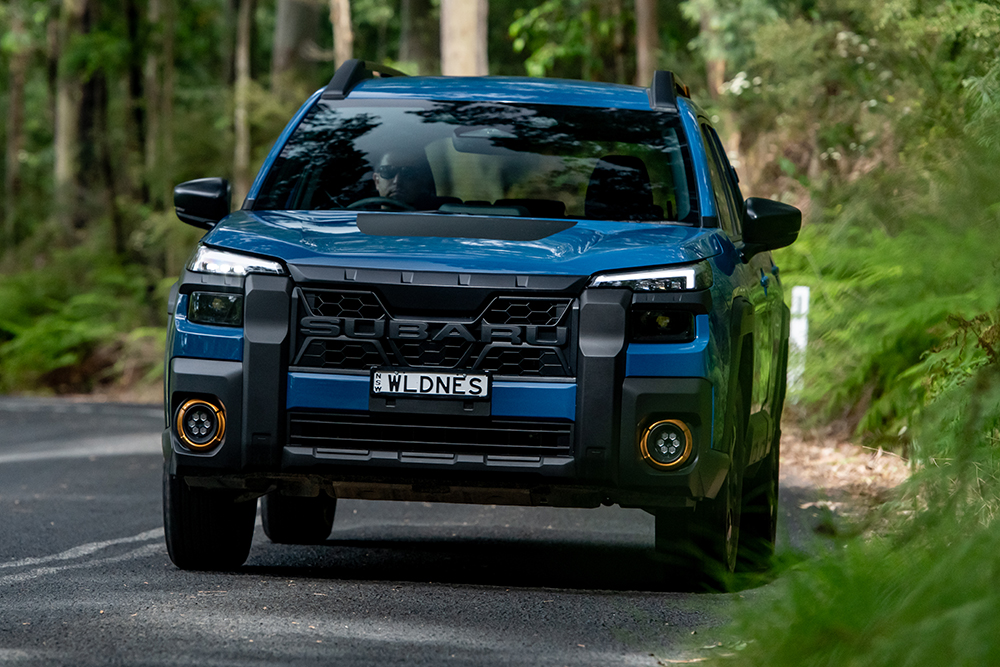
Subaru has taken its all-new seventh-generation Outback wagon further down the off-road path, repositioning the versatile all-wheel drive wagon as more of a purpose-built SUV, with a taller, tougher and more purposeful appearance.
Arriving almost five years after the launch of the well regarded sixth-generation model, the new Outback features a redesigned SUV profile and major interior upgrades while retaining Subaru’s trademark ‘boxer’ engines and symmetrical all-wheel drive underpinnings.
Leading the Outback’s charge down rougher roads and tracks are two new Wilderness variants, which Subaru is pitching as the most adventure-ready and capable models the brand has ever produced.
How much does a Subaru Outback Wilderness Apex cost?
Prices are up across the board with the new range, the entry-level Outback AWD now costing $48,990 (MRLP), and the range-topping Outback Wilderness Apex costing $62,690 (MRLP).
By comparison, when the sixth-generation Outback launched in February 2021 prices ranged from $39,990 to $47,790.
The five-variant range comprises three non-turbocharged or ‘atmo’ variants and two turbocharged variants, with the forced-induction engine reserved exclusively for the range-topping Wilderness badge.
Manufacturer recommended retail pricing for the non-turbo range kicks off with the Outback AWD at $48,990, rising to $53,490 for the Outback AWD Premium and $56,990 for the Outback AWD Touring. Stepping up to the turbocharged Outback AWD Wilderness costs $59,690, with the range-topping Outback AWD Wilderness Apex costing $62,690.
Subaru Outback Wilderness Apex exterior design
This is arguably Subaru’s boldest design step yet with a model it has carefully evolved over three decades.
The new look is more ‘in your face’ than any previous Outback, channelling the contemporary angular design language seen with the likes of the Kia Tasman, Hyundai Santa Fe and Toyota LandCruiser Prado.
While it won’t pass for a pretty car the new Outback looks more purposeful and SUV-like than its wagon-like predecessors.
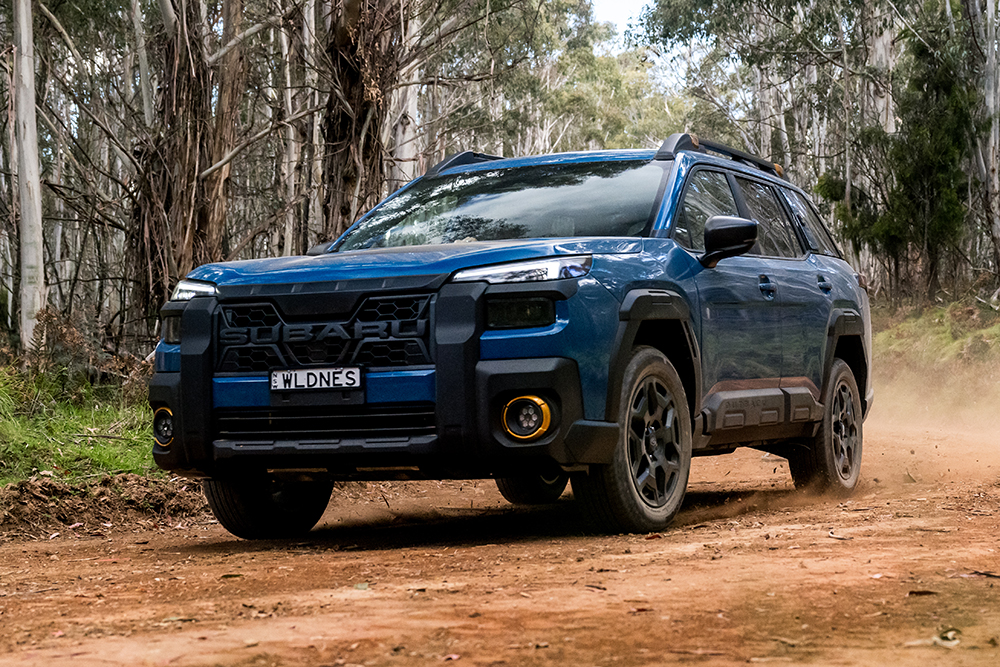
Notable styling touches include dark-grey body cladding on the lower body and bumpers, squared off wheel arches, chunky roof racks, and a blunt-nose with honeycomb grille and Subaru lettering.
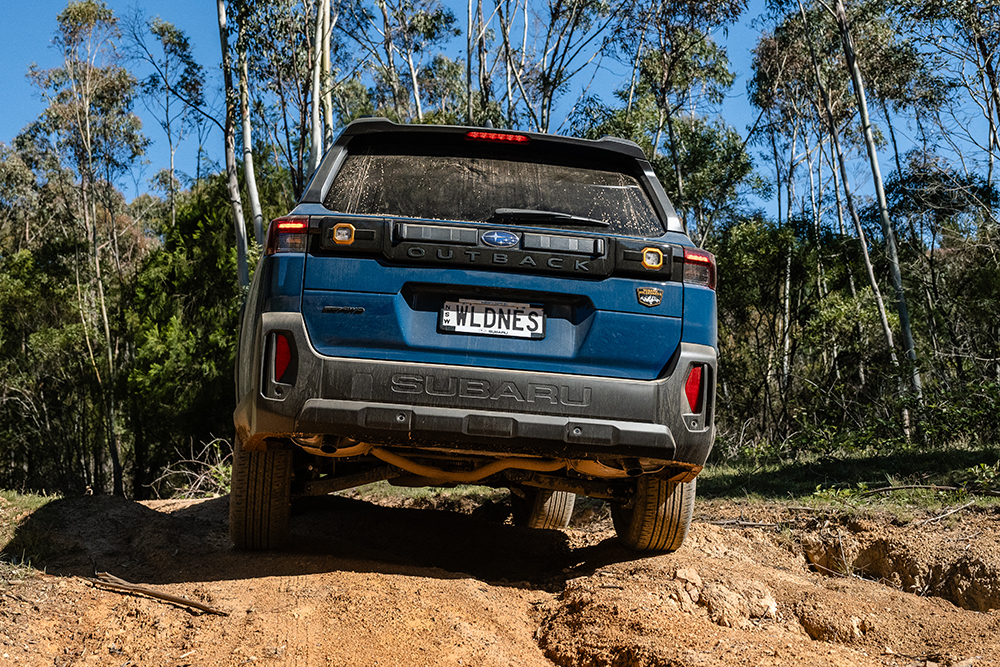
Wilderness variants are readily identified via their strategically located gold highlights – designed to emulate the look of aircraft-grade aluminium used in outdoor equipment – on the roof racks, driving lights and reversing lights.
The Wilderness also features an anti-glare blackout decal on the bonnet.
What Features does the Subaru Outback Wilderness Apex have?
The Wilderness variants are based on the entry-level Subaru Outback AWD but boast additional features including 18-inch alloy wheels in matte black, anti-glare bonnet decal, LED fog lights, redesigned bumpers, front skid plate, and high-strength ladder-style roof rails with increased load capacity.
Inside, both Wilderness variants feature a heated steering wheel, heated and ventilated front seats, heated rear outboard seats, and wireless phone charging.
Water-repellent upholstery with embossed Wilderness logos, all-weather floor mats, and a hands-free powered tailgate are other key features.
Despite being the most expensive variants, the Wilderness twins miss out on some key feature fitted to the Outback AWD Touring including ventilated seats, Nappa leather and a sunroof.
Both Wilderness grades also miss out on the Touring’s active lane-change assist system, while the base Wilderness forsakes the 360-degree camera system and 12-speaker Harman Kardon sound system fitted to the Touring and Wilderness Apex.
What is the Subaru Outback Wilderness Apex like inside?
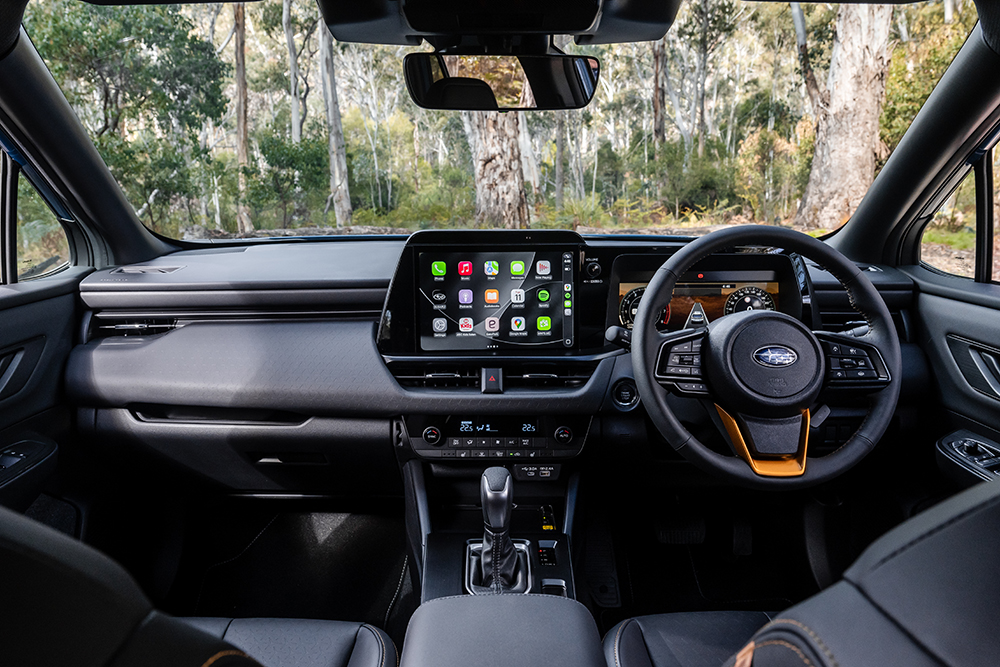
Inside, the new Outback is attractively designed, well finished and roomier than its predecessor. Front-and-centre is a new 12.1-inch horizontal infotainment touchscreen in place of the previous vertical display.
The touchscreen and digital dash are housed in a chunky plastic surround which befits the SUV-like design, while the driver monitoring system has been relocated from the internal rearview mirror to a less prominent panel atop the central touchscreen.
The infotainment screen offers clear graphics, a largely intuitive widget layout, and runs a new operating system with processing speed that’s 2.5 times faster that’s than before.
Wireless Apple CarPlay and Android Auto connectivity are standard, with the higher-grade Outback Touring and Wilderness Apex variants gaining an upgraded Harman Kardon 12-speaker premium sound system.
Ahead of the driver is a new 12.3-inch digital instrument cluster with selectable Classic, Calm and Eyesight viewing modes, along with map and projection modes on variants with in-built satellite navigation.
The transmission lever is a traditional centre-console mounted unit, with steering-wheel mounted shift paddles on all models enabling pseudo-manual operation of the CVT gearbox.
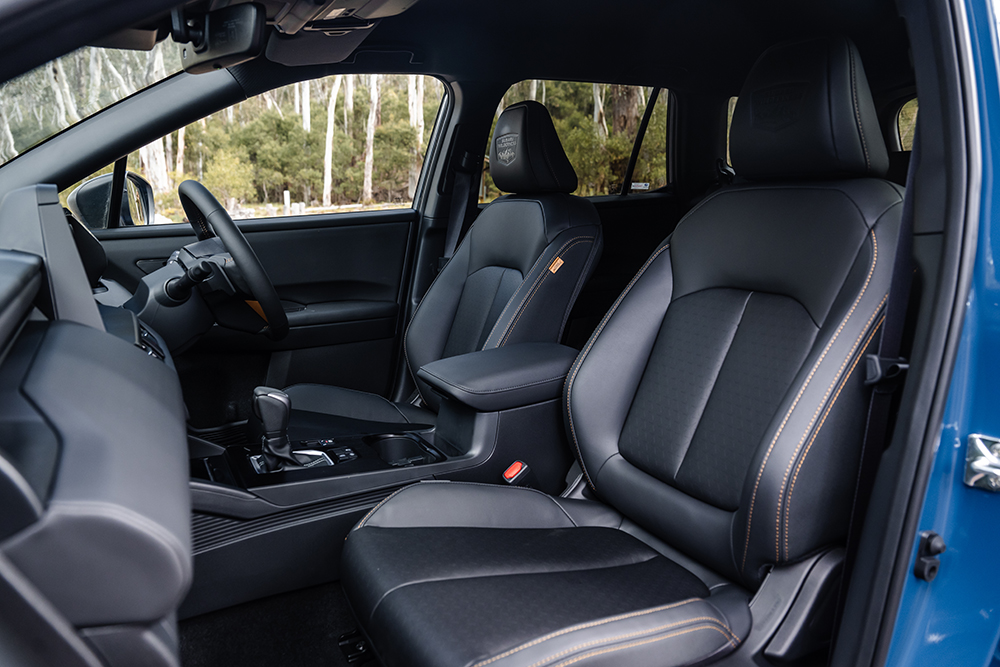
Redesigned seats offer improved lumbar and pelvic support, with the AWD Touring featuring premium Nappa leather-accented trim and Wilderness variants adopting a hard-wearing, synthetic leather with Anodised Yellow accents.
These variants also feature cross-stitching on key touchpoints and Wilderness-branded embossed headrest and backrest logos.
Headroom is excellent throughout and there’s adequate rear-seat legroom for most frames.
The transmission tunnel does eat into foot room for the centre-rear passenger but accommodation is otherwise pleasingly roomy and comfortable.
The rear seat is comfortably shaped with good under-thigh support and seatback recline function, with convenience items including a folding centre armrest with twin cupholders, and enlarged door trim bottle holders.
There’s also tinted rear glass, rear seat vents (but no climate controls), USB-A and C ports, and heating for the two outer seats. The seatbacks feature a hard-wearing plastic covering and twin pocket storage system for passengers to stow phones, iPods or books.
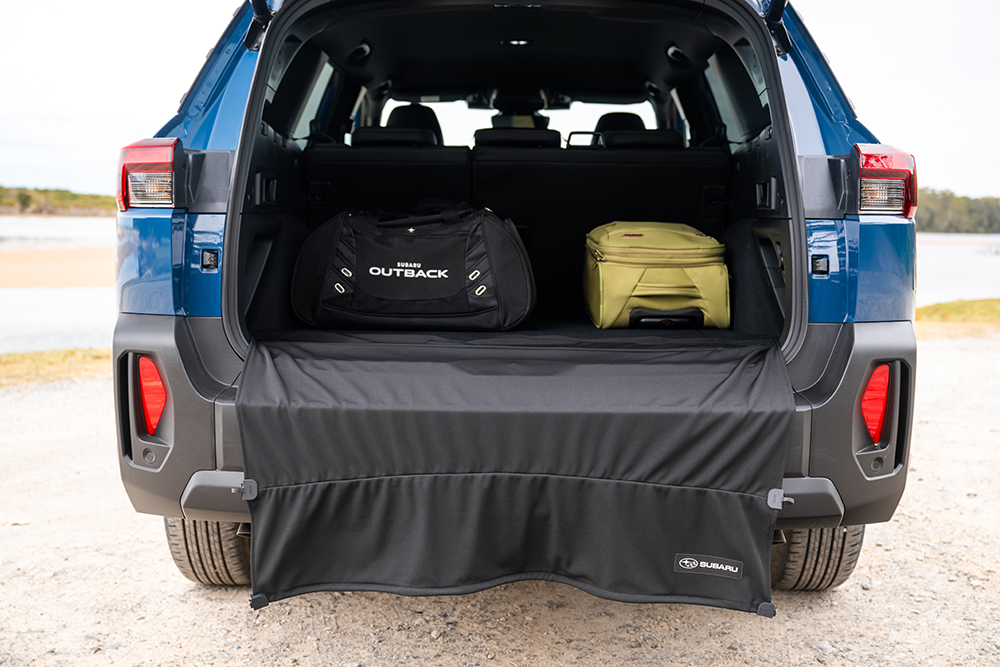
The cargo bay boasts an extra 8.0-litres of cargo space (530-litres VDA) with a squarer and taller cargo opening designed to make loading and unloading easier.
Quick-release levers in the luggage area allow the 60/40 split seats to be individually folded to carry longer objects, or fold almost flat for expanded cargo capacity.
The luggage bay itself incorporates a 12-volt outlet for powering accessories, two curry hooks, four tiedown points and a full-size underfloor spare wheel.
A new multi-use cargo cover made of fabric, rather than the more common retractable cartridge-style unit is of a clever multi-purpose design that allows the cover to be used as a tonneau cover, storage hammock, cargo partition, and a rear load lip step cover.
Finally, new high-strength ladder-style roof rails provide increased static load capacity of 363kg, up from the old model’s 318kg.
Is the Subaru Outback Wilderness good to drive?
The Wilderness variants are powered exclusively by Subaru’s 2.4-litre turbocharged four-cylinder boxer engine, which produces a healthy 194kW/382Nm.
That’s an extra 11kW and 32Nm over the outgoing MY25 Outback Turbo, with the engine driving all-four wheels via a Lineartronic CVT with eight-speed manual mode and Subaru’s symmetrical all-wheel drive system.
It's an impressively smooth and refined combination with the turbo engine delivering the sort of effortless low- and mid-range performance that makes for an easy touring companion.
Disappointingly, the turbocharged engine is no longer available in the regular Outback range with the Outback AWD, Outback AWD Premium and Outback AWD Touring featuring an updated version of Subaru’s 2.5-litre naturally aspirated boxer engine, paired with the same Lineartronic CVT as the Wilderness.
Subaru claims revisions to the non-turbo four-cylinder boxer or flat-four-cylinder engine deliver more useable torque, reduced noise and smoother performance than its predecessor, with combined cycle fuel consumption of 8.1L/100km.
Drive an atmo four-cylinder Outback in isolation and you’ll likely come away feeling reasonably happy with the balance of performance, refinement and economy. But drive one back-to-back with the turbo and it’s immediately apparent the latter is the superior engine in all regards, except economy.
The extra oomph makes the Wilderness variants easier and more effortless to drive, especially in hilly terrain where you require less throttle pressure for brisker performance.
There’s also less engine noise due to using lower revs, and less of the CVT-drone effect heard in the atmo models.
The turbo engine’s extra grunt was especially noticeable heading up and over the Bells Line of Road in the Blue Mountains west of Sydney, where it tackled inclines with ease where the non-turbo engine required more revs and effort.
While both turbo and non-turbo variants are equipped with a CVT, the turbo engine-CVT gearbox combination feels fundamentally better matched.
However, the turbo’s extra performance does come at a cost at the petrol bowser, with combined-cycle fuel consumption for the Wilderness variants of 9.7L/100km, or 1.6L/100km more than the non-turbo variants.
That’s also 0.7L/100km higher than the previous Outback Turbo, possibly attributable to the new model’s revised gearing and increased kerb weight.
Aside from the engine, the other major technical upgrade to the Wilderness variants is fitment of electronically-controlled dampers, which have a meaningful impact on ride and handling.
The Outback has long been one of the better-riding vehicles on the market, with long-travel suspension that allows it to soak up large lumps and bumps at speed.
That’s still the case with this new model but the electronically controlled dampers provide a notable improvement over the standard suspension of the lower grades.
The adaptive dampers are like those used on Subaru’s sporty WRX but unlike that model there is no ability to select manually for specific road and driving conditions. Instead, the dampers use sensors to firm or soften damping according to road conditions, providing better control of vehicle ride and handling in different conditions.
Ride quality is impressive in all grades but the Wilderness has an edge both in terms of low-speed ride and high-speed ride and handling over the base models, thanks to its adaptive dampers.
On low to moderate speed gravel roads, the Wilderness feels wonderfully supple, smoothing over imperfections that are felt more tersely in the base cars.
Another technical change to both turbo and non-turbo variants includes the adoption of a new fuel-saving dual-pinion electric power steering system which improves steering precision and on-centre feel.
There’s also a stronger body structure courtesy of increased use of high-tensile steel, and structural enhancements aimed at reducing wind, road and vibration noise.
The steering is nicely weighted and positive, the Outback feeling well balanced and predictable through bends, with a gentle amount of body roll that is well controlled by the suspension.
Towing remains a relative weakness versus some rivals, however.
The unbraked towing capacity of both turbo and non-turbo models is a competitive 750kg, but the braked towing capacity of the non-turbo variants is just 2,000kg with the turbocharged variants rated at 2,100kg.
Key rivals including the Hyundai Palisade (2,200kg) and Mazda CX-90 (2,500kg) boast higher braked tow ratings, while stepping up to a ‘proper’ 4x4 such as a Toyota Prado or a Ford Everest raises the ceiling further to 3,500kg.
What is the Subaru Outback Wilderness like off-road?
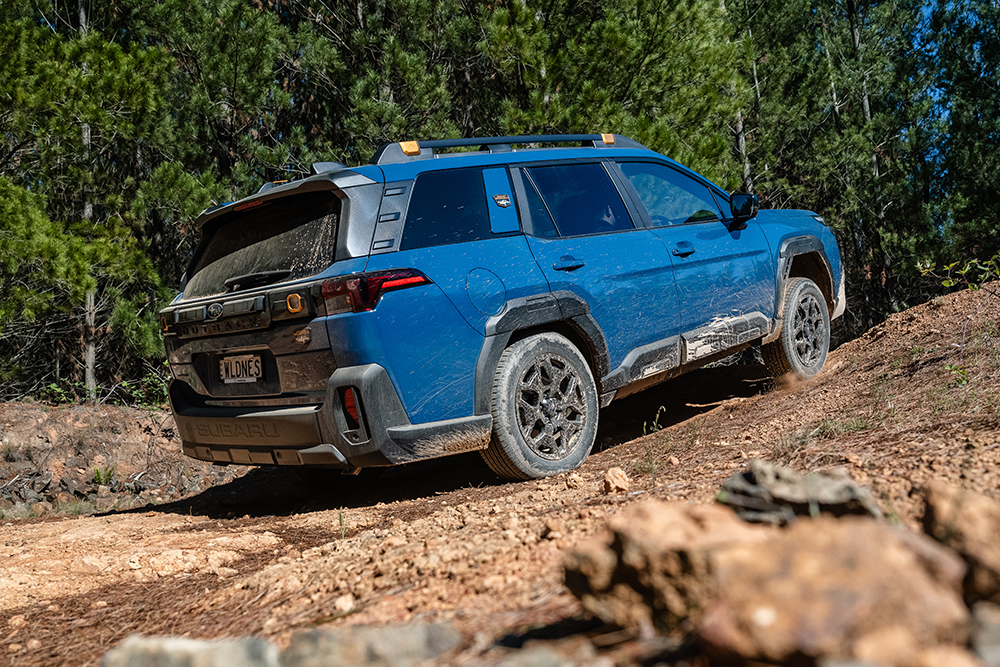
The Outback has always had a decent level of rough-road and all-terrain capability but the Wilderness variants take this baseline and expand the window of capability further.
Key to their enhanced off-road capability is a LandCruiser-like 240mm of ground clearance, plus improved approach and departure angles.
Even the naturally aspirated variants benefit from an additional 7mm of ground clearance versus their predecessors, clearing a handy 220mm.
However, unlike most ‘proper’ 4x4 rivals the Outback lacks a transfer case so has no low-range gearing.
The Wilderness variants do gain a lower 4.44:1 final drive ratio versus 4.11:1 for their stablemates, which Subaru says is calibrated to maximise off-road capability by making the most of the engine’s increased low-rev output.
All Outback variants also gain an updated all-wheel drive system with improved torque split control for enhanced performance in low-traction conditions. And they all get Subaru’s X-Mode traction control system as standard, giving drivers the choice of specific modes for different driving conditions.
We put both Outback and Outback Wilderness variants through some moderately challenging off-road tracks and trails in the Sunny Corner State Forest near Lithgow, NSW.
It’s the sort of location 4x4 enthusiasts from Sydney and surrounds will head to for a day of off-roading and is certainly no cakewalk.
Both the Wilderness and regular Outback variants handled the combination of shallow water crossings, moderately steep ascents and descents, cross-axle ruts, humps, bumps and loose surfaces with impressive ease.
The X-Mode system provides the ability to use the vehicle’s traction control system as de facto low-range gearing, acting like cruise control to allow the selection and adjustment of vehicle speed via steering wheel controls, using the vehicle’s throttle, brakes and transmission to hold that set speed both up and downhill.
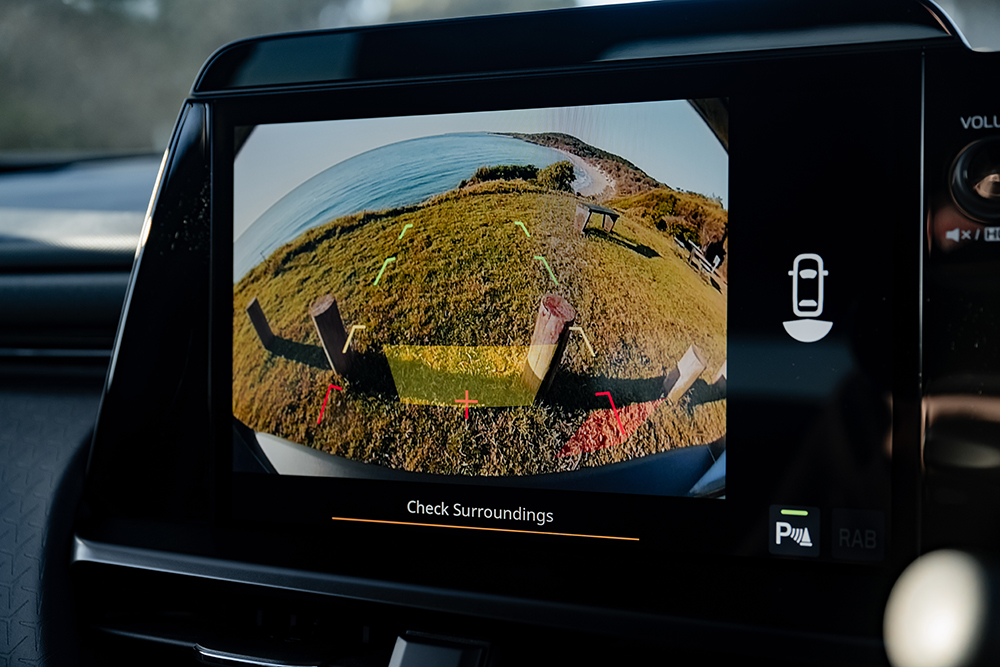
An additional handy feature of the Wilderness Apex that's not available on the base Wilderness is a 360-degree camera system providing a top-down, panoramic view for navigating tight trails and uneven terrain.
Road-oriented tyres are arguably the weakest link in the Wilderness’s off-road armoury – other than the lack of low-range gearing.
US variants can be had more aggressive all-terrain tyres but Subaru Australia says it has no plans to offer the option locally.
Chunkier rubber would likely look better, too, as the Wilderness does look a little under-tyred on its standard Bridgestone Alenza 225/60R18 rubber.
Of course, the flip side of any move to more aggressive all-terrains is they would likely detract from the Outback’s civilised road manners, introducing more road noise and potentially undesirable handling attributes.
Speaking of tyres, Subaru is to be lauded for continuing to supply the Outback with a full-size spare wheel, given it’s a vehicle that owners may regularly use to travel rough and unsealed roads.
What safety features does a Subaru Outback Wilderness have?
While the previous generation Outback held a five-star ANCAP rating, this new model hadn’t been tested at the time of writing.
However, Subaru points to numerous safety improvements across the Panoramic 360-degree View Monitor, with more camera angles and improved low-light performance.
Every Outback variant is also equipped with the latest generation of Subaru’s EyeSight Driver Assist system, with the ADAS system now incorporating Emergency Driving Stop and Acceleration Override Assist, together with Active Lane Change Assist on higher grades.
All versions have nine SRS airbags as standard, including a front far-side airbag and passenger seat cushion airbag.
How does the Subaru Outback Wilderness compare?
Despite the fact it sells in the large SUV category, the Outback doesn’t have any like-for-like direct rivals, threading a fine line as it does between a car-like station wagon with a suspension lift, and the more dedicated SUVs that are likely to be considered its main competitors.
Key large SUV rivals at the time of writing include the Hyundai Santa Fe ($53,650 to $77,150), Kia Sorento ($51,630 to $86,040), Toyota Kluger ($62,410 to $85,135) and Mazda CX-70 ($76,720 to $91,816), while more off-road focused rivals include the Ford Everest ($58,990 to $83,490) and Toyota Prado ($73,200 to $100,690).
Some of these rivals are seven-seaters, others offer 2WD variants, still others offer diesel, hybrid or plug-in hybrid powertrains.
These are all points of difference with the Outback and Outback Wilderness which are strictly AWD, five-seaters and with non-electrified petrol powertrains.
So, even with the new Wilderness variants taking the Outback in a more determinedly SUV-like direction, they still hold something of a unique niche in the market that makes direct comparisons difficult.
Should I buy a Subaru Outback Wilderness?
Across seven model generations over three decades the Outback has earned trust as a vehicle that can handle rough roads while delivering passenger-car like levels of ride, handling and refinement.
Subaru says its new model gives buyers more choice to suit a wider variety of lifestyles with fewer compromises, and it’s hard to argue with that logic.
The various improvements speak to the Outback’s design ethos of being a practical, purposeful and capable family wagon designed to make life on the road easier.
The addition of the Wilderness variants with their enhanced ground clearance, extra underbody protection and added grunt means further broadens the Outback’s appeal.
While we wouldn’t necessarily recommend taking your Outback or Outback Wilderness to Cape York or across the Simpson, we did come away impressed by how easily the new models accounted for tracks and trails that most would usually be regarded as the domain of low-range-equipped vehicles.
Clearly, not everyone will seriously consider an Outback in lieu of a ‘proper’ low-range equipped 4x4 wagon, and the Subaru’s relatively low braked-towing capacity does limit its appeal versus more heavyweight rivals.
But for many drivers who are honest about how they use their vehicle much of the time, the Outback is probably a great fit.
Subaru Outback key specs
- PRICE: $62,690 (MRLP)
- WARRANTY: Five years, unlimited kilometres
- POWERTRAIN: 2.4-litre turbocharged four-cylinder boxer engine, CVT automatic, full-time AWD (194kW/382Nm)
- ANCAP CRASH RATING: Not rated
- FUEL CONSUMPTION: 9.7L/100km (225g/km CO2) estimated
- FOR: Enhanced off-road capability; New and improved interior; Strong turbocharged engine; Comfortable ride; Balanced handling; Impressive refinement.
- AGAINST: Price increases across range; Low braked-towing capacity; Five-seat only; Polarising design; Lacks some features of less expensive Outback Touring.


Related topics
Things to note
The information in this article has been prepared for general information purposes only and is not intended as legal advice or specific advice to any particular person. Any advice contained in the document is general advice, not intended as legal advice or professional advice and does not take into account any person’s particular circumstances. Before acting on anything based on this advice you should consider its appropriateness to you, having regard to your objectives and needs.
Insurance Products (excluding Travel Insurance) are issued by RACQ Insurance Limited ABN 50 009 704 152 (RACQI) and arranged by RACQ Distribution Services Pty Ltd (RDS) ABN 35 116 361 650, AFSL 567130 and RDS' authorised representatives (including RACQ Operations Pty Ltd ABN 80 009 663 414, AR No. 234978 (RACQO)). Conditions, limits and exclusions apply.
Any advice provided by RDS and RACQO is general advice only and does not take into account your personal objectives, financial situation or needs and you will need to consider whether the advice is appropriate for you. Read the Product Disclosure Statement (PDS) before making a purchase decision on the product. You can also access our Target Market Determinations on this website.
RDS receives a commission from RACQI for the policies it arranges. RACQO receives fees paid for services it provides to RDS. Further details about remuneration are available on request prior to purchasing.
Banking and loan products issued by Members Banking Group Limited ABN 83 087 651 054 AFSL/Australian credit licence 241195 trading as RACQ Bank. Terms, conditions, fees, charges and lending policies apply. This is general advice only and may not be right for you. This information does not take your personal objectives, circumstances or needs into account. Read the disclosure documents for your selected product or service, including the Financial Services Guide and the Terms and Conditions, and consider if appropriate for you before deciding.
Except for RACQ Bank, any RACQ entity referred to on this page is not an authorised deposit-taking institution for the purposes of the Banking Act 1959 (Cth). That entity’s obligations do not represent deposits or other liabilities of RACQ Bank. RACQ Bank does not guarantee or otherwise provide assurance in respect of the obligations of that entity, unless noted otherwise.
RACQ Bank subscribes to the Customer Owned Banking Code of Practice which establishes higher standards than the law requires. The Code reflects modern consumer expectations and developments in approaches to issues such as consumer vulnerability, guarantors, and supporting customers through financial hardship. Please read our Customer Owned Banking Code of Practice page for more information.
RACQ Operations Pty Ltd (ABN 80 009 663 414, AR No. 234978) and Members Travel Group Pty Ltd (ABN 45 144 538 803, AR No.432492) (RACQ) are authorised representatives of the RACQ Travel Insurance insurer Tokio Marine & Nichido Fire Insurance Co., Ltd. (ABN 80 000 438 291 AFSL 246 548) (Tokio Marine). Tokio Marine Management (Australasia) Pty Ltd (ABN 69 001 488 455, AR No. 1313066) is an authorised representative of Tokio Marine, and administers RACQ Travel Insurance as the managing agent on behalf of Tokio Marine. Terms, conditions (including eligibility criteria), exclusions, limits and sub-limits apply. Any advice is general advice only, and does not take into account your specific objectives, financial situation or needs. Before you purchase, please consider the Combined Product Disclosure Statement (PDS) / Financial Services Guide (FSG) and Target Market Determinations (TMDs) available at racq.com or on request from RACQ.