
Tailgating facts, risks, and rules explained
Tailgating tops the list of driver annoyances in Queensland. Learn the facts, risks, and rules behind this dangerous driving habit.
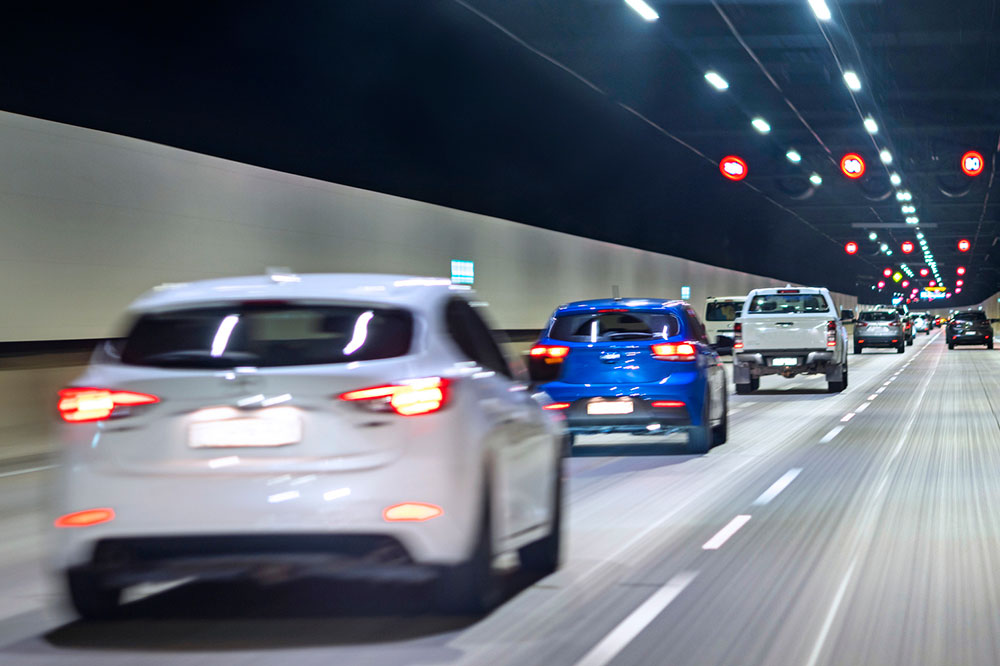
Tailgating, or driving too closely behind another vehicle, is one of the most common and dangerous habits on Queensland roads.
It is also the behaviour that annoys drivers the most according to RACQ’s 2025 Annual Road Safety Survey.
The survey found almost every respondent (96%) ranked tailgating as a frustrating driver behaviour, above littering (95%) and using mobile phones (93%).
Queensland road rules state drivers ‘must drive a sufficient distance behind a vehicle travelling in front of the driver so the driver can, if necessary, stop safely to avoid a collision with the vehicle.’
Failure to do so can see drivers fined $389 and receive one licence demerit point, with a maximum penalty of 20 penalty units ($3,338).
Despite its prevalence, many drivers misunderstand what tailgating is and how it is enforced.
Misconception 1: ‘There’s a legal minimum distance I must keep.’
Reality: Queensland road rules don’t specify an exact distance in metres (except for drivers of long vehicles travelling behind another long vehicle in certain circumstances). Instead, the law requires drivers to maintain a safe following distance that allows enough time to stop and avoid a collision.
The safe following distance can vary depending on speed, driving conditions and the type of vehicle you are driving.
The Department of Transport and Main Roads recommends driving at least two seconds behind the vehicle in front in ideal conditions.
It is also recommended to at least double it to a minimum of four seconds if towing, or driving in poor conditions (e.g., in the rain).
How to judge two-second following distance
- Pick a fixed point on the left side of the road, such as a power pole or traffic sign.
- When the car in front passes it, count “one thousand and one, one thousand and two.”
- If you reach the point before finishing the count, you’re too close, so increase your distance.
Remember, in poor weather or if driving a heavier vehicle the lapsed time should be increased to four seconds or more.
Misconception 2: ‘Tailgating isn’t a big deal unless I hit someone.’
Reality: Tailgating is considered aggressive driving and can lead to fines and demerit points.
It’s also a major contributor to rear-end collisions, which are among the most common types of crashes in Queensland.
Misconception 3: ‘It’s okay to tailgate if the driver in front is going too slow.’
Reality: Frustration doesn’t justify unsafe driving. If the vehicle ahead is travelling below the speed limit, you must still maintain a safe distance. Tailgating can lead to dangerous outcomes including crashes or other road users reacting aggressively.
Misconception 4: ‘I’m not tailgating, I’m just drafting.’
Reality: Drafting (driving close to reduce wind resistance on your vehicle) might be a tactic in motorsports, but on public roads, it’s illegal and unsafe. The very minor aerodynamic benefits for limited periods of time and at road speed aren’t worth the greatly increased risk of a collision.
What you should do
- Back off: Give yourself space and time to react to the unexpected
- Stay calm: If someone is tailgating you, don’t brake suddenly; safely change lanes or let them pass.
- Educate others: Share the two-second rule with friends and family.


More articles
Related topics
Things to note
The information in this article has been prepared for general information purposes only and is not intended as legal advice or specific advice to any particular person. Any advice contained in the document is general advice, not intended as legal advice or professional advice and does not take into account any person’s particular circumstances. Before acting on anything based on this advice you should consider its appropriateness to you, having regard to your objectives and needs.
Insurance Products (excluding Travel Insurance) are issued by RACQ Insurance Limited ABN 50 009 704 152 (RACQI) and arranged by RACQ Distribution Services Pty Ltd (RDS) ABN 35 116 361 650, AFSL 567130 and RDS' authorised representatives (including RACQ Operations Pty Ltd ABN 80 009 663 414, AR No. 234978 (RACQO)). Conditions, limits and exclusions apply.
Any advice provided by RDS and RACQO is general advice only and does not take into account your personal objectives, financial situation or needs and you will need to consider whether the advice is appropriate for you. Read the Product Disclosure Statement (PDS) before making a purchase decision on the product. You can also access our Target Market Determinations on this website.
RDS receives a commission from RACQI for the policies it arranges. RACQO receives fees paid for services it provides to RDS. Further details about remuneration are available on request prior to purchasing.
Banking and loan products issued by Members Banking Group Limited ABN 83 087 651 054 AFSL/Australian credit licence 241195 trading as RACQ Bank. Terms, conditions, fees, charges and lending policies apply. This is general advice only and may not be right for you. This information does not take your personal objectives, circumstances or needs into account. Read the disclosure documents for your selected product or service, including the Financial Services Guide and the Terms and Conditions, and consider if appropriate for you before deciding.
Except for RACQ Bank, any RACQ entity referred to on this page is not an authorised deposit-taking institution for the purposes of the Banking Act 1959 (Cth). That entity’s obligations do not represent deposits or other liabilities of RACQ Bank. RACQ Bank does not guarantee or otherwise provide assurance in respect of the obligations of that entity, unless noted otherwise.
RACQ Bank subscribes to the Customer Owned Banking Code of Practice which establishes higher standards than the law requires. The Code reflects modern consumer expectations and developments in approaches to issues such as consumer vulnerability, guarantors, and supporting customers through financial hardship. Please read our Customer Owned Banking Code of Practice page for more information.
RACQ Operations Pty Ltd (ABN 80 009 663 414, AR No. 234978) and Members Travel Group Pty Ltd (ABN 45 144 538 803, AR No.432492) (RACQ) are authorised representatives of the RACQ Travel Insurance insurer Tokio Marine & Nichido Fire Insurance Co., Ltd. (ABN 80 000 438 291 AFSL 246 548) (Tokio Marine). Tokio Marine Management (Australasia) Pty Ltd (ABN 69 001 488 455, AR No. 1313066) is an authorised representative of Tokio Marine, and administers RACQ Travel Insurance as the managing agent on behalf of Tokio Marine. Terms, conditions (including eligibility criteria), exclusions, limits and sub-limits apply. Any advice is general advice only, and does not take into account your specific objectives, financial situation or needs. Before you purchase, please consider the Combined Product Disclosure Statement (PDS) / Financial Services Guide (FSG) and Target Market Determinations (TMDs) available at racq.com or on request from RACQ.