

Know your caravanning etiquette
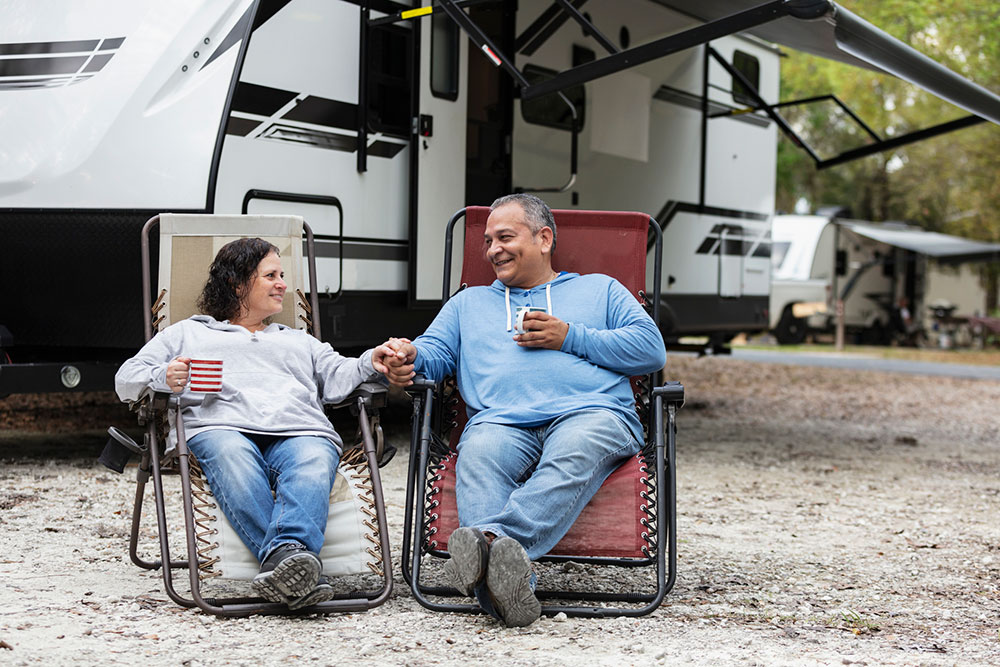
With caravanning more popular than ever, good manners on the road and at the caravan park are an important part of the experience.
While most caravanners do the right thing, keeping etiquette front of mind can help make every trip safer, calmer and more enjoyable.
What is caravan etiquette?
Caravan etiquette is the practice of driving, camping and using shared facilities in a way that is safe, respectful and considerate of other road users, fellow travellers and local communities.
Whether you're towing on a busy highway or staying in a crowded caravan park, simple acts of courtesy can make the experience more enjoyable for everyone.
Caravan etiquette at a glance
- Pull over when safe if traffic is building up behind your caravan.
- Ease off slightly in overtaking lanes to allow faster vehicles to pass.
- Keep left unless overtaking and use indicators early.
- Ensure you have clear rearward vision, including towing mirrors if required.
- Choose campsites carefully and avoid crowding neighbouring campers.
- Dispose of grey water responsibly and only via approved facilities.
- Keep noise to a reasonable level, particularly in the evening.
- Respect shared facilities, including dump points, amenities and water supplies.
- Start with shorter trips if you're new to caravanning and towing.
Road etiquette for caravanners
Towing a caravan inevitably means travelling a little slower, particularly on hills, winding roads and rough surfaces.
Frustration can often build among other drivers when traffic is unable to pass, and this can lead to risky overtaking decisions.
Good etiquette means being aware of what's happening behind you.
If traffic is backing up, pulling over when it's safe to do so is one of the easiest ways to reduce stress and risk for everyone on the road.
Being aware of overtaking lanes is also important.
Rather than maintaining or increasing speed, easing off slightly allows others to pass safely and keeps traffic flowing smoothly.
Good road etiquette not only improves safety but also helps foster goodwill between caravanners and other road users.
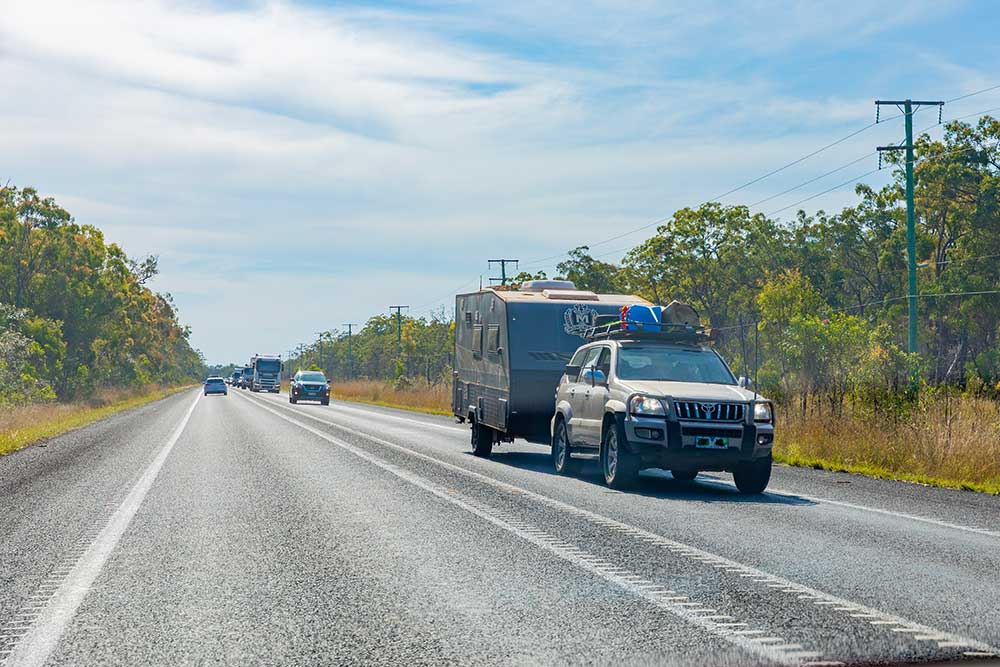
Keep these tips in mind whenever you're towing
- Keep to the left lane unless overtaking.
- Don't unnecessarily hold up faster traffic.
- If there is a build-up of traffic behind you, pull over when safe to do so and allow it to pass.
- Allow plenty of space for other traffic to pass. In Queensland, drivers of long vehicles (7.5m or longer, including many caravan and towing combinations) travelling
outside built-up areas on single-lane roads must leave at least 60m between the vehicle in front, if following another long vehicle. In road train areas, road trains must
leave at least 200m. - Consider fitting a UHF radio to improve communication with other road users. Channel 18 is widely used by caravanners and RV travellers, while Channel 40 is commonly monitored by truck drivers for road safety and traffic information on many highways.
- Use indicators and give plenty of warning about your intentions.
- Ensure you can see clearly behind your vehicle. If your caravan blocks your rearward vision, fit towing mirrors to provide a clear view down both sides of the van and of traffic behind you.
- Good visibility reduces blind spots and helps make lane changes, merging and overtaking safer.
Etiquette at the caravan park and campground
Once you reach your destination, etiquette shifts from driving behaviour to being a good neighbour.
With campsites and caravan parks often busy, awareness of personal space and shared areas is important.
Where possible, avoid setting up too close to other vans in free or open camps. Not everyone wants a neighbour just a few metres away if the area allows for more distance and privacy.
Blocking views, tracks or exit points is another common frustration that can usually be avoided with careful site selection.
Manage grey water responsibly
One of the biggest sources of friction in caravan parks and campgrounds is grey water being discharged onto the ground and flowing through neighbouring sites.
Always use designated drainage facilities where provided.
If no suitable drainage point is available, your caravan should be fitted with a grey water tank to collect wastewater until it can be disposed of responsibly.
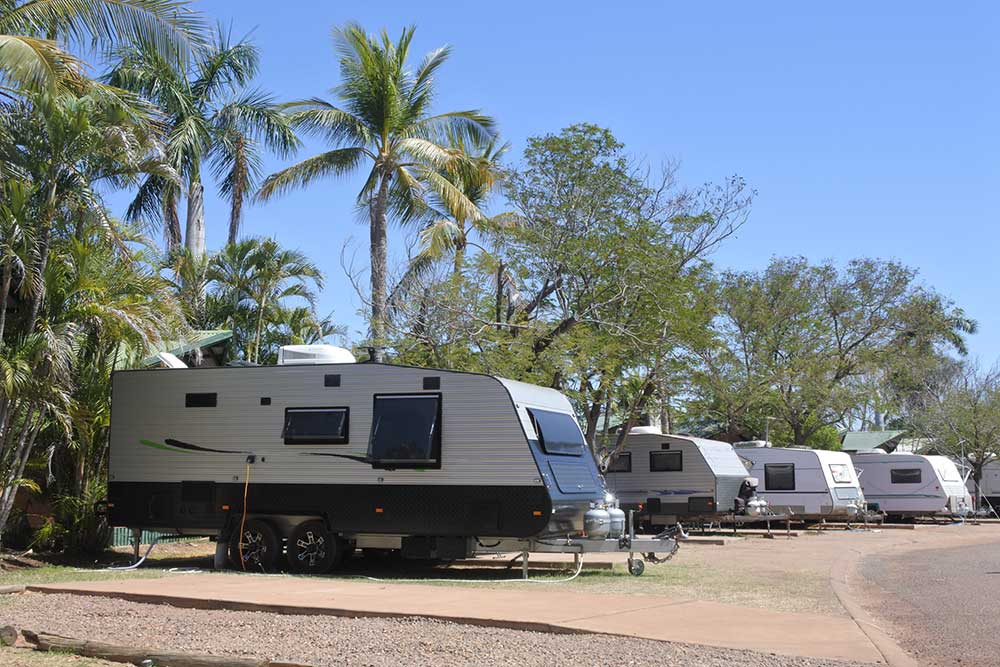
Keep noise to a minimum
Caravanning Queensland CEO Jason Plant said excessive noise was one of the biggest causes of tension in parks.
While socialising is an important part of caravanning culture, respect for others is just as important.
"There are some basic tips for good park etiquette, including being aware that people nearby may be winding down early or looking for a quieter stay," Mr Plant said.
Keeping music, televisions and conversations at reasonable levels, particularly in the evening, helps ensure everyone gets the experience they hoped for.
Respect shared facilities
Dump points, amenities blocks and water supplies are shared by everyone, and their condition reflects how well people look after them.
Using facilities correctly, cleaning up after yourself and following park instructions helps preserve access and standards for all users.
Mr Plant said caravanners were often seen by non-caravanners as a single community.
"One inconsiderate act can reflect on all caravanners, while thoughtful gestures can help build goodwill with locals, fellow travellers and park operators," he said.
"Caravanning etiquette isn't about strict rules, it's about awareness, patience and respect.
"When we keep those values front of mind, everyone's journey becomes safer, quieter and more enjoyable."
Why short trips are best for new caravanners
For new caravanners, the excitement of hitting the open road can make it tempting to plan a long trip straight away.
You may feel confident you are past the beginner stage and have the basic skills, like how to reverse your van, and are keen to set off and explore.
However, one of the best pieces of advice for beginners is to start with shorter journeys.
A weekend away or an overnight stay close to home is the perfect way to get comfortable with towing before tackling longer distances.
Build confidence before going further
RACQ Principal Technical Researcher Andrew Kirk said towing a caravan was very different from everyday driving.
"Acceleration, braking, cornering and overtaking all take more time and space, and it can take a while to build confidence behind the wheel," Mr Kirk said.
"Short trips allow you to focus on learning how your vehicle and caravan behave without the pressure of navigating unfamiliar roads for hours on end."
Local trips are also ideal for practising set-up and pack-down routines.
Levelling the van, connecting power and water, using the awning and managing waste all become easier with repetition.
If something doesn't go to plan, help is nearby and fixes are simpler.
"These first shorter outings are a chance to identify what works, what needs adjusting and what equipment you might be missing," Mr Kirk said.
"Once towing feels second nature, longer adventures will be safer and more enjoyable."
New caravanner checklist
Before planning a longer adventure, make sure you've practised:
- Towing, braking and reversing.
- Setting up and levelling your caravan.
- Connecting power and water services.
- Using awnings and campsite equipment.
- Managing grey water and waste disposal.
- Packing down efficiently and safely.
Mastering these basics on shorter trips will help ensure your first major caravanning adventure is both safe and enjoyable.



Related topics
Things to note
The information in this article has been prepared for general information purposes only and is not intended as legal advice or specific advice to any particular person. Any advice contained in the document is general advice, not intended as legal advice or professional advice and does not take into account any person’s particular circumstances. Before acting on anything based on this advice you should consider its appropriateness to you, having regard to your objectives and needs.
Insurance Products (excluding Travel Insurance) are issued by RACQ Insurance Limited ABN 50 009 704 152 (RACQI) and arranged by RACQ Distribution Services Pty Ltd (RDS) ABN 35 116 361 650, AFSL 567130 and RDS' authorised representatives (including RACQ Operations Pty Ltd ABN 80 009 663 414, AR No. 234978 (RACQO)). Conditions, limits and exclusions apply.
Any advice provided by RDS and RACQO is general advice only and does not take into account your personal objectives, financial situation or needs and you will need to consider whether the advice is appropriate for you. Read the Product Disclosure Statement (PDS) before making a purchase decision on the product. You can also access our Target Market Determinations on this website.
RDS receives a commission from RACQI for the policies it arranges. RACQO receives fees paid for services it provides to RDS. Further details about remuneration are available on request prior to purchasing.
Banking and loan products issued by Members Banking Group Limited ABN 83 087 651 054 AFSL/Australian credit licence 241195 trading as RACQ Bank. Terms, conditions, fees, charges and lending policies apply. This is general advice only and may not be right for you. This information does not take your personal objectives, circumstances or needs into account. Read the disclosure documents for your selected product or service, including the Financial Services Guide and the Terms and Conditions, and consider if appropriate for you before deciding.
Except for RACQ Bank, any RACQ entity referred to on this page is not an authorised deposit-taking institution for the purposes of the Banking Act 1959 (Cth). That entity’s obligations do not represent deposits or other liabilities of RACQ Bank. RACQ Bank does not guarantee or otherwise provide assurance in respect of the obligations of that entity, unless noted otherwise.
RACQ Bank subscribes to the Customer Owned Banking Code of Practice which establishes higher standards than the law requires. The Code reflects modern consumer expectations and developments in approaches to issues such as consumer vulnerability, guarantors, and supporting customers through financial hardship. Please read our Customer Owned Banking Code of Practice page for more information.
RACQ Operations Pty Ltd (ABN 80 009 663 414, AR No. 234978) and Members Travel Group Pty Ltd (ABN 45 144 538 803, AR No.432492) (RACQ) are authorised representatives of the RACQ Travel Insurance insurer Tokio Marine & Nichido Fire Insurance Co., Ltd. (ABN 80 000 438 291 AFSL 246 548) (Tokio Marine). Tokio Marine Management (Australasia) Pty Ltd (ABN 69 001 488 455, AR No. 1313066) is an authorised representative of Tokio Marine, and administers RACQ Travel Insurance as the managing agent on behalf of Tokio Marine. Terms, conditions (including eligibility criteria), exclusions, limits and sub-limits apply. Any advice is general advice only, and does not take into account your specific objectives, financial situation or needs. Before you purchase, please consider the Combined Product Disclosure Statement (PDS) / Financial Services Guide (FSG) and Target Market Determinations (TMDs) available at racq.com or on request from RACQ.